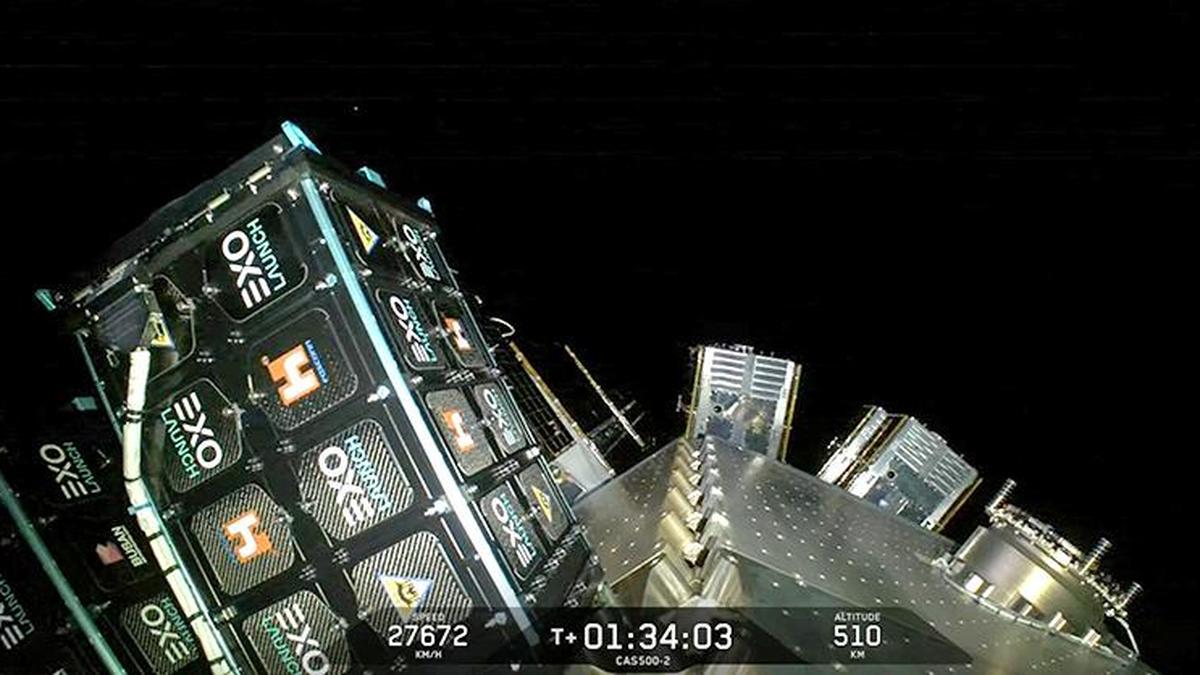
The successful deployment of the Mission Drishti satellite via a SpaceX Falcon 9 rocket marks a significant inflection point for India's private aerospace sector. By utilizing the launch infrastructure of SpaceX, the Bengaluru-based startup GalaxEye has effectively validated its OptoSAR technology on a global stage. The endorsement from SpaceX founder Elon Musk and Prime Minister Narendra Modi highlights the increasing integration between emerging private space entities and established global launch providers.
OptoSAR Technology and Private Sector Scaling
Mission Drishti represents the world's first OptoSAR satellite, a hybrid imaging technology that combines optical and synthetic aperture radar capabilities. This dual-sensor approach allows for high-resolution imaging regardless of cloud cover or lighting conditions, a critical requirement for commercial and defense-related earth observation. As the largest privately-built satellite to emerge from India, the mission serves as a proof-of-concept for the country's domestic manufacturing capabilities. The ability to move from design to orbit using international launch services demonstrates a shift in how Indian startups are positioning themselves within the global stock market analysis framework for aerospace and defense.
Strategic Implications for Global Launch Partnerships
For investors and industry observers, the involvement of SpaceX provides a clear signal regarding the commercial viability of Indian space hardware. The reliance on the Falcon 9 rocket for this mission underscores the necessity of reliable, high-cadence launch vehicles for smaller, specialized satellite operators. This relationship creates a symbiotic path for growth; startups like GalaxEye gain immediate access to orbit, while SpaceX secures a growing pipeline of international payloads. The public recognition from leadership in both the United States and India suggests a strengthening of bilateral technological cooperation, which may lower barriers for future cross-border space ventures.
Assessing the Commercial Trajectory
While the technical success of Mission Drishti is a milestone, the next phase for GalaxEye involves scaling its data services and proving the long-term reliability of its OptoSAR constellation. The market will be watching for the company's ability to convert this successful launch into long-term service contracts. Investors should monitor how this mission influences the valuation of other emerging space startups in the region, particularly those seeking to bridge the gap between prototype development and commercial satellite operations. The successful deployment sets a precedent for future private-sector missions, potentially accelerating the pace of capital allocation into the Indian space ecosystem. The next decision point for stakeholders will be the release of initial imaging data and the subsequent announcement of commercial partnerships, which will determine if this technological achievement can be translated into sustained revenue growth.