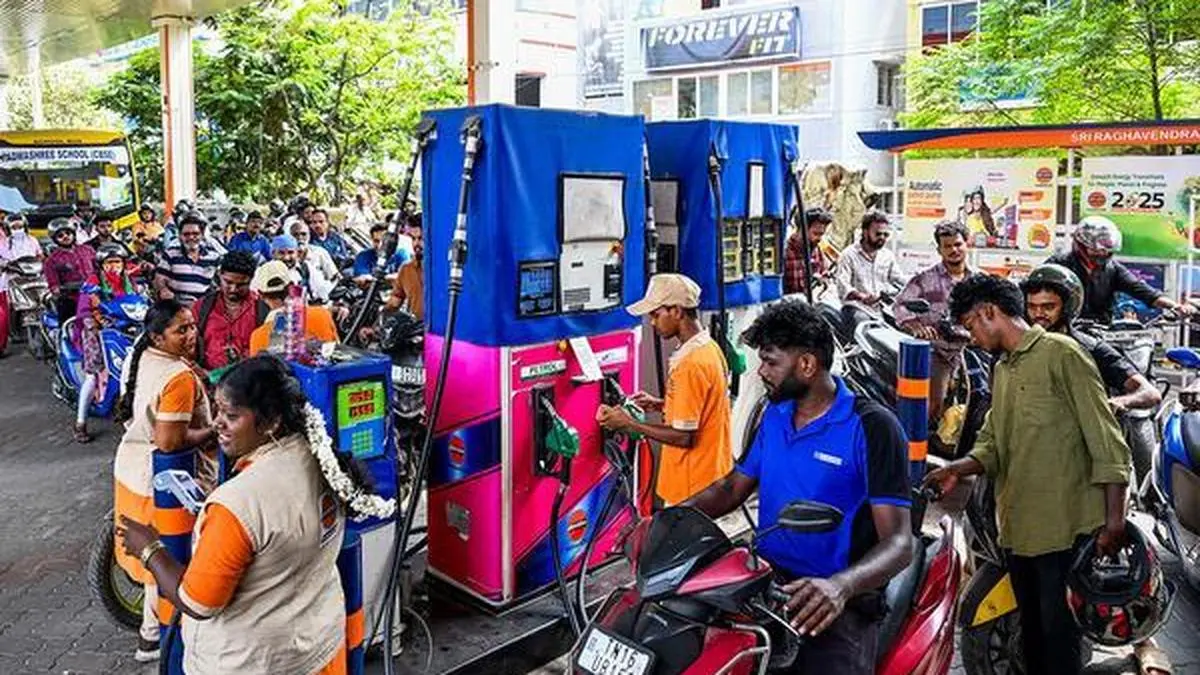
Bank of Baroda's latest macro assessment flags two supply-side threats that could push India's retail inflation above the Reserve Bank of India's 4% target in FY27: the delayed pass-through of higher global fuel prices and weather-related disruptions to food output. The warning arrives even as the April 2026 headline Consumer Price Index stayed below 4%, a level that masks building pressure in the food basket and the latent impact of elevated energy costs.
[
{
"internal_link": "commodities analysis"
}
]
Fuel Pass-Through: The Lagged Shock to India's CPI
India's system of administered fuel pricing and periodic tax adjustments delays the transmission of global crude oil moves to retail pump prices. The Bank of Baroda report explicitly calls for close monitoring of this channel, because every link in the food supply chain – fertiliser, diesel-powered irrigation, cold storage, and trucking – consumes energy. A sustained period of elevated crude can store up a one-time inflation jolt when pump prices are eventually revised.
[
{
"internal_link": "crude oil profile"
}
]
Administered Pricing Stores Energy for a Larger Adjustment
India's occasional fuel-price freezes insulate consumers temporarily. They also accumulate under-recoveries that force a catch-up later. A one-time 5–10% jump in pump prices can add 20–40 basis points to headline CPI almost mechanically. The Bank of Baroda report frames this as a latent risk that policymakers cannot afford to ignore, especially when food inflation is already perking up.
The Crude-to-Food Supply Chain
Traders tracking Indian inflation-linked bonds or the rupee should map the following linkages:
- Diesel powers 60–70% of rural irrigation pumps; a sustained rise lifts cultivation costs directly.
- Freight rates for moving perishables from farm gate to mandi climb with any fuel-price revision.
- Fertiliser subsidies and global natural-gas prices move in lockstep with the energy complex.
“Thus, the pass-through to domestic prices needs to be monitored closely, at a time when weather-related vagaries are posing upside risk to inflation in FY27,” the report said.
Weather Risks: Heatwaves and El Niño Threaten Harvests
The report identifies ongoing heatwave conditions and the prospect of an El Niño event later in the year as the second risk leg. El Niño historically weakens the Indian monsoon, damaging crop output and pushing food prices higher. A severe heatwave in March–April already dented horticultural output, and the meteorological department's guidance suggests monsoon rainfall could be uneven even if the total quantum looks normal.
Heatwave Impact on Vegetables and Pulses
Tomato, onion, and potato – the noisy trio of Indian food inflation – are acutely heat-sensitive. Prices typically swing 30–50% within a quarter when temperatures cross critical thresholds. Pulses, which India already imports heavily, face double pressure from domestic heat stress and higher landed costs as freight rates rise.
El Niño's Historical Drag on Output
If El Niño intensifies by the second half of 2026, the kharif harvest – sown from June and harvested from September – will bear the brunt. History shows that even a moderate El Niño can shave 3–5 percentage points off foodgrain output, pushing rural wages up and forcing the government into ad-hoc export curbs that rattle global agricultural markets.
Core Inflation’s Cushion: Gold and Contained Demand
The Bank of Baroda report offers one cushion: core inflation currently does not pose a significant risk, as demand-side pressures remain contained. Lower gold prices help on the margin, because gold constitutes a non-trivial weight in India's consumer basket and influences household wealth perception.
[
{
"internal_link": "gold profile"
}
]
Lower Gold Prices Help Core CPI
When domestic gold rates fall, the jewellery component of the CPI basket – part of the miscellaneous category – exerts a calming effect. Softer gold prices also reduce India's import bill, stabilising the rupee and indirectly capping imported inflation. For now, this dynamic is keeping the overall core print subdued.
Restaurant and Hospitality: A Pocket of Pressure
The report warns that restaurant and hospitality services could see some inflationary pressure. Labour shortages, rising energy costs for commercial kitchens, and a pickup in discretionary spending are converging. This sector's weight in the CPI basket is modest, yet it can serve as an early signal of demand-pull pressures if the service sector reopens fully.
Consumption Gauge Picks Up, Narrowing Policy Room
The bank's in-house Economic Consumption Index (BoB ECI) registered a 1% year-on-year uptick in May 2026, based on data through 11 May. The reading suggests that economic activity is gathering pace even as supply-side risks mount.
“Our in-house BoB ECI is showing a pickup in May 2026 (till 11 May) at 1 per cent, YoY. Thus, watchfulness is required about the evolution of the food inflation trajectory in FY27,” the report stated.
A rising consumption indicator at a time when food inflation is already perking up narrows the room for central bank complacency. If the ECI continues to strengthen through May, the combination of demand and supply-side pressures could force a rethink of the rate trajectory in the second half of FY27.
Practical rule: When a domestic consumption gauge strengthens alongside warnings on fuel pass-through and weather, the market's pricing of the terminal repo rate can swing 15–25 bps within a single policy cycle.
What Would Reduce the Risk – and What Would Make It Worse
The Bank of Baroda report concludes that inflationary risks remain tilted to the upside unless the ongoing war situation eases. A de-escalation would lower crude prices and relieve the energy pass-through pressure on India's import-dependent economy.
A favourable monsoon – with timely arrival, even distribution, and limited flooding – would neutralise the weather leg. A cut in excise duties on petrol and diesel, though politically difficult, would act as an immediate circuit breaker by compressing the transport-cost channel.
On the other side, several developments would intensify the risk:
- An escalation in geopolitical tensions that pushes Brent above $95–100
- A one-time pump-price hike that catches food inflation seasonally elevated
- Confirmation of a strong El Niño that cuts kharif acreage by more than 5%
- A sustained rise in the BoB ECI above 2% YoY, signalling demand-pull pressures layered onto supply shocks
The report's message for commodity and macro traders is clear: India's benign headline CPI is a rear-view metric. The live risks – fuel pass-through and weather – are already on the dashboard, and the next three months will determine whether FY27 inflation stays anchored near 4% or drifts towards a less comfortable 5.0–5.5% zone.