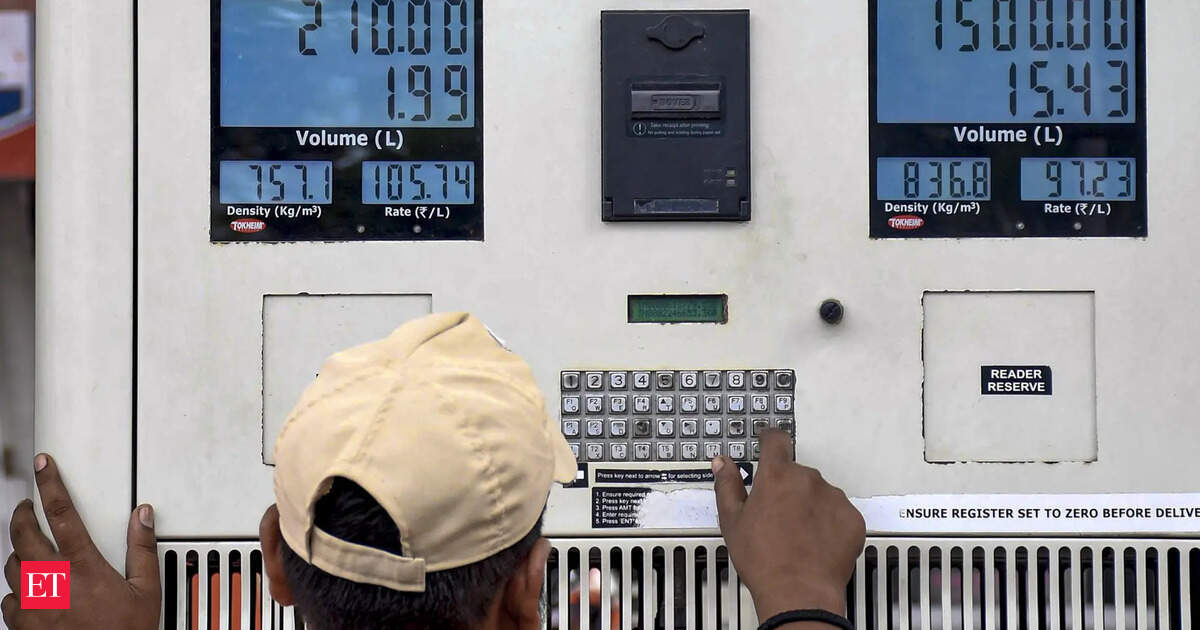
India’s cumulative retail fuel price increase of Rs 7.5 per litre since the escalation of the Iran conflict is now flowing through the economy. Petrol and diesel have been revised upward in stages, each one hitting transporters, supply chains and household budgets. Oil marketing companies (OMCs) have seen their stocks rally as government policy permits greater pass-through of crude costs. The trade-off between OMC profitability and consumer inflation is sharpening.
Rs 7.5 per Litre Cumulative Hike Since Iran Escalation
The Iran war context matters because it has tightened crude supply expectations globally. India, which imports more than 85% of its crude, is exposed to every spike in the Brent benchmark. Since the conflict intensified, domestic fuel prices have risen by a cumulative Rs 7.5 per litre – a number that aggregates several micro-revisions. The effect is most visible in diesel, the fuel that powers the trucking fleet. Higher diesel costs immediately push up freight rates, which cascade into food, construction materials and manufactured goods. Supply chains are under pressure; delivery margins are shrinking for logistics firms that cannot fully pass on costs. Household budgets are tightening as commuters face higher petrol bills and grocery prices inch up.
OMC Stock Rallies and the Pass-Through Debate
BPCL, IOC and HPCL – the three state-run OMCs – have benefited from the government’s decision to allow market-linked price revisions after a prolonged freeze in 2022-23. Their stock prices reflect that relief. A recent BPCL project announcement shows the company is confident enough to commit large capital to offshore energy. The pass-through mechanism is not guaranteed. If crude oil stays elevated, the government faces a choice: let pump prices rise further, risking inflation and political backlash, or cut excise duty to cushion consumers. Cutting excise duty reduces government revenue and indirectly pressures the fiscal deficit. OMC margins would take a hit if the government forces a freeze again. That tension is the core of the current market debate.
Next Data Point: CPI Transport Cost and Crude Path
The next trigger for OMC stocks and for the broader market is the government’s response to sustained high crude. Watch for any signal on excise duty reductions or a new subsidy mechanism. If the government holds the line on duty, OMCs can continue to pass through costs, supporting their earnings. If it intervenes, the stock rallies may reverse. For the Nifty 50, fuel inflation is a headwind; the index has already tested critical support at 23,500 as shown in recent analysis on Nifty support. The crude oil profile will remain the primary variable. Any de-escalation in the Iran situation would cool crude and ease pressure on India’s pump prices. The lead time for retail revisions means the Rs 7.5 hike is already locked in for the near term. The next data point to watch is the monthly CPI print for transportation costs, which will quantify how much of this hike has passed through to consumers.