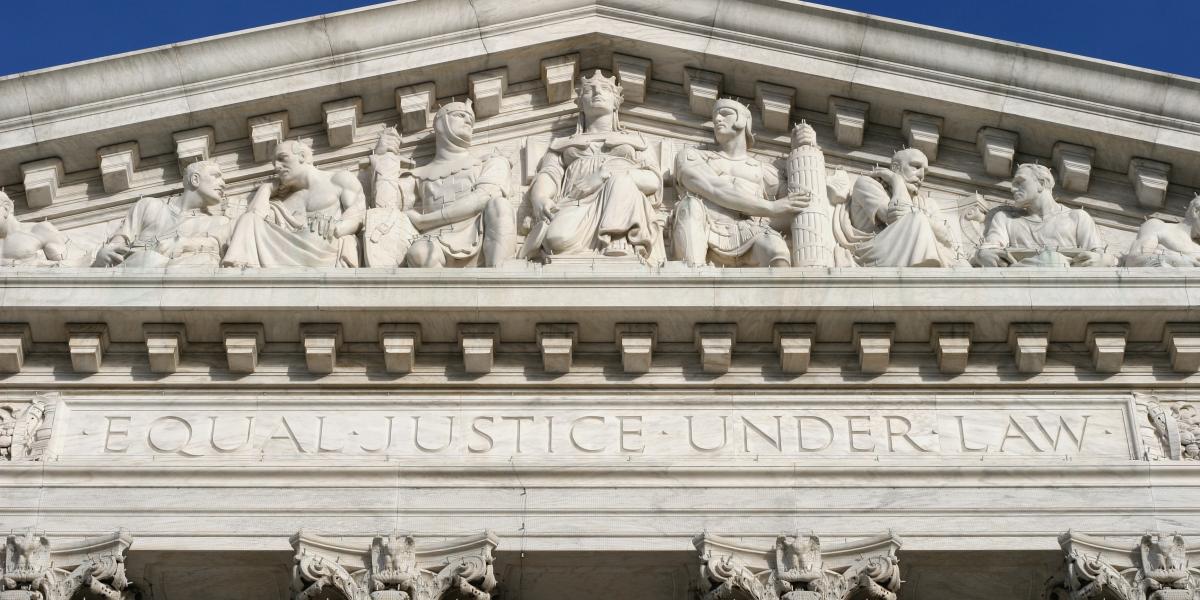
The uneven application of free speech in the United States and the United Kingdom is a sign that equality before the law has been replaced by group privilege, a regression to the precapitalist social ordering that classical liberalism aimed to abolish, Ludwig von Mises warned.
In Minnesota a young mother was convicted of using a racial slur against a black family, despite the theoretical application of the First Amendment to all citizens. In the United Kingdom a conservative mother was jailed for two years for expressing outrage on social media after the murder of three children. She wrote: "set fire to all the hotels [housing immigrants] for all I care. If that makes me racist so be it." A left-wing politician who called for protesters to be slaughtered in the streets using similar language was said to be exercising his fundamental right to free speech.
"Privilege is an institutional arrangement favoring some individuals or a certain group at the expense of the rest," Mises wrote. "The privilege exists, although it harms some–perhaps the majority–and benefits no one except those for whose advantage it was created."
The classical liberal tradition Mises defended, rooted in the 18th and early 19th centuries, rejected the notion of 'a select class of privileged persons' who had special rights and freedoms. The purpose of equality under the law was to ensure that no group is granted rights solely by virtue of membership, rights unavailable to those outside it. That ideal has been broken.
What passes for classical liberalism today largely comes from the progressive egalitarianism of the 1960s, Mises's followers argue. The modern notion of "equal opportunities" is increasingly institutionalized as group rights and protections. The premise is grounded in group identity – the only way to determine whether opportunities are equal is by comparing one group's experience with another's. That is the same premise that prevailed before the classical tradition arose.
Rights were historically based on one's position in what Mises described as the "social pyramid": noble birth, lord, serf. "In the precapitalistic society those had been paramount who had the strength to beat their weaker fellows into submission," he wrote. Only the strongest prevailed. The classical ideal of equality under the law was formulated precisely to reject that.
"There were only citizens with equal rights," Mises said. "No one was handicapped or persecuted on account of his nationality, his opinions, or his faith."
That distinction between lord and serf has been replaced by group identity distinctions. Persecution based on political opinion and party affiliation has become prevalent. As Mises put it: "Whoever denies rights to a part of the population must always be prepared for a united attack by the disenfranchised on the privileged."
What has happened, critics say, is that social justice activists campaigned against unfairness to black people and then began demanding unfairness to white people. While social justice activists are no longer silenced, they have adopted the mantle of silencing others.
Mises distinguished the privilege that follows from merit from privilege conferred by state edicts. The privilege that follows from ability and training, he argued, is "beneficial to the general public." He gave the example of lawyers becoming judges – those without legal training lack the same opportunity, but the public benefits from well-qualified judges.
The same analysis applies to private property. All must have the right to own property and protection of law in respect of their property. Private property privileges the rich over the poor, but it drives material prosperity and social mobility.
In contrast, privileges conferred on favored political or identity groups carry no benefit to the general public. The only benefit is to the privileged group, the social activist class, and the court intellectuals who defend the system. Resentment, hostility and brewing social conflict are the only results.
Free speech should extend not only to those who say rude words, but also to those who express pride in their history and heritage. Americans who defend their Confederate heritage in the South, who want to sing Dixie at public events, have a right to free speech no matter how much social justice activists might claim to find that heritage offensive.
"Liberalism has always had in view the good of the whole, not that of any special group," Mises wrote. "Liberalism is not a policy in the interest of any particular group, but a policy in the interest of all mankind."