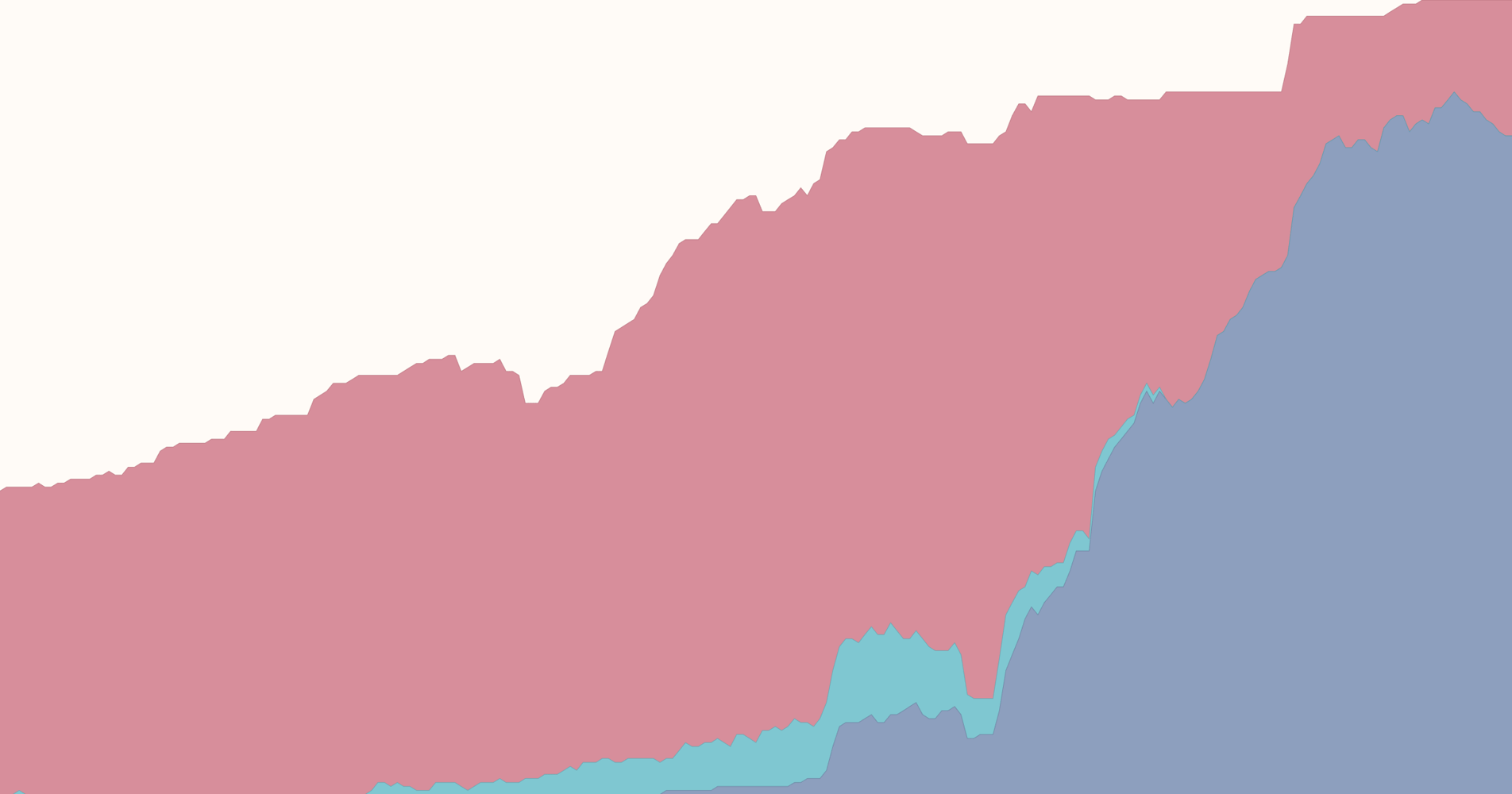
In 1900, fewer than a million people lived in a country that met the full criteria of an electoral democracy. All of them were in New Zealand. By 2025, roughly 4 billion people did, according to the Lexical Index of Electoral Democracy, a project by political scientists Svend-Erik Skaaning, John Gerring, and Henrikas Bartusevičius. The number of democratic countries hit a high of 130 in 2015, then fell by 13 to 117 in 2025.
The Lexical Index defines an electoral democracy as a country with an elected government and parliament, universal voting rights, a political opposition, and competitive elections. The index tracks these components separately over the last two centuries.
Elections for parliament and government spread slowly. In the late 18th century, only the United Kingdom and the United States had both. By 2025, 165 countries did, down from a peak of 176 in 2016. Military coups and civil wars toppled elected governments in countries such as Afghanistan, Madagascar, Niger, and Sudan in recent years.
Universal voting rights emerged even later. New Zealand became the first country to grant women the vote in 1893. At the end of World War II, fewer than two dozen countries had universal suffrage in practice. The number climbed to nearly 150 by the end of the Cold War. Recent declines reflect countries that stopped holding elections altogether, not formal restrictions on voting rights.
Competitive elections – where voters can choose freely among candidates and fraud does not determine the outcome – are the rarest and most recent development. The Lexical Index uses electoral turnovers as a proxy. In the late 18th and early 19th centuries, elections almost never led to a change in government. A wave of turnovers followed World War I, then faded. Changes in government spread rapidly in the 1990s. By 2025, 111 out of 199 countries had experienced a recent electoral turnover, defined as a change in government within the previous 12 years.
Electoral turnovers are an imperfect proxy. Japan's Liberal Democratic Party has held power almost continuously for 70 years without fraud, simply by staying popular. Incumbents can also lose despite rigging the contest. Still, the index's own expert-coded measure of competition shows the same trend: meaningful political competition has become much more common.
When all three conditions are met simultaneously, the number of electoral democracies grew from zero in the late 19th century to 20 by the early 1930s. The 1930s saw a sharp reversal, with only nine left by the decade's end. Democracies did not become a majority of countries until the 1990s. Since 2015, the count has slipped from 130 to 117, with declines in countries including Côte d'Ivoire, Nicaragua, and Serbia.
Population trends amplify the scale of the change. India's democratization in 1950 added more than 300 million people. From 1.2 billion in 1965, the number of people living in democracies roughly tripled to about 4 billion today. The world's population is now almost evenly split between those in democracies and those outside them. Because global population has grown faster than democracy spread, the absolute number of people without democratic rights is higher than ever. Recent backsliding has removed around 400 million people from democratic regimes since a decade ago, including in Myanmar, Nigeria, and Turkey.
Surveys capture a gap between support for democracy and satisfaction with how it works. In 2023, the Pew Research Center found that in all 24 countries surveyed, majorities rated representative democracy as a good system. In 19 of those countries, more than three-quarters said so. Yet in 17 of the 24, majorities said they were dissatisfied with how democracy was working in practice. A 2025 Pew update found similar results across 23 countries. A separate 2023 survey by the Open Society Foundations covering 30 countries found that 86% of respondents said living in a democracy was important to them, while 23% said corruption was the most important challenge and 58% feared political unrest could lead to violence.
The Lexical Index's data comes from Skaaning, Gerring, and Bartusevičius's 2015 paper "A Lexical Index of Electoral Democracy" in Comparative Political Studies.