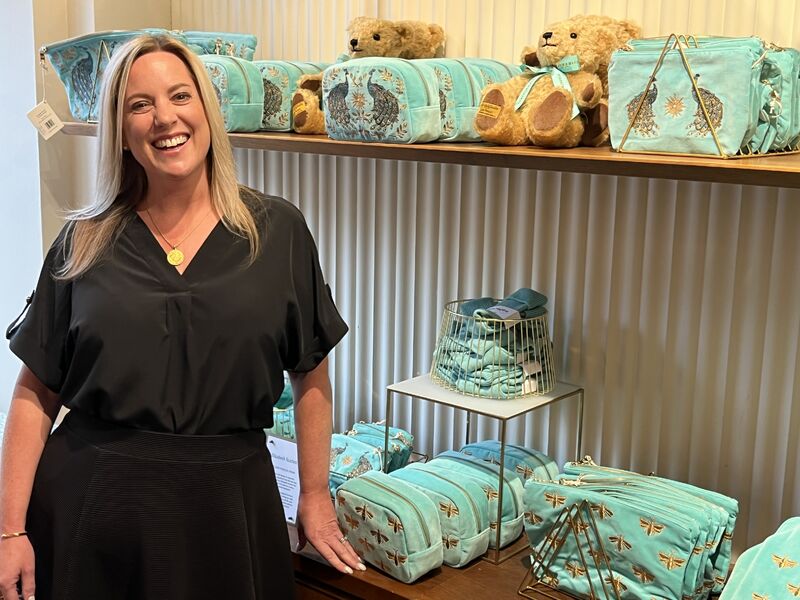
Sarah Wilkinson spent two years at Fortnum & Mason as director of online, arriving from Jimmy Choo. Her observation: the 300-year-old department store's commitment to customers runs deeper than she expected.
"It's not until you come here that you realize how deep the commitment to the customer runs," Wilkinson said. That line is not a platitude. It describes a structural choice to build the online channel around feedback loops rather than discount strategies.
Fortnum & Mason operates in a segment where price competition is secondary. The department store's online growth depends on repeat buyers who trust the curation. Wilkinson argues that listening to customers – complaints, requests, small preferences – directly shapes product sourcing, packaging, and delivery speed.
A customer who receives a broken biscuit tin or a delayed Christmas hamper does not return. Wilkinson's team tracks those signals as closely as conversion rates. She cited one case where customer feedback led to a change in the packaging of a popular tea blend. That change reduced breakage during shipping by over 30%. Data points like that carry more weight than a marginal site-speed optimization, she said.
The approach stands apart because many retailers treat customer service as a cost center. Fortnum & Mason treats it as a source of intelligence. Wilkinson said the online team holds weekly sessions where customer emails and chat logs are reviewed for emerging patterns. "They tell us what we are missing," she said.
For a company with a 300-year-old physical store, the online business has grown rapidly. Wilkinson would not disclose revenue figures. She said the channel now accounts for a "significant and growing" share of total sales. The digital operation is profitable, she added – rare for luxury e-commerce given the high cost of shipping and returns.
Returns are a central part of Wilkinson's strategy. She does not treat them as a loss. She sees them as a data point. If a high rate of returns appears on a specific product, the team investigates whether the product description is misleading, the sizing is off, or the quality does not match expectations. That feedback loop feeds back to the buying team, which adjusts future orders.
Wilkinson acknowledged the model works because Fortnum & Mason has a narrow product range and a loyal customer base. "It is harder to do this at scale across thousands of SKUs," she said. "We have the advantage of being tightly curated."
Her background at Jimmy Choo gave her a sense of how brand loyalty works in fashion. She said food and gifting are different. "People are very emotional about their food gifts," she said. "They are sending a hamper to a mother or a client. If it arrives damaged, that is personal."
Wilkinson's team uses a mix of post-purchase surveys, chat transcripts, and review analysis. The data goes into a dashboard that every department can see – from marketing to logistics. "Everyone sees what the customer is saying," she said. "That changes how you prioritize."