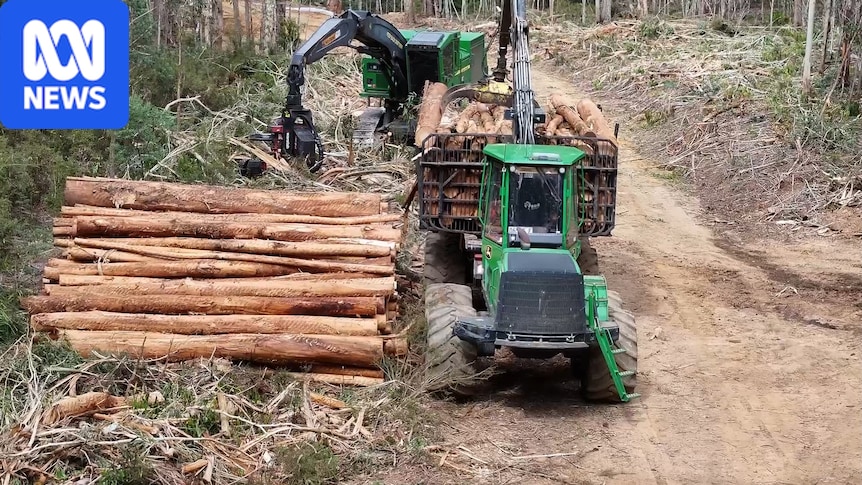
Forestry Corporation of NSW felled 1,000 trees including greater glider dens under road maintenance laws, bypassing stricter environmental protections. Conservationists call it logging in disguise.
The Forestry Corporation of NSW felled about 1,000 trees in a state forest believed to be a stronghold for the critically endangered greater glider. It avoided strict environmental protections by classifying the operation as “road maintenance.”
The work took place in Glenbog State Forest in south-east NSW. Andrew Wong, executive director of Wilderness Australia, said the operation looked like logging, not road management. He estimated at least 21 truckloads of timber were removed and taken to a mill for processing and sale.
“This looked like a logging operation, not a road management operation,” he said.
Under NSW planning laws, road maintenance is subject to weaker environmental rules than commercial logging. Forestry Corporation did not have to comply with the 50-metre exclusion zones that normally protect greater glider dens. Logging occurred within 50 metres of nine dens – a distance that would have breached the buffer had the work been regulated as commercial logging, according to WWF ecologist Dr Kita Ashman.
“What that does is it removes really important habitat for that species,” she said. Greater gliders need to move across canopies to access food and multiple den trees within a home range, she added.
Documents show the road maintenance was planned across 90 kilometres of road within Glenbog. So far 2.7 kilometres have been completed. Mr Wong warned the loophole could expose 50,000 kilometres of roadside forest across NSW state forests to unregulated logging.
“The scale of it is so great, they could probably do as much logging as they would do within about four or five years of all state forest logging in New South Wales,” he said.
The NSW Environment Protection Authority said it is aware of community concerns and is assessing information related to the matter. “As this assessment is ongoing, it is inappropriate to comment further,” a spokesperson said.
James Jooste, CEO of Australian Forestry Products Association, dismissed the criticism as a “supposition from an activist group who will do anything to desperately try and shut down an industry.” He said using trees felled during road maintenance for milling is a practical use of a product.
“This is not a Trojan Horse. This is not a loophole. This is practical use of a product or a tree that is felled, that can be milled for a critical product,” he said.
Justine Emerson, a lawyer at the Environmental Defenders Office, said the operation might not have been lawful even under road maintenance laws. The Biodiversity Conservation Act makes it an offence to harm the habitat of a threatened species, she said.
Forestry Corporation did not answer specific questions about the forest operations. A spokesperson said the work was contained within the previously disturbed footprint of the road corridor and included tree removal to enable machinery access. The purpose, he said, was to improve access and safety for community members who use the roads.
Mr Wong said if the loophole is not closed, management activities such as road maintenance will become profitable and their scale will increase. “There are 50,000km of roads in New South Wales state forest,” he said. “The scale of it so great, they could probably do as much logging as they would do within about four or five years of all state forest logging in New South Wales.”
Prepared with AlphaScala editorial tooling from the source reporting linked above. Indexable analysis may include a cited Alpha Score value. Publishing checks screen each story before release. Educational coverage, not personalized advice.