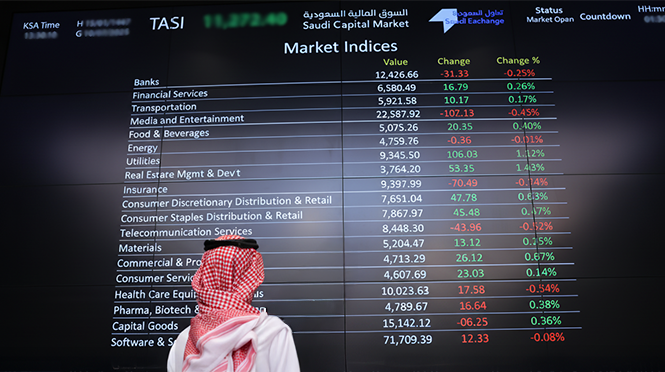
Foreign Institutional Outflows Signal TASI Liquidity Realignment

Foreign institutional investors net sold SAR 408.4 million in TASI stocks last week, signaling a tactical shift in capital allocation and potential valuation pressure on large-cap sectors.
Alpha Score of 33 reflects weak overall profile with moderate momentum, poor value, poor quality, moderate sentiment.
Alpha Score of 45 reflects weak overall profile with strong momentum, poor value, poor quality, weak sentiment.
Alpha Score of 47 reflects weak overall profile with moderate momentum, poor value, moderate quality. Based on 3 of 4 signals — score is capped at 90 until remaining data ingests.
Alpha Score of 70 reflects moderate overall profile with moderate momentum, moderate value, strong quality, moderate sentiment.
Foreign institutional investors recorded a net outflow of SAR 408.4 million from the Saudi Exchange (TASI) during the week ending April 23. This net selling activity marks a departure from recent capital allocation trends, signaling a tactical shift in how international participants are managing their exposure to the Saudi equity market. The scale of the movement suggests a coordinated adjustment rather than fragmented retail activity.
Institutional Capital Rotation
The net outflow reflects a broader reassessment of regional risk and liquidity preferences among institutional holders. When foreign entities reduce positions in the TASI, the impact is often felt most acutely in large-cap equities that serve as primary vehicles for international index trackers. This liquidity withdrawal forces a rebalancing of domestic portfolios, as local investors and state-linked entities often absorb the supply to stabilize price discovery mechanisms. The timing of this shift coincides with broader volatility in global emerging market indices, where capital is frequently rotated based on interest rate expectations and regional geopolitical risk premiums.
Sectoral Impact and Valuation Pressures
Sectoral performance on the TASI remains sensitive to these institutional flows. As foreign institutions pare back their holdings, the immediate pressure falls on sectors with high foreign ownership ratios, such as banking and petrochemicals. These sectors are typically the first to see valuation compression when institutional mandates shift toward cash preservation or reallocation to other jurisdictions. The current outflow creates a technical headwind for these heavyweights, potentially limiting their ability to lead index rallies in the near term.
AlphaScala data currently tracks the broader technology sector with varying degrees of sentiment. For instance, ON stock page holds an Alpha Score of 45/100, reflecting a mixed outlook, while NET stock page carries a score of 33/100, indicating a weaker position. These metrics highlight how institutional skepticism can manifest across different global markets, including those heavily influenced by stock market analysis of growth-oriented assets.
Monitoring the Liquidity Pivot
The next concrete marker for the TASI will be the subsequent weekly foreign ownership report. Investors should look for a reversal in this net selling trend or a sustained period of outflows that could signal a deeper structural exit. If the outflow persists, the focus will shift to whether domestic liquidity pools, including the Public Investment Fund and local retail participation, can maintain price floors without significant volatility. Monitoring the specific sectors targeted by these outflows will provide the clearest signal of whether this is a temporary rebalancing or a fundamental change in foreign sentiment toward the Saudi market.
AI-drafted from named sources and checked against AlphaScala publishing rules before release. Direct quotes must match source text, low-information tables are removed, and thinner or higher-risk stories can be held for manual review.