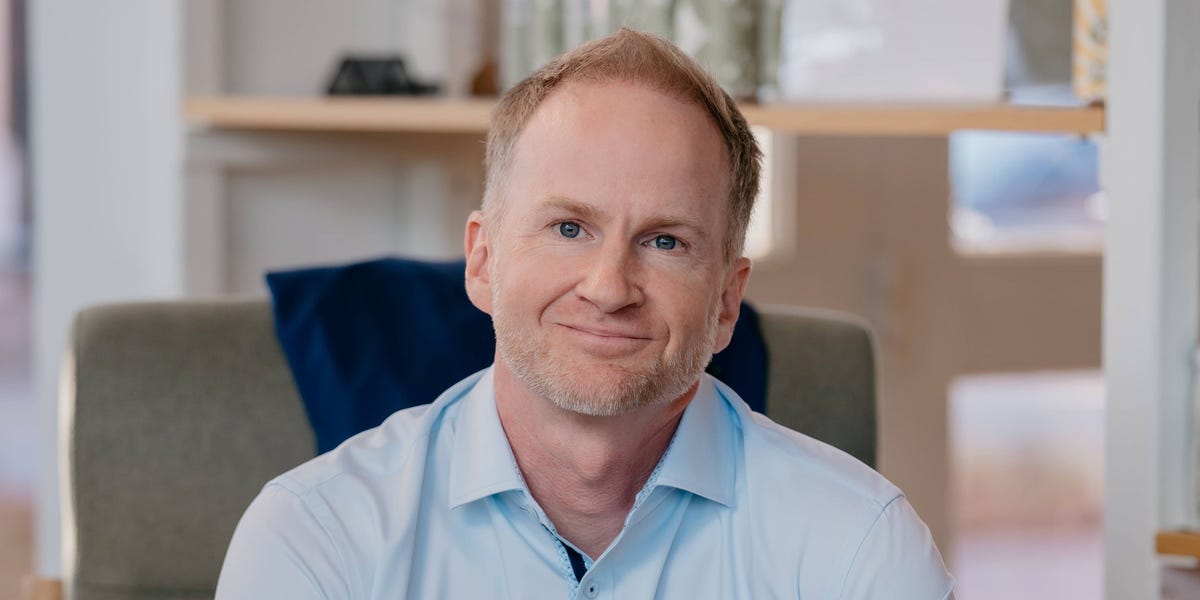
A Louisiana real-estate broker who has bought and flipped foreclosed homes for nearly a decade says the biggest misconceptions about the process are also what keeps competition thin.
Tyler Pritchard, 46, bought his first foreclosed home one year into his real estate career. The property sat on piers and had rotten beams and joists under the subfloor. Most buyers would not touch it. Pritchard did, and the risk paid off. He now buys and flips several foreclosed homes each year out of Lafayette.
"It was at a really good price range where I probably wouldn't have to put a ton of money into it," he told Business Insider. "But it was a kind of house that a lot of people don't like to touch because it's on piers, and there were rotten beams, joists underneath, and you had to get it leveled and replace all the subfloor."
A July report from Realtor.com found that the median price of a foreclosed home listed on the MLS sells for 27.2% below its estimated value. Pritchard targets deals where he can clear at least 30% after purchase and renovation costs.
The misconception most buyers get wrong
Pritchard said the popular image of a foreclosed home as a wrecked shell with holes in the walls and squatters inside is overblown. About half of the foreclosed homes he encounters need a full gut renovation. Homes that have been neglected beyond repair are rare.
"People think that if a house is getting foreclosed, the people living there didn't take care of the house – that's not always true," he said. "Or maybe the utilities hadn't been turned on in a long time, and people have been squatting in it, stuff like that. That's not true most of the time – it happens, but it's not a most of the time thing."
Pritchard focuses on two channels: sheriff sales, which function as public auctions after a sheriff seizes the property, and bank-owned homes that eventually hit the MLS. Each comes with a different risk profile.
At a sheriff sale, buyers cannot enter the home before bidding. The purchase must be made in cash, with funds ready within 48 to 72 hours. Traditional financing is not accepted.
"When you can only view the exterior of the home, you may luck out and the home may be beautiful on the inside," Pritchard said. "I've seen it happen where people have only had to put in $5,000, and they got themselves something that was probably 30% plus below market value."
Where the hidden costs live
Pritchard said the biggest drawback of buying foreclosures is the information gap. In standard home sales, Louisiana law requires sellers to sign a property disclosure listing defects like roof age or HVAC issues. Banks that repossess homes are exempt from that requirement because they never lived there.
"With a foreclosure, the bank is exempt from filing that out, so you're kind of shooting in the dark," he said.
Title issues are another risk. Liens from prior owners or contractors can survive a foreclosure sale and attach to the new owner. Pritchard said title insurance is a non-negotiable expense for every foreclosure purchase.
"You always, always, always want to get title insurance with a foreclosure," he said. "I have had title issues where there were liens on the title that weren't taken care of whenever I purchased the home."
Who should stay away
Pritchard said foreclosed homes are probably not a good fit for first-time buyers. The cash requirement at sheriff sales eliminates most owner-occupants who depend on a mortgage. The renovation work that most foreclosures need – even the ones that look clean from the curb – eats into the price advantage quickly if the buyer has to hire every trade.
"You can luck out," Pritchard said. "But you have to hope for the best, but be prepared for the worst."
As of April, foreclosed homes on the MLS made up 1.3% of active listings nationally. In Lake Charles, Louisiana, about 75 miles west of Lafayette, the share was 10.2%, the highest in the country, according to Realtor.com.
Pritchard said the foreclosure niche works for someone who can evaluate a house from the outside, has cash reserves, and is comfortable with the uncertainty. The people who do best, he said, are the ones who treat the information gap as an opportunity rather than a reason to walk away.