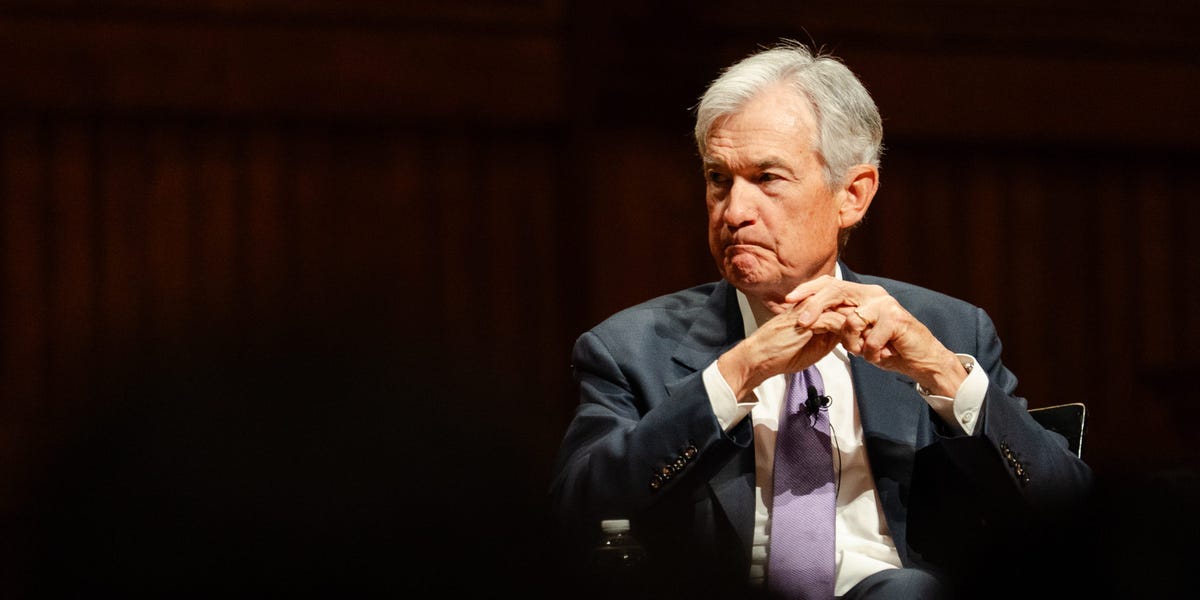
The Federal Reserve enters its April policy meeting under the weight of a significant leadership transition. With Chair Jerome Powell presiding over his final scheduled FOMC gathering before his term concludes on May 15, the committee faces the immediate challenge of maintaining policy continuity amid persistent inflationary friction. The market focus remains fixed on whether the committee will maintain the current federal funds rate range or signal a shift in the reaction function as the transition to a new administration appointee approaches.
Transmission of Policy Stasis
The current policy stance serves as a anchor for the broader yield curve. By holding rates steady, the FOMC aims to suppress inflationary pressures while navigating the risks of a cooling labor market. The transmission mechanism relies on the expectation that current borrowing costs will continue to dampen capital expenditure across interest-rate-sensitive sectors. Investors are monitoring the post-meeting statement for any deviations in language regarding the duration of restrictive policy, as any perceived softening could trigger a compression in short-term bond yields and alter the trajectory of the dollar.
Equity Market Sensitivity and Sectoral Exposure
Equity markets remain sensitive to the duration of the current rate regime, particularly for companies with high capital intensity or significant debt-servicing requirements. The interaction between policy signals and corporate earnings guidance creates a volatile environment for industrial and technology firms. AlphaScala data currently reflects this uncertainty, with ON Semiconductor Corporation (ON stock page) holding an Alpha Score of 46/100, Amer Sports, Inc. (AS stock page) at 47/100, and Bloom Energy Corp (BE stock page) at 46/100. All three are currently labeled as Mixed, highlighting the difficulty in pricing long-term growth against a backdrop of policy uncertainty.
This policy meeting serves as the final test for the current committee's framework before the arrival of a new chair. The primary marker for the next phase of policy will be the committee's updated assessment of the neutral rate, which dictates the long-term cost of capital. Market participants will look to the summary of economic projections for any revisions to the terminal rate, as these figures will define the baseline for the incoming leadership. The transition period will likely be characterized by heightened sensitivity to any divergence between the committee's inflation forecasts and incoming data on consumer price indices. As the Fed navigates these stagnation risks, the broader market analysis suggests that the focus will shift toward how the incoming chair manages the balance between price stability and the mandate for full employment.