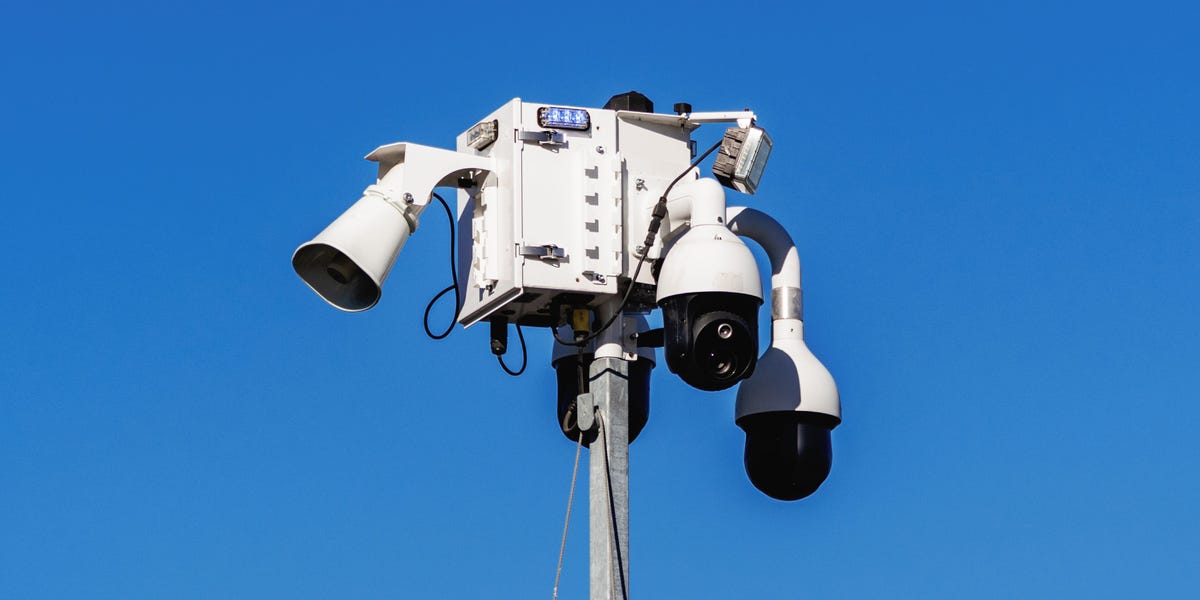
Roseville police records show Flock Safety's AI misread 71% of stolen vehicle alerts. The errors raise questions about the reliability of license plate surveillance nationwide.
In the Sacramento suburb of Roseville, California, a police officer spent part of the summer of 2024 on the phone with a man whose license plate number kept triggering false alarms. The city's AI-powered license plate readers, made by the startup Flock Safety, had repeatedly misread the plate. At least six times, the system flagged the vehicle as stolen or linked to a felony. Roseville police could see the software was confusing a "9" for an "8." The man removed his license plate cover. The problem persisted.
A dispatch supervisor wrote to a colleague: "It's easier at this point we have it memorized."
Flock says its cameras accurately read more than 96% of license plate characters under optimal conditions. Hundreds of pages of records from the Roseville Police Department tell a different story. Over 2023 and 2024, Flock sent 1,427 alerts to Roseville police, flagging vehicles as stolen or used in a felony. An internal police analysis found that in 71% of those alerts, Flock's machine-learning software misread the plate.
Business Insider obtained the records through public-records requests. The emails, data, meeting notes, and contracts show a years-long back-and-forth between Roseville and Flock over repeated errors. The cameras missed vehicles, captured blurry images, confused plate characters and states, and sent delayed alerts, the records show.
Roseville has flagged problems to the startup dozens of times since 2021. The department said it reported issues as recently as this year and continues to meet with Flock twice a month to share concerns.
Flock's cameras use machine learning to capture plate numbers and vehicle characteristics like color, model, dents, and bumper stickers. The Atlanta-based startup, valued at $8.4 billion, says it has cameras in more than 6,000 communities and logs over 20 billion vehicle reads each month. Law enforcement agencies say the technology helps track down suspects. Dozens of communities have canceled or paused contracts over privacy concerns, potential misuse, and data sharing with federal immigration officials.
A Flock spokeswoman attributed the misread problems in Roseville to the "particularly unique deployment" the city requested. Roseville configured its cameras to capture only the backs of vehicles to avoid capturing faces. The setup used older hardware and placed cameras higher and farther from traffic than Flock recommends. The company said it is "dedicated to going above and beyond" to support customers.
Max Isaacs, director of technology law and policy with the Policing Project at NYU School of Law, called the data "stunning." A 71% misread rate "is really beyond the pale," he told Business Insider. He added that without concrete rules addressing misreads, "this technology is not safe to be deployed in communities."
Misreads can have severe consequences. In Toledo, Ohio, driver Brandon Upchurch was mauled by a police dog after a Flock camera misread a "7" as a "2." He lost his job and was evicted. He settled a lawsuit against the city and police officer for $35,000.
In Roseville, none of the incorrect alerts led to a traffic stop or arrest, a department spokesman said. The city requires officers to verify a plate is stolen or have independent reasonable suspicion before making a stop. States including Montana, Virginia, Washington, and Kentucky have passed laws requiring such verification. California has not.
California Assembly Member Josh Lowenthal, who previously introduced legislation on license-plate reader data retention, called the Flock errors disturbing and said they require immediate legislative action. He said he would call for a statewide review of the reliability of the readers. "If the data is flawed, then so too will be our justice system," he said. The readers "should make Californians safer, not put them at risk."
Flock said Roseville's camera performance has improved significantly, a claim the police department disputed. Roseville said its data on alert accuracy is not complete for 2025 or 2026 and that it has not analyzed recent data to verify improvement. The company declined to say whether it independently tests its cameras' accuracy.
Roseville, which began using Flock cameras in 2021, continues to contract with the company because the cameras have helped solve crimes. The city has spent about $450,000 on Flock products since 2020. "Our agency acknowledges that technology is not perfect and requires human oversight," the Roseville spokesman said. "We take that responsibility seriously."
The cameras also missed vehicles entirely. Last fall, police trying to track a suspect in mailbox break-ins found that a Flock camera had missed the suspect's dark gray SUV. The same thing happened in January, during a search for a deli break-in suspect, and again the following day when a gray sedan was speeding and swerving.
Amanda Jones, a supervisor for the department's real-time crime center, documented missed and misread plates. In April 2025, she notified Flock that 16 of the 17 plates flagged the previous week were incorrect, including "blatant misreads" where a "3" was read as a "2." A lieutenant replied, "Ouch!"
Flock apologized and proposed solutions: reframing cameras, software updates to fix blurry plates and overexposed images. At one point, Flock's product director for machine learning suggested officers ask drivers to remove license plate frames that made it "very difficult for the machine vision to tell it is actually a 'E' and not an 'F.'" Roseville said it would not do that.
In 2024, Flock shared an analysis with Roseville outlining reasons for misreads: vehicles far from the camera were blurry, plates were cut off by trees or frames, and the software confused similar characters like "N" for "V" or "1" for "4."
Roseville is not the first to flag inaccuracies. In 2021, the research firm IPVM tested Flock's readers and found that Flock misidentified the state in about one of 10 reads and regularly misclassified vehicle type and make. IPVM said Flock subsequently blocked it from purchasing cameras for testing.
U.S. Sen. Alex Padilla of California told Business Insider that "inaccuracies stemming from law enforcement's use of this technology are deeply alarming, as are the mass surveillance capabilities that it enables." Technologies like Flock, he said, "should only be deployed with strong safeguards that protect both public safety and Americans' constitutional rights."
Drafted by a large language model from the source reporting linked above, then screened by automated publishing checks. It is not read by a journalist before publication. Some articles cite our Alpha Score. Verify prices and figures against the original source. Educational coverage, not personalized advice.