Modern art sales rose 43.7% to ₹1,548 crore in the first half; five masters drove 44% of India's auction turnover. Sotheby's sees a 'very positive' autumn.
India's art auction market is growing on price rather than volume. Modern art sales rose 43.7% year-on-year to ₹1,548 crore in the six months through June, accounting for nearly three-fourths of the market, according to Asign.art's Indian Auction Art Market report for January-June 2026. Overall turnover rose 43.7% too, while the number of lots sold increased just 3.21% to 2,091 from 2,026.
The price-led pattern is not new. Sales jumped 87% to ₹3,040.65 crore in 2025 while the number of lots dipped. Average price per lot nearly doubled to ₹73 lakh, and the sell-through rate, the share of offered lots that found buyers, eased from 95% to 90%.
Collectors are still chasing a handful of masters. M.F. Husain led first-half sales with ₹253 crore, followed by Ganesh Pyne at ₹187 crore, F.N. Souza at ₹107 crore, S.H. Raza at ₹97 crore and V.S. Gaitonde at ₹39 crore. Together the five artists accounted for 44% of the market. Lots fetching more than ₹1 crore rose nearly 35% to 413.
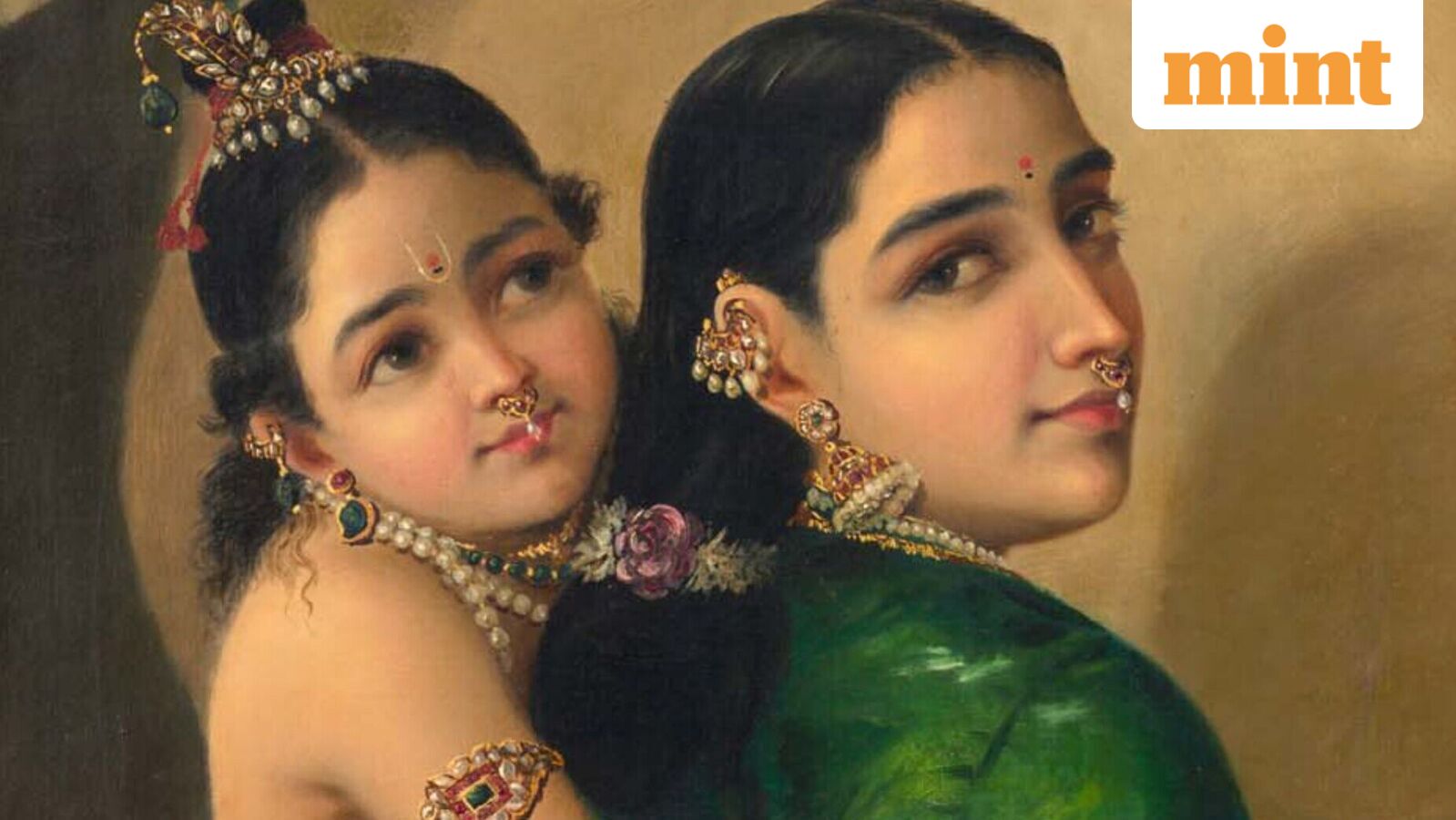
The half's most expensive lot came from an earlier generation. Raja Ravi Varma's Yashoda and Krishna (1890) sold for ₹167.2 crore at Saffronart's April sale in Mumbai. Pyne's The Fisherman (1979) fetched ₹48.95 crore, and Husain's Second Act (1958) went for ₹48 crore. Pyne placed four works among the ten priciest lots of the half.
Growth was overwhelmingly value-led, said Ashvin E. Rajagopalan, co-founder of Asign.art. Average price per sold lot rose 39.23% to ₹74.07 lakh from ₹53.20 lakh in the first half of 2025, and the sell-through rate stood at 92.60%.
Most transactions still happen at the low end. Nearly 83% of sold lots fetched less than ₹50 lakh, even though works dated between the 1950s and the 1970s generated ₹737 crore.
Scarcity starts with the artists themselves. Most modern masters were never prolific, and much of their surviving work now sits locked in museum and foundation collections, so very little is left to come to market, independent art critic Uma Nair said. Provenance, the ownership and publication history of a work, has become central to buyer due diligence, she said.
Auction houses describe the same squeeze. Damian Vesey, director and international specialist for South Asian modern and contemporary art at Christie's, told Mint in April that demand had outpaced the supply of high-quality works. More than 90% of the works Christie's offered in its Indian art auctions over the previous two years were fresh to the market, he said.
Newer names still broke through. More than 60 artists appeared in the first-half dataset for the first time. Records fell for Vivan Sundaram at ₹8 crore and Ramkinkar Baij at ₹6 crore, with Shanti Dave setting a new mark at ₹3 crore.
Manjari Sihare-Sutin, Sotheby's senior vice president and worldwide head of modern and contemporary South Asian art, said collectors favour rare works with strong provenance and art-historical significance, even as interest expands beyond the established names. She called the second-half outlook "very positive," citing an active autumn season and a growing number of exhibitions and private initiatives building visibility for Indian art.
Sotheby's September sale includes Husain's Mithuna Crimson, from the Chester and Davida Herwitz collection, alongside Bhupen Khakhar's Old Men Playing Chess, an early work from the artist's estate.
Most of the year's turnover lands in the second half. September and October accounted for 46% of calendar 2025 sales, with December adding another 12.04%, per Asign.art. Rajagopalan said it was too early to identify specific ₹100-crore-plus consignments for the second half because auction catalogues haven't been published. The first half showed how a single museum-quality work can materially shift the market, he said.
Christie's led auction houses with ₹495.7 crore in first-half turnover, followed by Saffronart at ₹424 crore, AstaGuru at ₹213 crore and Sotheby's at ₹207 crore.
Knight Frank's Luxury Investment Index said in April that the global collectibles market was stabilizing after years of correction, with rarity and provenance increasingly shaping buying decisions. Art ranked among the stronger-performing categories in 2025, with Impressionist works up 13.6% and modern art up 7.1%.
India accounted for 2.8% of the world's ultra-high-net-worth population in 2026, up from just over 2% five years earlier, according to Knight Frank. The firm forecasts the country's UHNW population will rise from 19,877 to 25,217 by 2031.
Drafted by a large language model from the source reporting linked above, then screened by automated publishing checks. It is not read by a journalist before publication. Some articles cite our Alpha Score. Verify prices and figures against the original source. Educational coverage, not personalized advice.