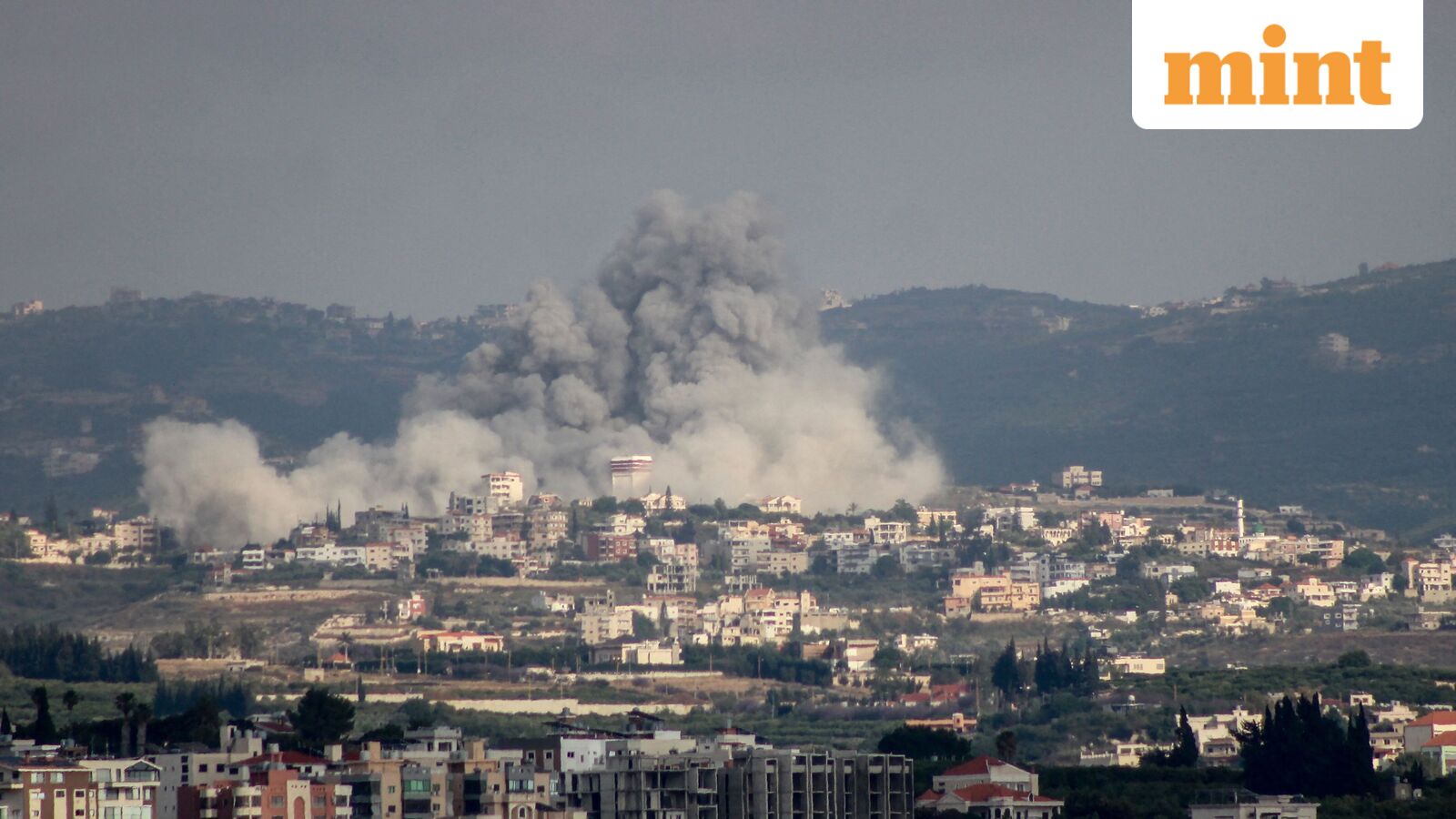
The Israeli military on Wednesday ordered residents across southern Lebanon to evacuate, the first such directive since a ceasefire took effect on April 17. The announcement, which came on the Eid al-Adha holiday, signals that the fragile truce between Israel and Hezbollah has effectively collapsed. Israeli troops have crossed the Litani River and are advancing toward Nabatiyeh, while strikes in the southwestern region have intensified in recent days.
The evacuation order escalates a conflict that began on March 2, days after the U.S. and Israel launched a joint operation targeting Iran. Hezbollah, an Iran-backed militant group, responded by firing rockets into northern Israel. Since then, more than 1 million people in Lebanon have been displaced, and over 3,200 have been killed in Israeli strikes, according to Beirut's health ministry.
The Evacuation Order and Litani Crossing
Ceasefire Breaks Down
The April 17 ceasefire had reduced the intensity of strikes, particularly avoiding strikes in Beirut or its vicinity. That restraint is now gone. The Israeli military stated it will “work with extreme force” against Hezbollah, and Prime Minister Benjamin Netanyahu announced the military will expand the scope of attacks. Since the beginning of this week, the Israeli military has struck 550 targets, a sharp increase in tempo.
Ground Operation Expands
The crossing of the Litani River is a key tactical shift. Hezbollah has claimed responsibility for attacks on Israeli troops in southern Lebanon and on border villages inside Israel. The group has also used exploding drones, a new threat that Israeli forces are struggling to counter. Clashes have intensified in the town of Zawtar al-Sharqieh along the riverbank. Roads from the southwest are jammed with cars fleeing north toward Beirut and makeshift shelters.
Exposure: Energy, Safe Havens, and Defense
Oil and Energy Markets
Southern Lebanon is not itself a producing region, the conflict sits atop the broader Iran-Israel proxy war. Iran has made an end to the war in Lebanon a condition for its ongoing talks with Washington over a nuclear deal. Any perception that the U.S. cannot restrain Israel increases the risk of a wider confrontation involving the Strait of Hormuz or Iranian energy infrastructure. Crude oil prices could spike on supply-disruption premiums, particularly if Iran's proxies target shipping in the eastern Mediterranean.
Safe-Haven Flows
Gold and the U.S. dollar typically attract inflows during escalations of this kind. The evacuation order adds a civilian-displacement dimension that raises the humanitarian and political stakes, potentially prolonging the crisis. Treasury yields may compress as investors seek duration safety.
Defense Sector Read-Through
Defense contractors with exposure to missile defense, surveillance, and drone countermeasures become direct beneficiaries. The event itself does not immediately change procurement pipelines. The read-through is thematic: prolonged Middle East conflict supports defense spending narratives for the U.S. and Israel.
Timeline and Catalysts: Washington Talks as Next Binary Event
Hezbollah has dismissed direct talks with Israel and instead supports Iran's negotiations with Washington. A round of those talks is scheduled in the coming days. Iran’s conditions include ending the war in Lebanon. This creates a two-path scenario:
- De-escalation path: A U.S.-Iran framework emerges that includes a concrete timeline for Israeli withdrawal and Hezbollah ceasefire commitments. The evacuation order would then stall or reverse.
- Escalation path: Talks fail or are suspended. Israel advances deeper into southern Lebanon, targeting areas near the Bekaa Valley and Qaraoun Dam, Lebanon's largest reservoir, which was struck on Tuesday.
Market Assets at Risk
The following table compares key escalation parameters from the source:
Assets most directly affected:
- Crude oil futures (WTI, Brent) – risk premium expansion
- Gold futures – safe-haven bid
- U.S. Treasury 10-year note – yield compression
- Broad equity indices (S&P 500, STOXX 600) – downward pressure from uncertainty; sector rotation into defensives (utilities, health care)
For investors monitoring utilities as a geopolitical hedge, Southern Company (SO) carries an Alpha Score of 44/100 (Mixed), reflecting its exposure to rate-sensitive demand and fuel cost dynamics rather than a pure defensive play. More details on the SO stock page.
What Would Reduce the Risk
- A ceasefire reaffirmation based on the original April 17 terms, backed by U.S. and French mediation
- A diplomatic breakthrough in Washington that satisfies Iran's condition for a Lebanon ceasefire
- Hezbollah cessation of rocket and drone attacks, even if Israeli troops remain in place
What Would Make It Worse
- Israel strikes in Beirut or other densely populated areas outside the south
- Hezbollah missile attacks hitting Israeli infrastructure or population centers, triggering a full-scale Israeli ground invasion
- Iranian military involvement beyond proxies, such as IRGC deployments or missile shipments
- Regional spillover: Hezbollah-aligned militia attacks on U.S. assets in Iraq or Syria, or retaliatory strikes on Gulf oil infrastructure
The evacuation order moves the conflict from localized skirmishes to an active displacement crisis. That changes the incentive structure for all parties: the longer civilians are on the road, the harder it becomes for leaders to de-escalate without appearing weak. Markets should watch the Washington talks as the next binary catalyst. If those fail, escalation is the default path. For broader context on how geopolitical risk affects equity positioning, see our stock market analysis.