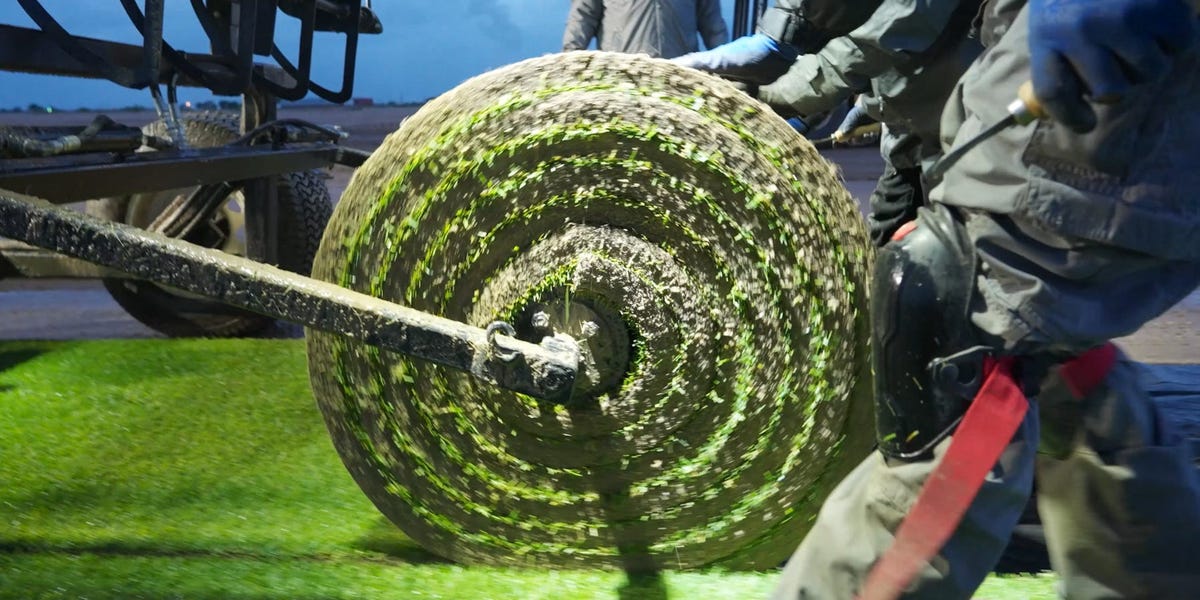
FIFA has poured millions into a turf research program at the University of Tennessee, where scientists use robotic cleats and stadium simulators to grow grass that can survive 104 World Cup matches across three countries. The 2026 tournament is the first to span 48 teams and 16 venues from Mexico City to Vancouver, each with a different climate. The grass has to look good on camera, hold up to a 39-day schedule, and arrive at each stadium without drying out.
The budget is in the low eight figures, people familiar with the project said. It covers seed genetics and soil engineering, plus refrigerated transport. Each pitch is grown in a controlled greenhouse environment before it is shipped to its venue weeks before the first match. The University of Tennessee's facility runs tests with ball-launching machines that measure surface roll and robotic cleats that replicate the wear of a full game.
World Cup fields have a history of problems. The 2014 tournament in Brazil produced patchy, discolored surfaces that players complained about. The 2015 Women's World Cup in Canada switched to artificial turf after natural grass could not be installed in time. FIFA wants to avoid a repeat. The Tennessee team is working with hybrid grass systems that weave synthetic fibers into natural turf to anchor the root zone. The same technology is used in the NFL and Premier League. The World Cup schedule is more compact.
Transportation is the weak link. Sod grown in Tennessee must cross into Canada and Mexico without losing moisture or root structure. The turf is shipped in refrigerated containers with humidity controls. Each pallet is tested for moisture before departure. A single failed shipment can force a venue to use backup sod, which may play differently.
FIFA requires each stadium to maintain a secondary practice field within walking distance. Those fields are grown from the same seed batch and kept to the same standards. The backup fields give groundskeepers a place to rotate training sessions without wearing down the game-day surface.
The tournament opens June 11, 2026, at Estadio Azteca in Mexico City. The grass for that match started as a seed in a Tennessee greenhouse 18 months earlier. Whether it survives 90 minutes of 22 players and a billion viewers watching is the test the lab cannot fully simulate.