Fervo Energy Jumps 8% on Nvidia Digital Twin Deal
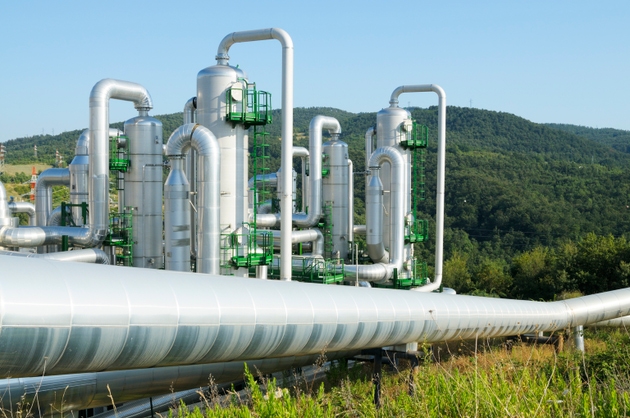
Fervo Energy jumps 8% pre-market on a partnership with Nvidia and PNNL to build a digital twin for enhanced geothermal systems. The EGS-Twin platform aims to cut drilling risk and speed project finance.
Fervo Energy (FRVO) shares rose 8.3% in pre-market trading Monday after the company announced a partnership with Nvidia (NVDA) and Pacific Northwest National Laboratory to build a digital twin platform for enhanced geothermal systems, or EGS. The platform, called EGS-Twin, will use Nvidia's computing hardware and PNNL's subsurface modeling to simulate geothermal reservoirs in real time.
A digital twin is a virtual replica of a physical system. In geothermal, it models the complex underground fractures, temperatures, and fluid flows that determine how much heat can be extracted. Operators can test drilling strategies and injection plans without touching a real well. That cuts both cost and risk, especially in enhanced systems where rock is deliberately fractured to create a reservoir.
Fervo has pushed ahead in EGS, drilling horizontal wells similar to oil and gas methods. The company's first commercial project in Utah started delivering power last year. The new digital twin aims to speed up that process by giving engineers a tool to predict how the reservoir behaves months before drilling starts.
Nvidia's role is the compute layer. Its GPU clusters handle the massive simulation workloads needed to model subsurface physics at high resolution. Nvidia has been pushing into industrial digital twins across energy, manufacturing, and climate science. Its NVDA stock page shows the stock is up 2.95% today as the sector reacts to the announcement. Nvidia's CUDA architecture enables the parallel processing needed for real-time simulation.
The partnership also brings in one of the U.S. Department of Energy's national labs, giving the project access to decades of geothermal research. PNNL developed a high-fidelity code called FEHM that simulates heat and fluid transport in fractured rock. It is considered one of the most advanced codes for geothermal, historically limited by compute power. Running it on Nvidia GPUs should remove that bottleneck.
For the geothermal sector, this type of AI-driven modeling addresses a long-standing problem. Drilling a single deep well can cost $5 million to $10 million. Without a reliable model, operators risk hitting low-permeability zones that make an EGS well uneconomical. A digital twin that accurately predicts reservoir behavior would make project finance more feasible and open up resources outside traditional hot spots.
Geothermal provides baseload power, unlike solar and wind. The Department of Energy has a goal to cut the cost of EGS electricity by 90% by 2035. Digital twins are a key tool toward that target.
Fervo did not disclose the financial terms. The initial work will focus on building the twin for the company's Cape Station project in Beaver County, Utah, according to a statement. That site is expected to produce 400 megawatts of electricity under its full buildout.
Fervo shares, listed on the Nasdaq under FRVO, were active pre-market. The stock has risen roughly 60% over the past year on expectations that EGS technology would reach commercial scale.
The two-year research and development phase will produce a prototype to be tested on Fervo's Utah site. If successful, the company plans to commercialize the twin for use by other geothermal developers.
Drafted by a large language model from the source reporting linked above, then screened by automated publishing checks. It is not read by a journalist before publication. Some articles cite our Alpha Score. Verify prices and figures against the original source. Educational coverage, not personalized advice.