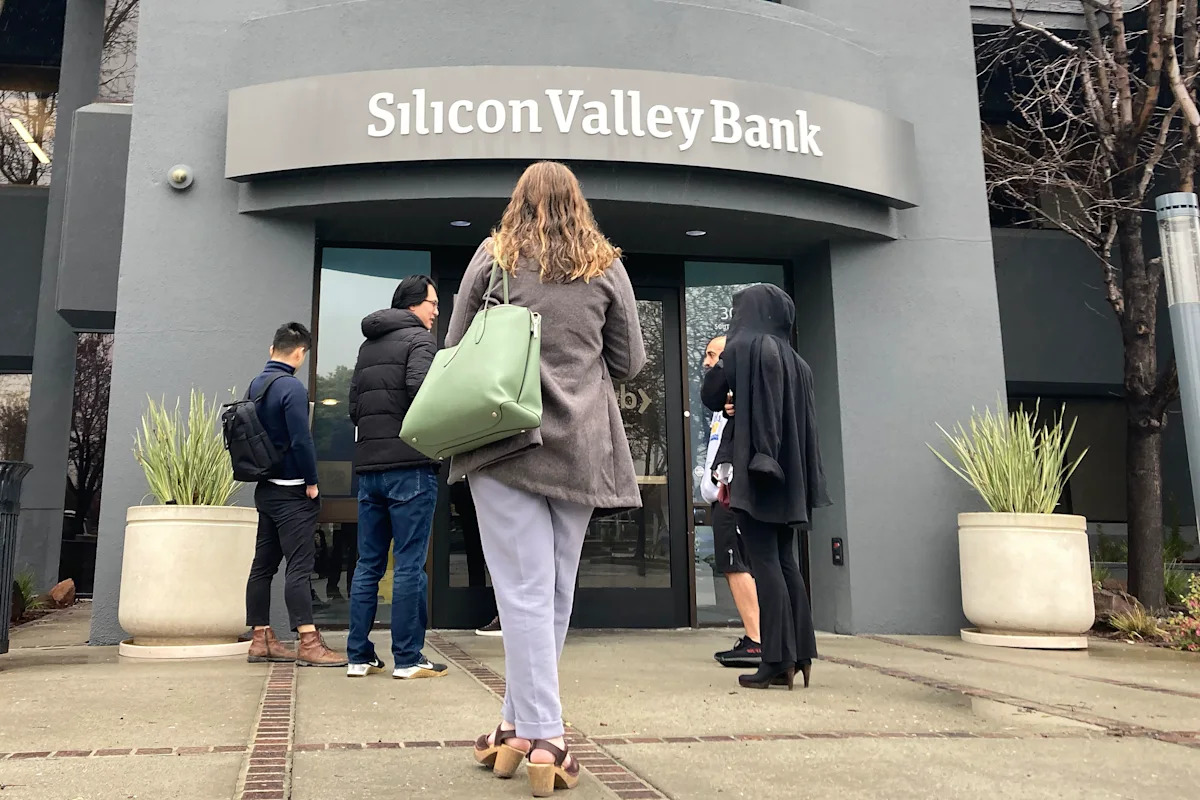
An independent review commissioned by Fed Vice Chair Michelle Bowman found regulators knew of Silicon Valley Bank's vulnerabilities a year before its collapse but did not act.
An independent report commissioned by Federal Reserve Vice Chair of Supervision Michelle Bowman finds that regulators identified Silicon Valley Bank's vulnerabilities a full year before its collapse but chose inaction for fear of being wrong.
The Starling Advisory Group review, released Monday, described a culture of risk aversion at the Fed. Supervisory staff spotted SVB's fatal vulnerabilities as early as March 2022, a full year before its collapse. They chose inaction over the professional risk of making an imperfect call.
SVB collapsed on March 10, 2023, after a run on deposits forced federal regulators to seize the institution. The bank primarily served tech startups and venture capital firms. Using deposits it did not lend out, SVB bought billions of dollars in long-term US Treasury bonds and mortgage-backed securities when interest rates were near zero, locking in very low yields.
The Fed raised rates aggressively through 2022 and into 2023. SVB was sitting on massive unrealized losses in its bond holdings. Clients started pulling money out to cover their own expenses. The bank was forced to sell its bond portfolio at a loss to meet redemptions and said it would raise capital. That spooked depositors.
The report found supervisory staff knew or should have known about these vulnerabilities as early as March 2022. Despite that, they did not take prompt action to require SVB to reduce its interest rate risk or concentration of vulnerabilities.
The report described a supervisory environment where the perceived cost of acting incorrectly outweighed the cost of not acting at all. Staffers lacked clear guidelines on when to escalate concerns. A lack of clarity regarding decision rights compounded this culture: supervisory staff were unsure who could provide certainty that a particular action was correct. The report recommended clearer decision rights and a shift in accountability.
"We are addressing the culture problem head-on," Bowman said. "The review revealed that too many staff members feel it is personally safer to take no action than to risk taking the wrong action."
Going forward, Bowman said examination teams will submit monthly reports directly to the heads of supervision and their respective reserve banks. These reports will identify any supervisory issue or concern in which an examiner was uncertain.
The review also addressed a common narrative about SVB's failure. Many have asserted that social media fueled the run on the bank. The independent review found that none of these accounts made any effort to substantiate that claim.
At Starling's request, Charles River Associates analyzed the claim. It concluded that social media did not trigger the bank run at SVB, nor was there evidence that social media accelerated the run. The analysis determined that 96% of the social media chatter regarding the run appeared after SVB's failure was inevitable. The finding pushes back against a widely repeated story that Twitter and other platforms caused a modern bank run, pointing instead to traditional deposit runs driven by fundamental solvency concerns.
"The American people deserve a banking system that is safe, sound, and resilient," Bowman said. "They deserve supervisors who constantly assess the banking system to identify vulnerabilities and have the will to act promptly and decisively when material vulnerabilities are identified. And they deserve leaders who are unafraid to examine their own shortcomings with the same rigor we apply to the institutions we supervise."
Drafted by a large language model from the source reporting linked above, then screened by automated publishing checks. It is not read by a journalist before publication. Some articles cite our Alpha Score. Verify prices and figures against the original source. Educational coverage, not personalized advice.