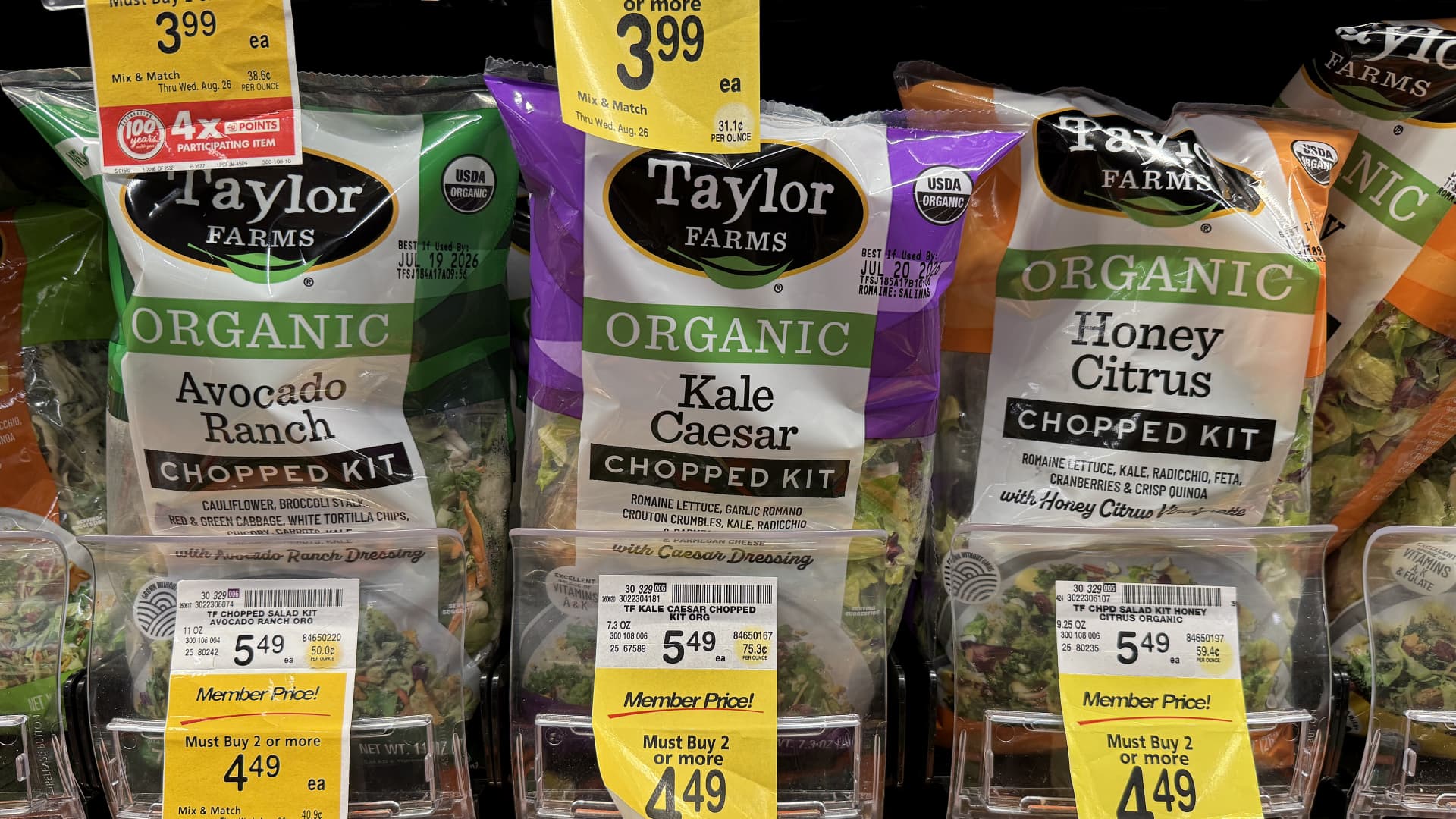
The Food and Drug Administration said Sunday a test that pointed to a sample of iceberg lettuce from Taylor Farms de Mexico as carrying the cyclospora parasite was a false positive. The next day, the agency clarified: that result does not change its conclusion that shredded iceberg lettuce from central Mexico supplied by Taylor Farms caused the outbreak that has sickened more than 1,600 people.
The false positive applied to one specific shipment of lettuce from the company. The FDA said in a statement Monday that its "traceback investigation and outbreak data continue to converge on shredded iceberg lettuce from Taylor Farms locations in central Mexico." The agency is still telling Americans not to eat recalled iceberg lettuce.
Former FDA Commissioner Dr. Scott Gottlieb told CNBC the test result does not clear Taylor Farms of its link to the outbreak. The recall, he said, covered a product imported weeks ago, separate from the lettuce that tested positive. Because cyclospora has an incubation period of up to two weeks and lettuce has a short shelf life, testing multiple shipments from the same farm is necessary, he added.
Dr. Norman Beatty, an associate professor of medicine at the University of Florida College of Medicine, said the outbreak may have already spread wider. "We may find that this current outbreak may have led to additional outbreaks because of the nature of this parasite," Beatty told CNBC. He pointed to over 30 states where the parasite has been isolated, suggesting smaller outbreaks could be occurring in other regions.
The confusion has rattled the food industry. Frank Yiannas, former deputy commissioner of food policy and response at the FDA, said the reversal "may add further confusion to what has already been a complex situation for consumers."
Taco Bell, a unit of Yum Brands, said it removed suspected lettuce from its locations within 72 hours and adjusted its supply chain. The company said it is "confident" consumers can eat safely at its restaurants. "Clearly, this is a nationwide industry-wide issue, not a Taco Bell-specific issue," Taco Bell said in a statement. It urged other industry members to take similar action.
Foot traffic at Taco Bell fell about 19% on Friday compared with the day-of-the-week average so far this year, according to data from Placer.ai. Other chains that sell lettuce, including Chopt, Panera Bread and Chipotle, also saw declines.
Walmart said Monday it proactively removed four bagged salad kit products under its Marketside brand, supplied by Taylor Farms, from stores across 27 states. The company said there were no confirmed illnesses associated with those products.
Shares of Yum Brands are down nearly 9% in the last five days. Restaurant analysts previously told CNBC they did not expect a long-term financial hit for companies linked to the outbreak.
Taylor Farms said Monday it would continue its voluntary recall of implicated iceberg lettuce from central Mexico. The Michigan Department of Health and Human Services, where the outbreak has grown quickly, continues to recommend that people buy whole heads of lettuce rather than pre-washed or bagged salad kits. The department said that based on interviews with more than 2,000 infected patients, many did not report eating lettuce at a restaurant, though they frequently said they ate leafy greens in some setting.
The National Restaurant Association said it is taking food safety seriously. CEO Michelle Korsmo wrote on LinkedIn that "the Food Code requires that every restaurant must have a manager that is food safety certified on every shift." She added that the association will continue to support public health officials.
The FDA said it will keep working with federal and state partners to investigate the multistate outbreak and ensure implicated products are off the market. The agency has not yet responded to questions about whether additional ingredients or suppliers are under scrutiny.