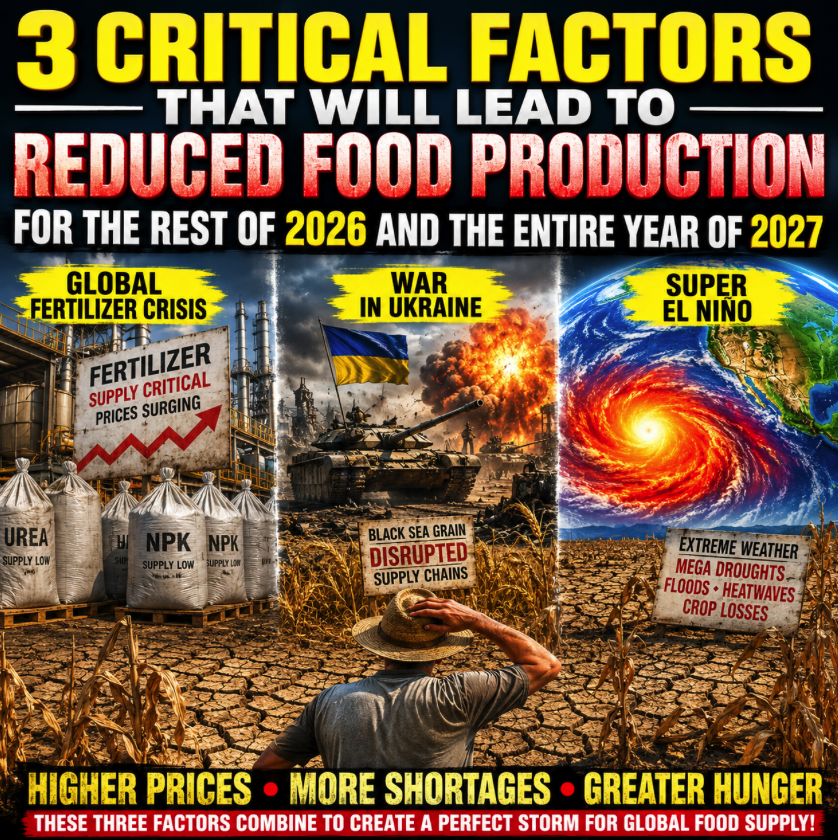
FAO warns fertilizer disruptions from the Strait of Hormuz will reduce crop yields and tighten food supplies through 2027, as Ukraine's grain exports collapse and a record Super El Niño looms.
The global food system is entering a period of strain that the United Nations says will extend well beyond the next harvest. The Director-General of the Food and Agriculture Organization, Qu Dongyu, told a ministerial meeting in Rome that disruptions to fertilizer shipments through the Strait of Hormuz will cut yields and tighten supplies through the second half of 2026 and into 2027.
“We meet at a moment of profound strain,” Qu said. “This is not only a geopolitical crisis, but also a disruption at the core of the global agrifood system.”
The warning lands against a backdrop of multiple simultaneous shocks. The war with Iran has choked fertilizer flows from the Persian Gulf just as northern-hemisphere farmers needed them most. Separately, the conflict in Eastern Europe has nearly paralyzed Ukraine's grain exports. Russian strikes on Odesa ports have reduced total grain shipments from Ukraine to about 500,000 tons since the start of August, roughly 20% of the country's potential export volume. The Greater Odesa ports typically handle about 90% of Ukraine's grain.
Asian processors that booked between 2 million and 2.5 million tons of Black Sea wheat for July-through-September delivery – representing 30% to 50% of regional import demand – are now scrambling. Egypt, the world's largest wheat importer, sourced more than 82% of its first-half imports from Russia and Ukraine. Indonesia contracted for roughly 600,000 tons from the region for the same period.
“The cargoes were due to start arriving from mid-August, but many ships could not go in to load,” one Singapore-based trader who sells Black Sea wheat to Asian millers said. “Buyers are thinking about replacing some of these cargoes with other origins, such as Australia, North America and Argentina.”
Agriculture analyst Noel Fryer told CNBC the situation amounts to a convergence of crop threats. “We’ve had crops decimated by weather in Europe and the U.S.,” Fryer said. “A searingly hot summer in Europe has eroded grazing potential, with no hay and grass for cattle. A possible result of that is significant herd liquidation.” He also pointed to the fertilizer issue from the Iran conflict, which he said is “still there and if anything getting worse.” U.S. corn yields, he added, “look concerning after a wet spring and less fertilizer use, and could push prices up.”
The U.S. wheat harvest is shaping up as one of the smallest in modern history. The Department of Agriculture estimates total planted wheat area at 42.7 million acres, down 6% from a year ago and 1 million acres below the agency's own March forecast. The harvested area is projected at roughly 32 million acres, which would be the lowest since 1877, according to USDA data.
A strengthening Super El Niño is expected to compound the problems. The National Oceanic and Atmospheric Administration now puts the odds at nearly 70% that the current event will be the strongest on record, a sharp upward revision from earlier forecasts. “We’re already at record-breaking or record-tying territory now, and we’re expected to skyrocket,” University of California climate scientist Daniel Swain said in a briefing.
The weather pattern typically brings heavy rains and flooding to some regions and drought to others, threatening crops already stressed by heat and reduced fertilizer application. NOAA's intensity records date back to 1950.
Qu's speech at the MED9++ ministerial meeting, co-chaired by FAO, Italy and Croatia, framed the crisis as systemic rather than temporary. “This is not only a geopolitical crisis, but also a disruption at the core of the global agrifood system,” he said.
The question for import-dependent countries from North Africa to Southeast Asia is whether alternative suppliers in Australia, North America, and Argentina can fill the gap before the next planting cycle. The FAO's projection suggests they cannot fully compensate.
Prepared with AlphaScala editorial tooling from the source reporting linked above. Indexable analysis may include a cited Alpha Score value. Publishing checks screen each story before release. Educational coverage, not personalized advice.