Macro● Neutral
EU to Cut Growth Forecast, Raise Inflation on Iran War Shock
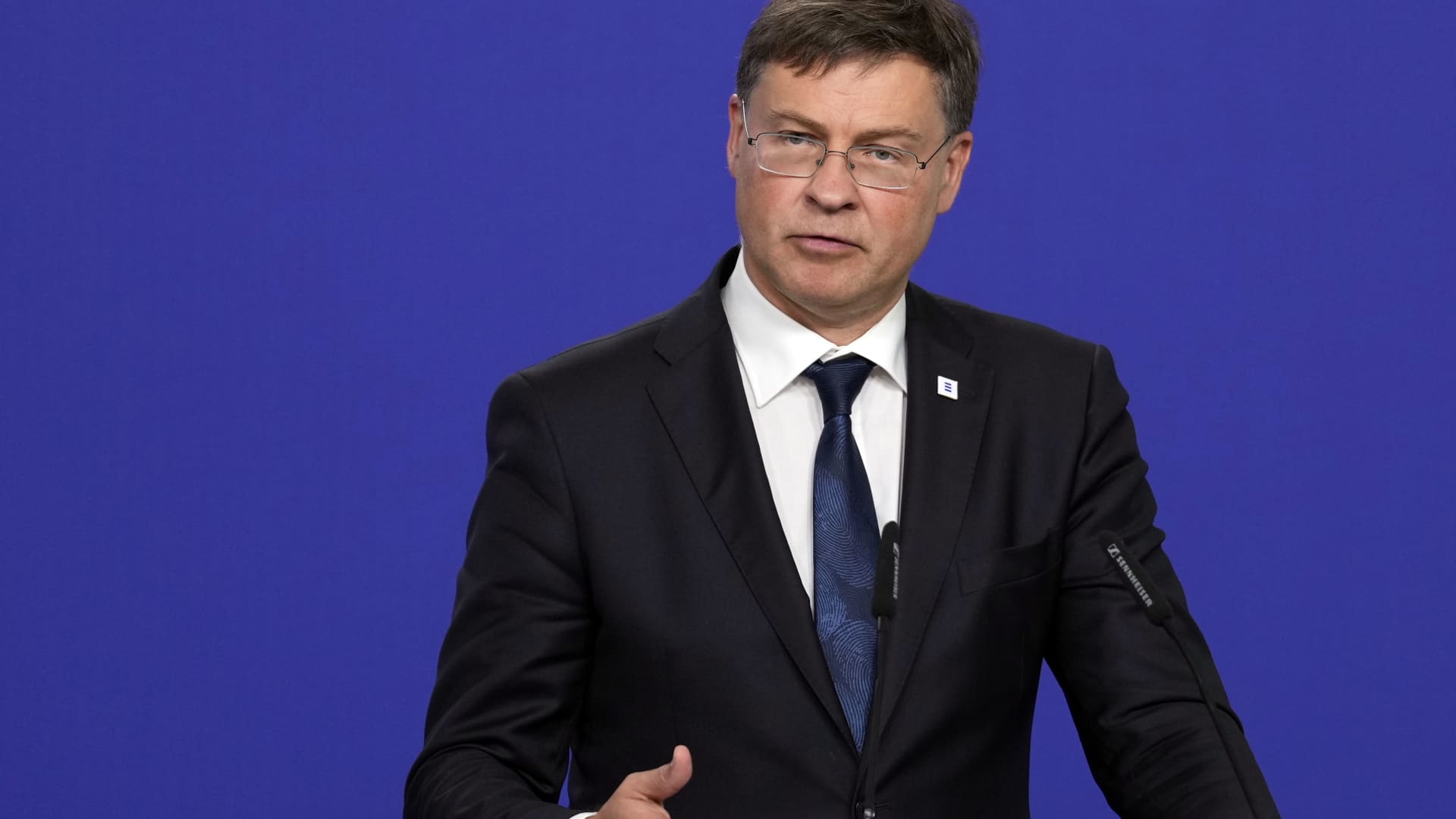
EU economy commissioner confirms stagflationary shock from Iran war. Spring forecast to cut growth and raise inflation. Oil above $100, IEA warns of record inventory depletion. Next catalyst: forecast release later this week.
Continue with
The European Union will downgrade its growth forecast and raise its inflation projection this week, directly citing the stagflationary shock from the Iran war. Valdis Dombrovskis, European Commissioner for Economy and Productivity, told CNBC that the spring forecast will reflect lower economic growth and higher inflation. The admission comes as oil prices hold above $100 a barrel with the Strait of Hormuz closed and global inventories depleting at a record pace.
The Stagflationary Signal from Brussels
The simple read is that the EU is acknowledging a worse macro outlook. The better market read is that this forecast formalizes a policy bind. Dombrovskis explicitly said the margin for policy action is "more limited now," leaving little room for the broad-based fiscal response seen during the pandemic. The EU is instead urging temporary and targeted support that does not sustain high demand for fossil fuels. Traders should watch for the exact numbers in the spring forecast later this week. A deeper cut to growth and a higher inflation path would reinforce the stagflation narrative and pressure European risk assets.
Oil Transmission: Strait of Hormuz and Inventory Depletion
The transmission mechanism runs through oil. The Strait of Hormuz closure has kept crude above $100. The more consequential factor is inventory depletion. The International Energy Agency warned that global oil inventories are shrinking at a record pace. Rapidly shrinking buffers may herald future price spikes. Strategists have flagged that stockpiles may not recover until December 2027. Physical shortages could hit Europe by the end of this month. The EU is releasing strategic reserves. Dombrovskis described that as "ongoing" and acknowledged concerns about supply bottlenecks, particularly in innovation fuels.