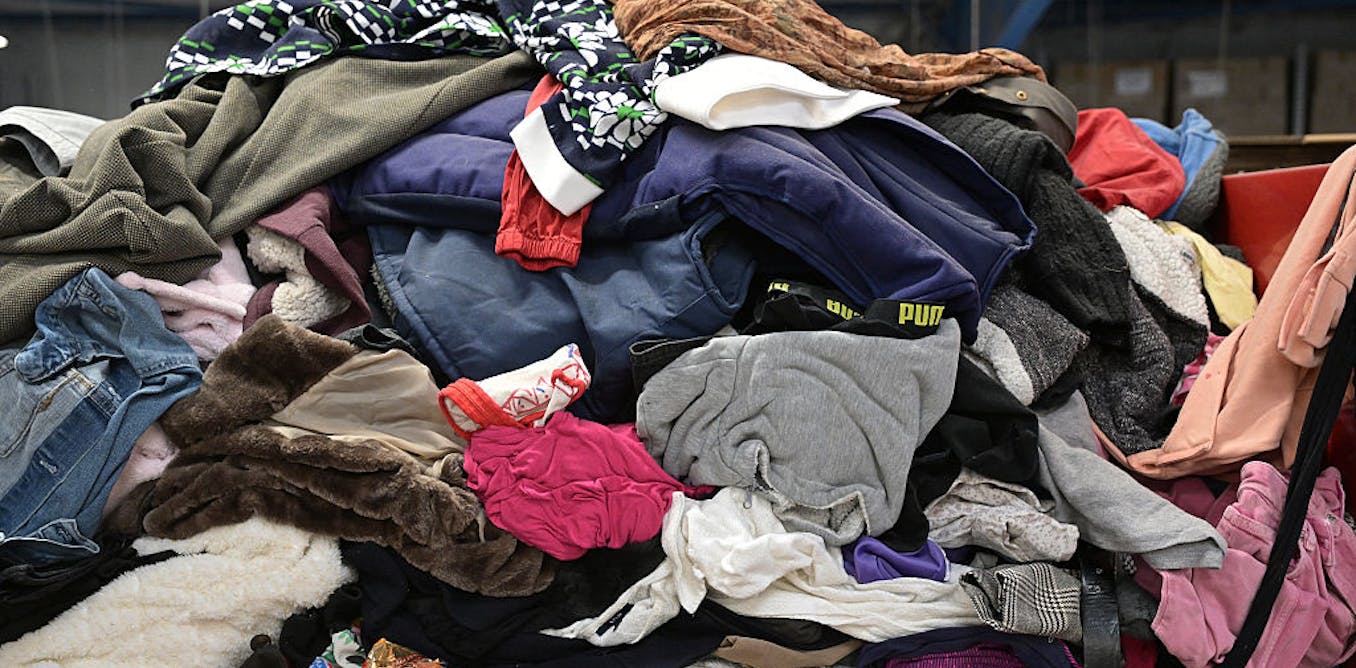
Rules now in force across the European Union ban the destruction of unsold clothing. Retailers must route surplus stock toward resale or donation and publish the volumes on their websites. Destruction is reserved for items that are damaged or unsafe. Large companies face the obligations immediately.
The regulation, adopted in 2024 to make clothing sold in the EU more durable and recyclable, lands on a sector built around surplus. A meta-analysis of European studies put the average share of unsold clothing at 21% of all garments placed on the market. The EU separately estimates that 4% to 9% of new clothing is destroyed.
Online retail distorts the numbers further. Return rates run from 10% to 60% for some clothing categories, pushed up by bracketing, where shoppers order several sizes of the same garment and send back the ones that do not fit. Returned clothing counts as unsold stock under the new rules, so the returns channel falls under the same ban.
Fast fashion produces the surplus at scale. H&M released 4,400 new styles in 2022; Zara's parent Inditex put 6,850 into its own cycle. Shein adds up to 10,000 new designs on peak days, according to Greenpeace. Each new style creates a new inventory position, and the lines that miss accumulate in warehouses.
Surplus is priced into fast fashion's economics from the start. Brands produce ahead of demand, then discount or destroy what does not clear. The EU rule removes the last option, and it applies to luxury labels the same way it applies to fast fashion. Burberry destroyed £90 million (A$170 million) worth of products over five years, the company disclosed.
Fast Fashion's Disclosure Problem
H&M (HM-B.ST) and Inditex (ITX.MC) now have to publish unsold volumes alongside their annual reporting. The disclosures create a dataset that did not exist before, letting investors compare which brands produce closest to demand. Waste moves from an off-book disposal cost to a reported number the market can see. Shein, privately held with no public reporting requirement, still has to respect the destruction ban in its EU operations. Burberry (BRBY.L) faces the disclosure rule as a large retailer too.
The regulation does not tell brands how to clear the surplus, only that they cannot destroy it. Selling through at a discount and donating are the immediate routes. Producing less is the structural one, and it has a working example in the sector. Uniqlo, owned by Japan's Fast Retailing, raised profit 70% over seven years while producing two collections annually and carrying half its range over from the previous season, a recent industry report noted. The profit growth did not require constant style turnover.
Australia's Uncounted Surplus
Australia has no equivalent disclosure requirement and no reliable estimate of its own unsold stock; companies have never had to declare the volumes. The country imported 1.55 billion units of clothing in 2024, counting only large shipments to retailers, not individual consumer purchases or smaller restocking by brands. One industry estimate puts at least 3% of imports in the unsold category: 47 million units, or 11,700 tonnes, with no data on how much is destroyed.
Applying the European destruction rates produces a larger number. If 4% to 9% of unsold clothing is destroyed annually, the Australian equivalent runs to 62 million to 132 million units a year, or 15,500 to 33,000 tonnes. Either way, tens of thousands of tonnes of unsold stock move through the local system each year, carrying the materials and energy that went into making and shipping them.
Local channels for the surplus already exist. Thread Together works with 2,000 Australian brands to distribute unsold clothing to people in need. The Seamless scheme, built to divert clothing from landfill, has recommended earlier forecasting and closer collaboration between brands so stock is dealt with before it needs discounting or donation.
The gap is regulatory. The EU rule applies to every brand in the market, on the view that no single fashion company changes its practices alone. Australia's equivalent tool is product stewardship, where businesses take responsibility for a product across its entire lifecycle, and extending it to retail would keep new unsold clothing out of landfill.
The EU made its rule binding for large retailers immediately. Medium-sized retailers have until 2030 to fall under the same obligations.