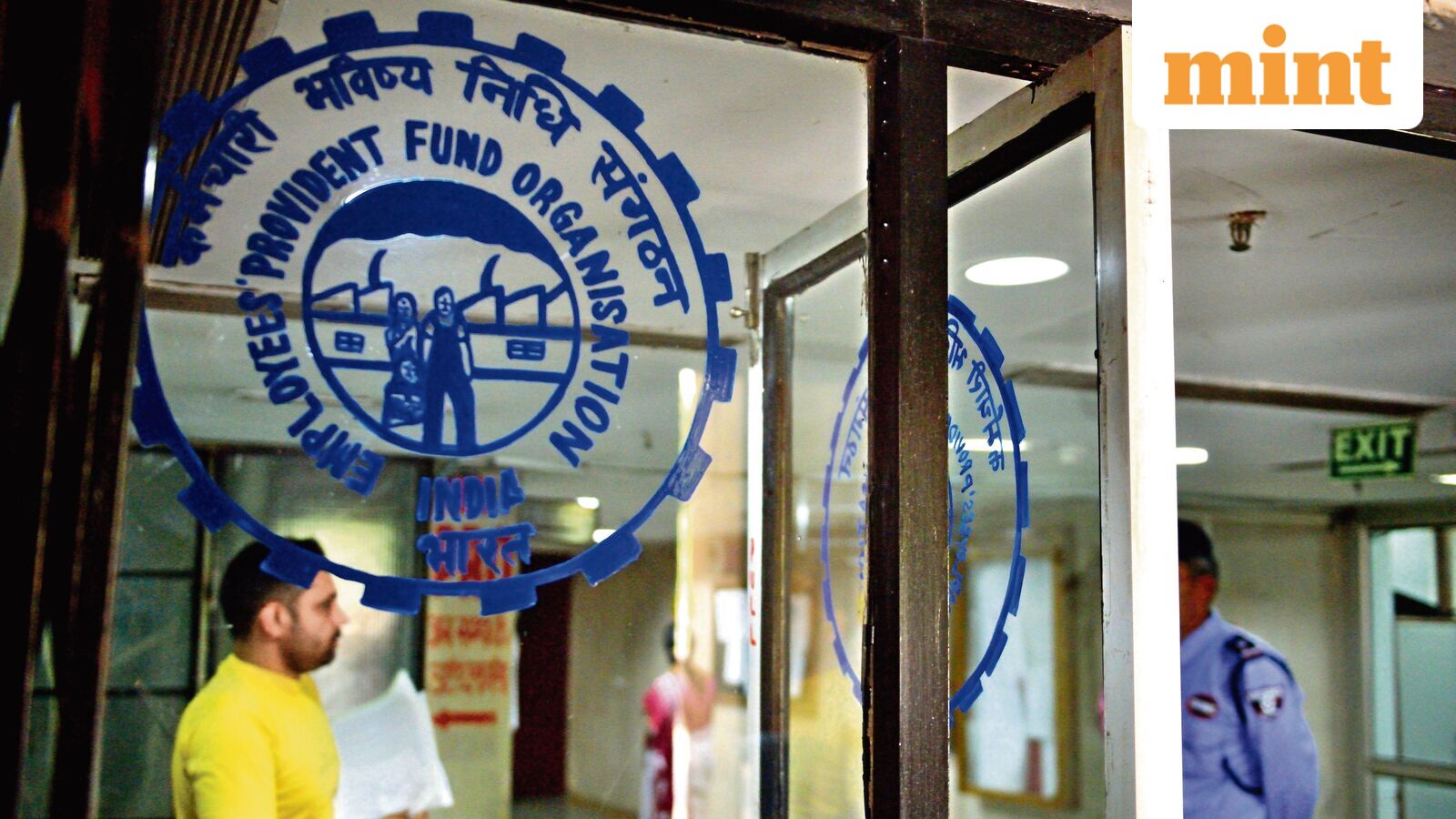
The EPFO's E-PRAAPTI portal will allow users to reactivate dormant accounts via Aadhaar. This shift could unlock significant liquidity for 290 million members.
The Employees’ Provident Fund Organisation (EPFO) is preparing to launch E-PRAAPTI, a digital portal designed to consolidate and reactivate dormant provident fund accounts. By shifting from an employer-dependent administrative model to a member-led, Aadhaar-authenticated system, the initiative aims to bridge the gap between millions of legacy accounts and their rightful owners. With over 280 million EPF accounts currently in the system, the accumulation of inactive balances—often stemming from historical job transitions or incomplete KYC—has become a structural friction point for the organization.
The E-PRAAPTI portal will operate in a phased rollout, prioritizing the integration of legacy member IDs with active Universal Account Numbers (UANs). In the initial phase, subscribers will utilize Aadhaar-based authentication to verify their identity and locate historical accounts. Once a match is confirmed, the portal allows users to update KYC details and link these legacy balances to their current UAN. This bypasses the traditional requirement for employer intervention, which has historically been the primary bottleneck for employees seeking to reconcile old employment records.
Future phases of the platform are expected to introduce more sophisticated retrieval mechanisms, potentially allowing for account identification even in cases where legacy details are incomplete or missing. This is a critical evolution for the EPFO, which manages a massive database of 290 million members, though only 69 million are currently contributing on a monthly basis. The delta between these two figures represents the scale of the dormant account challenge that E-PRAAPTI is intended to resolve.
The activation of these dormant accounts carries significant implications for household liquidity. EPFO data shows a clear trend toward higher digital engagement, with 83.1 million claims settled in FY26, up from 60.1 million in FY25. Notably, 55.1 million of these were advance withdrawals, and over 71% of total claims were processed through automated systems. The introduction of E-PRAAPTI is likely to accelerate this trend by providing a frictionless path to accessing previously inaccessible funds.
While this improves financial flexibility for individual households, it introduces a secondary risk regarding long-term retirement adequacy. If the ease of access provided by the new portal encourages premature withdrawals of legacy savings, the cumulative effect could be a reduction in the long-term capital base intended for retirement. For those interested in broader stock market analysis, the shift toward higher liquidity in the hands of retail savers often correlates with changes in consumption patterns and personal investment behavior, though the primary impact here remains the structural cleanup of the EPFO’s balance sheet.
Despite the clear benefits of a member-led system, the success of E-PRAAPTI hinges on the integrity of legacy data. EPFO records are frequently fragmented, suffering from inconsistencies in name spelling, date of birth, and employment history. The effectiveness of the Aadhaar-based matching process will be tested by these data discrepancies. If the system cannot accurately resolve these mismatches, the portal may face significant operational bottlenecks during the initial rollout.
As Abhash Kumar noted, the move is a significant step toward improving access to retirement savings and strengthening financial inclusion. However, the transition from a system where employers act as the primary gatekeepers to one where individuals have direct control requires a robust digital infrastructure capable of handling high-volume, real-time verification. The shift is not merely an administrative upgrade; it is a fundamental change in how the EPFO manages its liability to its 290 million members.
For subscribers and observers, the key metric to monitor will be the rate of successful account linkages versus the volume of withdrawal requests. A surge in withdrawals following the portal's launch would confirm the hypothesis that many users view these dormant accounts as a source of immediate liquidity rather than long-term retirement capital. Conversely, if the portal successfully facilitates the consolidation of accounts into active UANs without immediate liquidation, it will be viewed as a successful modernization of retirement savings management.
Ultimately, the E-PRAAPTI portal represents a shift toward a more transparent, user-centric model. By reducing the procedural friction that has kept millions of accounts in a state of dormancy, the EPFO is effectively unlocking a substantial volume of capital. Whether this capital remains invested for the long term or enters the economy as immediate consumption will depend on the behavior of the millions of members who will now find it easier to access their long-pending balances. The success of this transition will be measured by the organization's ability to maintain data accuracy while scaling the platform to accommodate the vast, inactive segment of its membership base.
AI-drafted from named sources and checked against AlphaScala publishing rules before release. Direct quotes must match source text, low-information tables are removed, and thinner or higher-risk stories can be held for manual review.