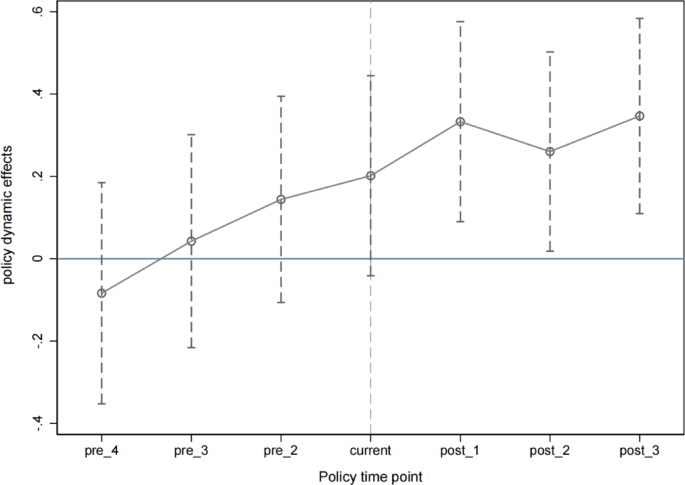
The intersection of environmental policy and corporate productivity has shifted from a narrative of compliance costs to one of structural transformation. Empirical analysis of A-share listed companies between 2011 and 2022 suggests that the implementation of the 2015 Environmental Protection Law acted as a primary driver for the adoption of new quality productive forces within heavily polluting sectors. Rather than acting as a drag on output, these regulations have forced firms to pivot toward technological innovation and improved capital allocation.
Mechanisms of Industrial Transformation
The transmission mechanism through which environmental regulation influences corporate behavior relies on two specific channels: increased investment in research and development and expanded access to financing. Firms facing stricter environmental mandates are compelled to modernize their production processes, which necessitates higher levels of technological investment. This shift is particularly pronounced in non-state-owned enterprises and firms with robust cash flow positions, as these entities possess the internal liquidity required to absorb the initial costs of green technology adoption.
By incentivizing firms to move away from legacy, high-emission production methods, the regulatory framework effectively forces a reallocation of capital toward more efficient, sustainable processes. This transition aligns with the broader objective of fostering long-term economic growth while maintaining ecological standards. The data indicates that the success of this transition depends heavily on the availability of green financing, which allows firms to bridge the gap between regulatory requirements and operational modernization.
Sectoral Impact and AlphaScala Data
The impact of these regulatory shifts is not uniform across all sectors. As firms navigate the transition to more sustainable production, their internal metrics often reflect the strain of capital expenditure alongside the potential for long-term efficiency gains. AlphaScala currently tracks several firms navigating these evolving industrial requirements, including ON Semiconductor Corporation with an Alpha Score of 45/100, Amer Sports, Inc. at 47/100, and Hasbro, Inc. which remains unscored.
These scores reflect the mixed nature of current market conditions as companies balance regulatory compliance with operational performance. The ability of a firm to integrate environmental mandates into its core strategy remains a key differentiator for long-term valuation. For further context on how broader economic shifts affect industrial output, see our recent analysis on U.S. GDP Growth Accelerates to 2.0% as Structural Headwinds Persist.
Future policy adjustments will likely focus on refining the 2015 Environmental Protection Law to further incentivize green technology development. The next concrete marker for this sector will be the emergence of new funding mechanisms designed to support firms that have successfully integrated environmental preservation into their productive capacity. Monitoring the evolution of these financing channels will be essential to understanding the next phase of industrial growth and the sustainability of current productivity gains.