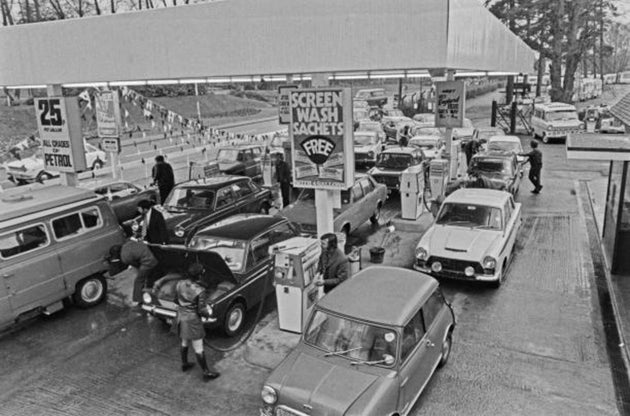
The Shadow of the 1970s
As geopolitical tensions in the Middle East escalate, crude oil prices have surged, prompting a wave of concern among market participants that the global economy may be sliding toward a period of 1970s-style stagflation—a toxic cocktail of stagnant growth and persistent inflation. The recent uptick in energy costs, tracked closely by instruments like the United States Oil Fund (USO:NYSEARCA), has reignited debates regarding the vulnerability of the current economic cycle to supply-side shocks.
Historically, the 1973 oil crisis serves as the primary cautionary tale for commodities traders and macro analysts alike. During that era, a sudden supply contraction triggered a decade-long struggle with price instability. However, while the current geopolitical landscape bears superficial resemblance to the volatility of the mid-20th century, a deeper analysis reveals an economy fundamentally better equipped to absorb energy shocks.
Structural Resilience in the Modern Era
Unlike the energy-dependent industrial base of the 1970s, today’s major economies—led by the United States—have significantly decoupled their GDP growth from crude oil consumption. The rise of renewable energy, improved energy efficiency in manufacturing, and the surge in domestic shale production have altered the fundamental supply-demand dynamics.
"The structural composition of the economy has evolved," noted market analysts reflecting on the current commodity cycle. "We are no longer as inextricably linked to oil price swings as the inflationary period of the 1970s would suggest." While the energy sector remains a critical component of the CPI (Consumer Price Index) basket, the economy’s ability to pivot toward alternative energy sources provides a buffer that did not exist fifty years ago.
What This Means for Traders
For investors and active traders, the primary concern is not necessarily a total economic collapse, but rather the persistence of interest rates at higher levels. Central banks, particularly the Federal Reserve, are closely monitoring core inflation metrics. If energy prices remain elevated, the "higher-for-longer" interest rate narrative gains further traction, which could suppress equity valuations and tighten liquidity in capital markets.
Traders should look for divergence between energy-heavy sectors and technology-driven growth sectors. While energy producers may benefit from the current supply constraints, the broader market indices, such as the SPX and IXIC, face headwinds if energy costs become a significant tax on consumer discretionary spending.
Forward-Looking Perspectives
Looking ahead, the market is pricing in a period of sustained volatility. The focus remains on whether geopolitical developments lead to concrete supply disruptions or if they remain largely contained within speculative premiums. Investors should monitor the spread between WTI and Brent crude, as well as the impact of energy prices on manufacturing PMIs.
While the ghost of the 1970s continues to haunt financial headlines, the data suggests that the global economy possesses greater institutional and structural resilience. The challenge for the coming quarters will be navigating the transition between geopolitical risk premiums and the underlying reality of demand-side growth. Traders are advised to maintain a defensive stance, focusing on portfolio diversification and hedging against sudden spikes in energy-related volatility.