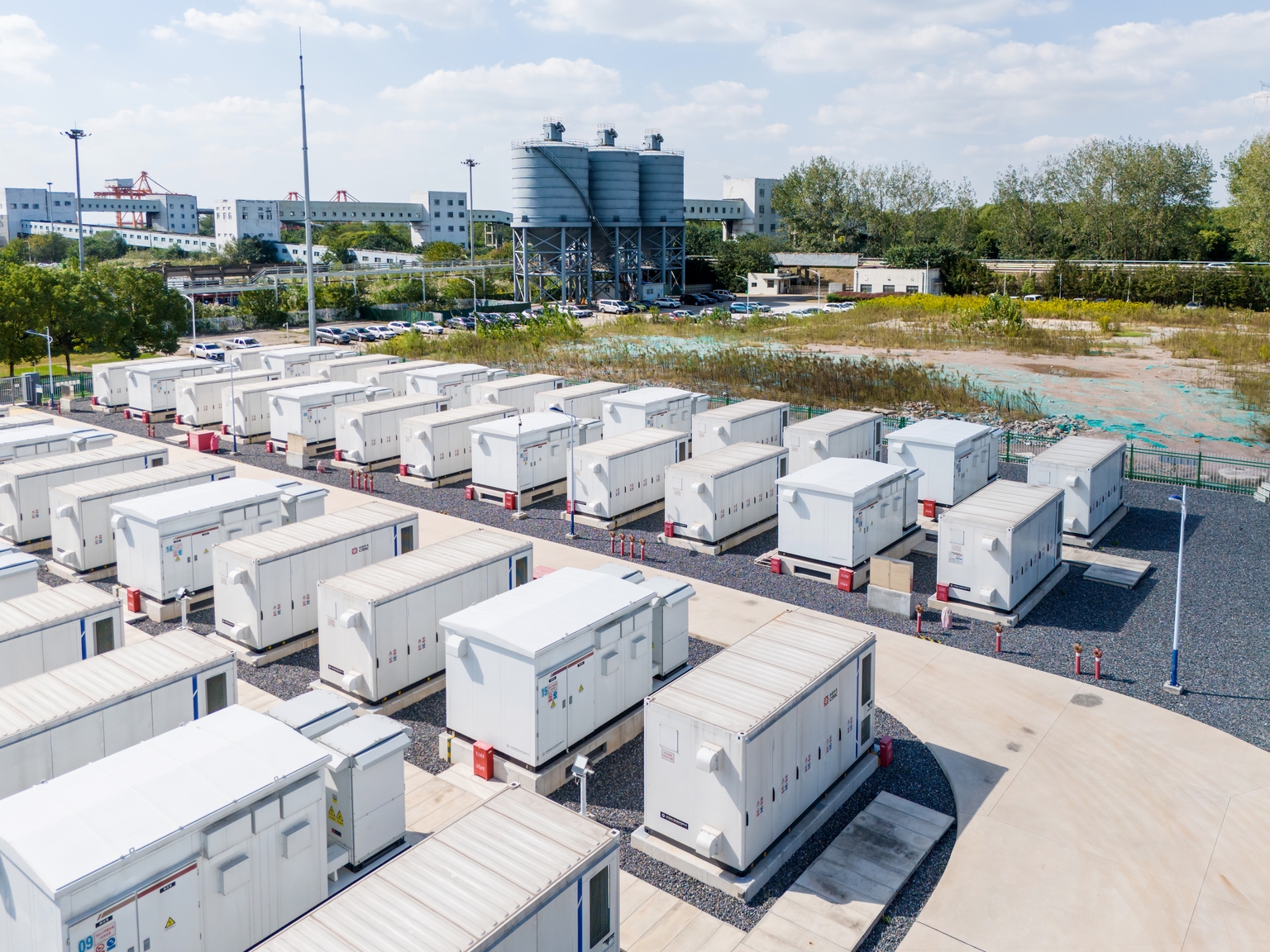
Energy Vault's backlog and EBITDA/MW gains in data-center storage offer a readthrough for the grid-scale storage sector. Sustained data-center demand is key to confirming the setup.
Energy Vault (NRGV) has been gaining traction in data-center energy storage, with an expanding backlog and rising EBITDA per megawatt of installed capacity, according to a recent analysis. The report argued the stock is a strong buy, citing explosive demand for behind-the-meter storage at data centers.
The readthrough for the broader grid-scale storage sector is straightforward. Data-center operators are signing long-term power purchase agreements and colocation deals that increasingly require on-site battery storage. That demand is not limited to lithium-ion systems. Gravity-based storage, which Energy Vault commercializes, offers a longer-duration alternative that some developers see as a fit for sites with space constraints.
For investors watching the sector, the key question is whether Energy Vault's backlog conversion will sustain the EBITDA-per-megawatt trajectory. The analysis said the company's per-megawatt profitability has increased alongside deployment scale. If that trend continues, it would validate the cost advantage of gravity storage over lithium-ion at durations beyond four hours. That would broaden the addressable market.
Other storage providers could benefit from the same tailwinds, though none offer the exact same technology. The sector remains fragmented, with different players focusing on flow batteries and compressed air. Energy Vault's closest competitors are private or divisions of larger industrial firms. No single public pure play mirrors its exposure.
What would confirm the setup? Sustained data-center capital expenditure growth and policy support for long-duration storage. The U.S. Department of Energy has funded demonstration projects for non-lithium storage. The Inflation Reduction Act's investment tax credit also applies to stand-alone storage, which improves project economics.
What would weaken the case? Execution delays, cost overruns in early commercial projects, or a shift in data-center design toward shorter-duration storage that lithium-ion can cover. Energy Vault's gravity system relies on a crane-and-block mechanism, which introduces moving parts that some engineers view as a maintenance risk. The company has not disclosed long-term reliability data for its first commercial-scale plant.
Data-center energy demand is rising, and operators are turning to on-site storage to manage peak loads and backup power. That creates a tailwind for any storage provider that can demonstrate reliability and competitive pricing. Energy Vault's next quarterly report will include backlog additions and updated EBITDA guidance.
Prepared with AlphaScala editorial tooling from the source reporting linked above. Indexable analysis may include a cited Alpha Score value. Publishing checks screen each story before release. Educational coverage, not personalized advice.