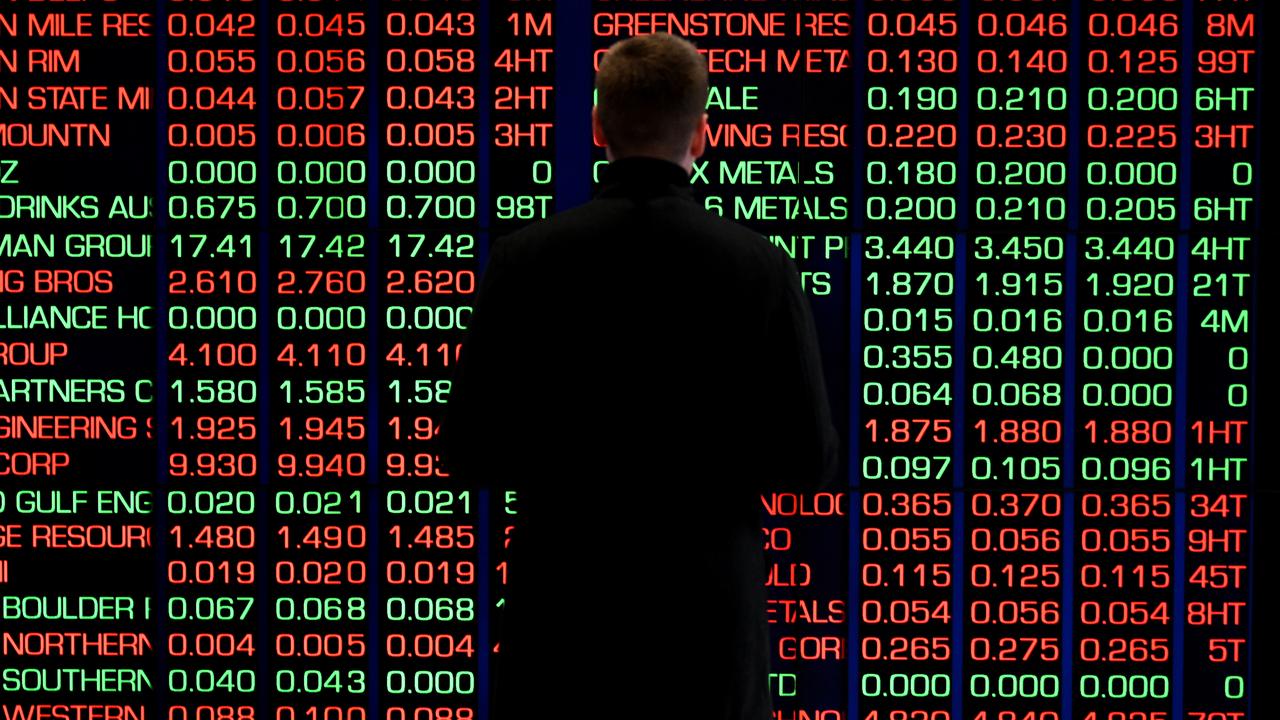
Energy Price Spikes Drive ASX Losing Streak to Eight Sessions

The Australian share market has extended its decline to an eighth consecutive session as Brent crude prices hit $US126 a barrel, signaling a shift toward a prolonged energy shock.
Alpha Score of 47 reflects weak overall profile with moderate momentum, poor value, moderate quality. Based on 3 of 4 signals — score is capped at 90 until remaining data ingests.
HASBRO, INC. currently screens as unscored on AlphaScala's scoring model.
Alpha Score of 45 reflects weak overall profile with strong momentum, poor value, poor quality, weak sentiment.
Alpha Score of 57 reflects moderate overall profile with moderate momentum, moderate value, moderate quality, moderate sentiment.
The Australian share market has extended its decline to an eighth consecutive session, marking the longest losing streak for the bourse since 2018. This sustained downward pressure follows a sharp escalation in Brent crude prices, which reached $US126 a barrel. The move reflects a broader repricing of risk as market sentiment shifts away from expectations of a rapid resolution to the conflict in the Middle East toward the reality of a prolonged energy shock.
Transmission of Energy Costs to Equity Valuations
The surge in oil prices acts as a direct tax on consumer cyclical sectors and industrial operations. When energy inputs rise rapidly, the immediate impact is a compression of margins for companies reliant on logistics, manufacturing, and discretionary spending. Investors are currently recalibrating their exposure to these sectors, moving away from companies with high variable cost structures that cannot easily pass price increases to end consumers. The persistence of this sell-off suggests that the market is pricing in a sustained period of elevated input costs rather than a temporary supply-side spike.
Structural Shifts in Consumer Cyclical Exposure
Within the consumer cyclical space, companies are facing a dual challenge of rising operational costs and potential demand destruction. As energy prices climb, household budgets tighten, leaving less room for non-essential spending. This environment creates a difficult backdrop for firms like AS stock page, which currently holds an Alpha Score of 47/100 and a Mixed label. Similarly, firms like HAS stock page must navigate these headwinds while managing supply chain costs that are inherently linked to global energy benchmarks. The current market environment forces a re-evaluation of how these firms maintain profitability when the cost of moving goods and raw materials remains at elevated levels.
Market Context and Liquidity Dynamics
Beyond individual sector performance, the broader stock market analysis indicates that liquidity is becoming more selective. The rapid shift in energy pricing has triggered volatility patterns that mirror historical periods of structural market stress. As capital flows out of equities perceived as vulnerable to energy shocks, the resulting liquidity shifts often exacerbate intraday price swings. This environment requires a focus on balance sheet resilience, as companies with high debt loads face the combined pressure of rising interest rates and higher operating expenses.
The Next Marker for Market Stability
The next critical juncture for the market will be the release of updated inflation data and central bank commentary regarding the persistence of energy-driven price pressures. Investors are looking for a signal that the current energy shock will not force a more aggressive tightening cycle. Until there is evidence of a stabilization in crude prices or a de-escalation in the underlying geopolitical conflict, the market will likely remain sensitive to any news that suggests a further supply disruption. The focus remains on whether the current price levels for Brent crude will force a revision of corporate earnings guidance in the coming quarter.
AI-drafted from named sources and checked against AlphaScala publishing rules before release. Direct quotes must match source text, low-information tables are removed, and thinner or higher-risk stories can be held for manual review.