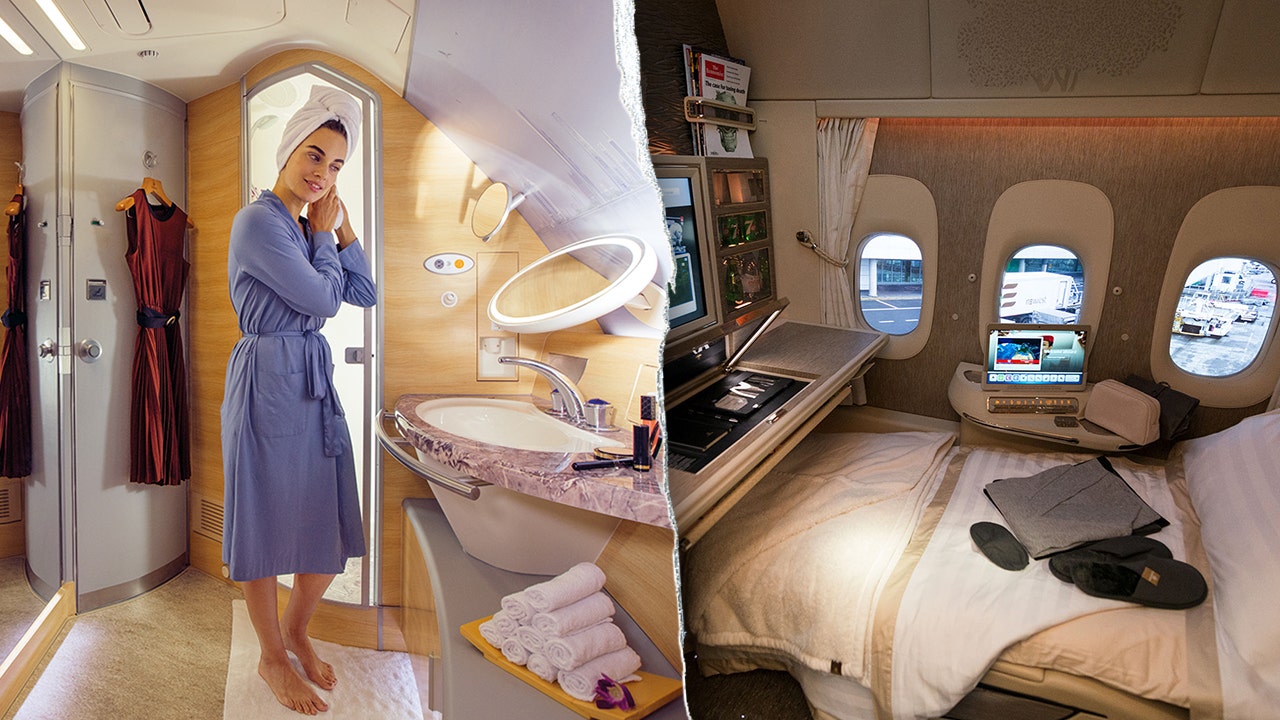
Emirates Luxury Pivot Signals Shift in Premium Cabin Competition

Emirates is exploring the integration of private bathrooms into first-class suites, a move that signals a shift toward extreme product differentiation in the long-haul aviation sector.
HASBRO, INC. currently screens as unscored on AlphaScala's scoring model.
Alpha Score of 43 reflects weak overall profile with moderate momentum, weak value, weak quality, poor sentiment.
Alpha Score of 45 reflects weak overall profile with strong momentum, poor value, poor quality, weak sentiment.
Alpha Score of 33 reflects weak overall profile with moderate momentum, poor value, poor quality, moderate sentiment.
Emirates has signaled a departure from standard premium cabin configurations by exploring the integration of private bathrooms directly into first-class suites. This development, disclosed by President Tim Clark at the 2026 Capa Airline Leader Summit, marks a shift in how long-haul carriers define the upper limits of passenger luxury. By moving beyond shared lavatory facilities, the airline is attempting to redefine the utility of the premium cabin footprint.
Redefining the Premium Cabin Footprint
The introduction of private facilities within a suite requires a significant reconfiguration of aircraft interior space. This shift suggests that the carrier is prioritizing yield-per-passenger over total seat count in its most exclusive sections. For the broader aviation sector, this move forces a re-evaluation of cabin density. If private bathrooms become a standard expectation for ultra-luxury travel, competitors may face pressure to sacrifice cabin volume to match these amenities, potentially altering the economics of long-haul routes.
This strategy aligns with broader trends in stock market analysis where premium service providers seek to insulate themselves from commodity-style pricing competition. By creating a product that is physically distinct from standard business or first-class offerings, the airline aims to capture a specific segment of high-net-worth travelers who prioritize privacy and time efficiency. The technical challenge lies in the weight and plumbing requirements of such installations, which directly impact fuel efficiency and operational costs.
Competitive Read-Through for Long-Haul Carriers
The move by Emirates serves as a benchmark for other global carriers that currently rely on shared premium amenities. While the industry has spent years focusing on lie-flat seats and direct aisle access, the transition toward fully self-contained suites represents a new phase of product differentiation. This development is particularly relevant for airlines operating high-capacity, long-haul aircraft where the square footage exists to support such modifications.
- Increased cabin weight due to dedicated plumbing and partition infrastructure.
- Reduced total seat count per aircraft to accommodate private suite dimensions.
- Potential for higher ticket pricing to offset the loss of revenue-generating floor space.
AlphaScala Market Context
Operational shifts of this magnitude often precede broader fleet renewal cycles. As carriers evaluate the return on investment for these luxury upgrades, the focus remains on whether the premium price floor can be raised sufficiently to cover the increased maintenance and fuel burn associated with heavier, more complex cabin interiors. The industry is currently observing a divergence between carriers focusing on high-density economy configurations and those doubling down on ultra-premium, low-density layouts.
Future updates regarding the specific aircraft models slated for these retrofits will serve as the next marker for investors. The timeline for implementation and the subsequent impact on seat-mile costs will determine if this luxury pivot remains a niche offering or becomes a new standard for international premium travel. Monitoring the capital expenditure filings of major global carriers will provide clarity on whether this trend gains traction across the wider sector.
AI-drafted from named sources and checked against AlphaScala publishing rules before release. Direct quotes must match source text, low-information tables are removed, and thinner or higher-risk stories can be held for manual review.