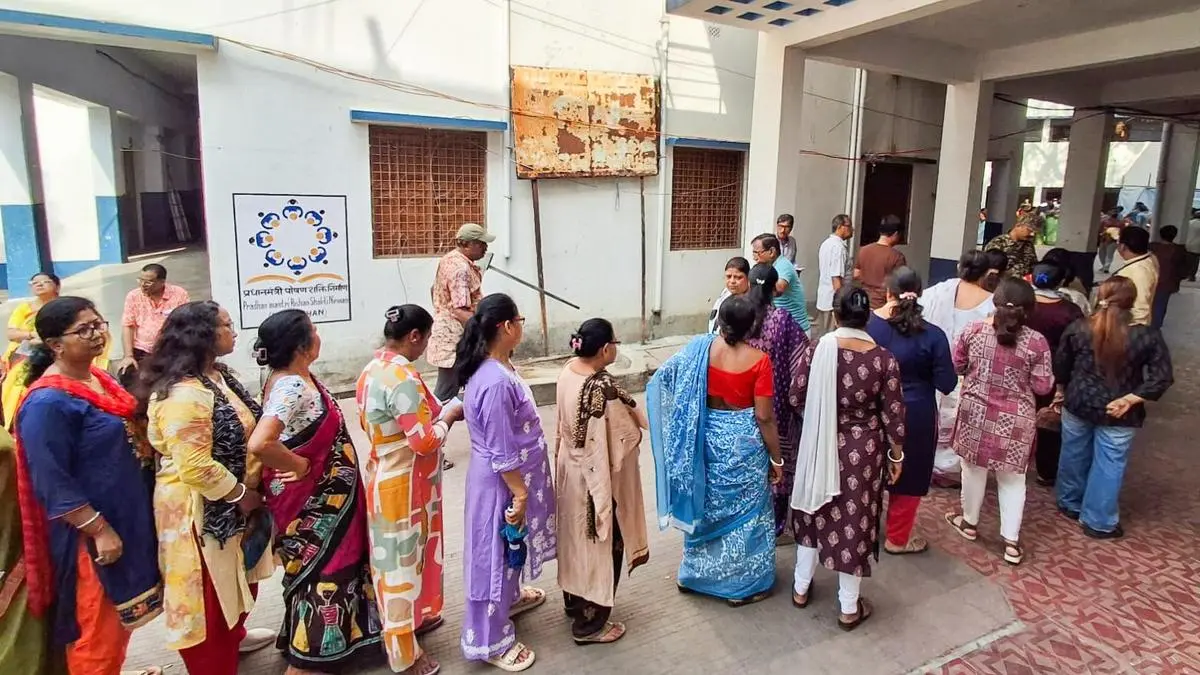
Election Commission Confirms Stability in West Bengal First-Phase Voting

The Election Commission has confirmed that no repoll is necessary following the first phase of voting in West Bengal, signaling procedural stability for the ongoing electoral process.
HASBRO, INC. currently screens as unscored on AlphaScala's scoring model.
Alpha Score of 47 reflects weak overall profile with moderate momentum, poor value, moderate quality. Based on 3 of 4 signals — score is capped at 90 until remaining data ingests.
Alpha Score of 51 reflects moderate overall profile with poor momentum, strong value, strong quality, weak sentiment.
Alpha Score of 45 reflects weak overall profile with strong momentum, poor value, poor quality, weak sentiment.
The Election Commission of India has officially confirmed that no repoll is required across the 44,376 polling stations involved in the first phase of the West Bengal elections. This announcement follows the conclusion of the initial voting cycle, which proceeded without significant disruptions or procedural irregularities that would necessitate a repeat of the process. By maintaining the integrity of the initial count, the Commission has effectively cleared a primary hurdle for the ongoing electoral schedule.
Operational Continuity and Electoral Integrity
The absence of repoll recommendations serves as a critical indicator of operational stability for the regional administration. In large-scale electoral exercises, the requirement for fresh voting often signals localized friction or security concerns that can delay final outcomes and create uncertainty for local stakeholders. Because the first phase concluded without such interventions, the focus now shifts toward the logistical management of subsequent phases. The Commission's ability to process these thousands of stations without incident suggests a high degree of control over the deployment of security personnel and electronic voting equipment.
For investors monitoring regional stability, the smooth execution of this phase reduces the risk of localized volatility often associated with contested election results. When electoral processes remain on schedule, the predictability of policy continuity improves, allowing businesses to plan around the established administrative calendar. This outcome provides a baseline for the remaining phases, as the Commission has demonstrated that its current security and logistical frameworks are sufficient to manage the scale of the electorate.
Sectoral Read-through and Regional Stability
While this event is primarily administrative, the implications for the broader stock market analysis are tied to the mitigation of political risk. Markets generally favor the absence of procedural friction, as repolls can often lead to extended periods of uncertainty and heightened social tension. By avoiding these complications, the regional government maintains a clearer path toward its stated economic objectives, which is essential for maintaining investor confidence in the state's industrial and agricultural sectors.
AlphaScala data currently tracks various entities with exposure to regional economic conditions. For instance, EC stock page reflects a Mixed Alpha Score of 51/100, highlighting the importance of stable regulatory and political environments for energy-related operations in the region. Similarly, firms like HAS stock page rely on predictable consumer environments that are less likely to be disrupted by prolonged electoral disputes. The successful completion of this phase without incident supports a stable environment for these operations.
Moving forward, the next concrete marker will be the Commission's performance reports for the subsequent phases of the election. Any deviation from this initial standard of stability in later rounds would likely trigger a reassessment of regional risk premiums. The market will continue to monitor the Commission's filings for any adjustments to the security deployment strategy or changes to the voting schedule as the process moves into more densely populated or sensitive districts.
AI-drafted from named sources and checked against AlphaScala publishing rules before release. Direct quotes must match source text, low-information tables are removed, and thinner or higher-risk stories can be held for manual review.