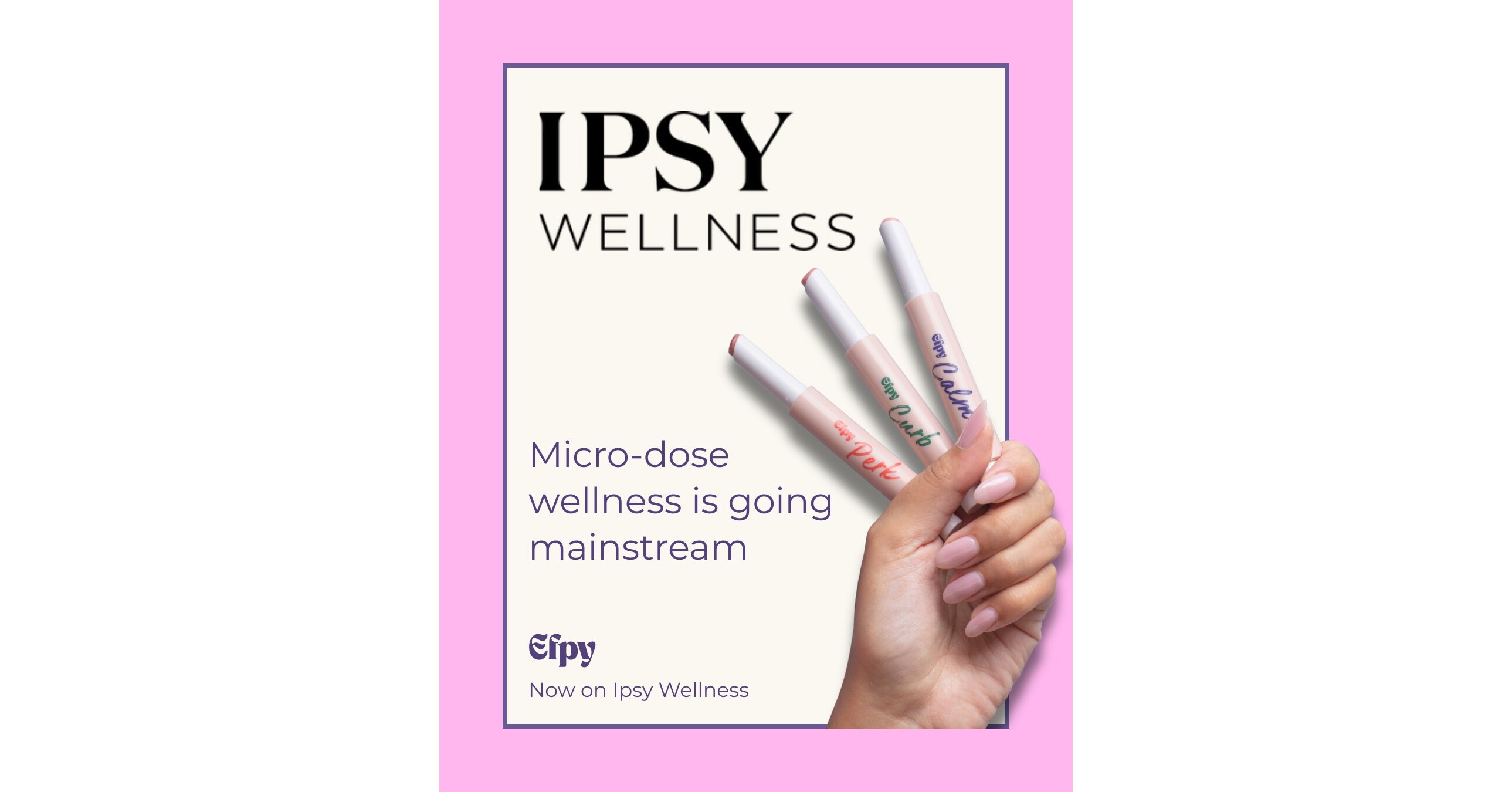
Efpy, a functional beauty brand founded by former Unilever and Google executive Smriti Khullar, launched this week on IPSY Wellness. The brand embeds micro-dosed functional ingredients – L-theanine, B vitamins, green coffee, and botanical extracts – into lip balm, a ritual people already repeat multiple times a day. The launch tests whether a subscription beauty channel can scale a concept called micro-dose wellness from press release into recurring revenue. For Unilever (UL), the event raises a real strategic question: does this trend create a tailwind for its personal care division, or does it expose a gap in the company's innovation model?
The Behavioral Insight Behind the Efpy–IPSY Launch
Khullar built Efpy on a simple observation. Wellness products fail not because the ingredients are wrong but because the habits do not stick. Most functional beauty products require a new routine – a spray, a serum, an ingestible. Lip balm requires nothing new. The dryness cue triggers the behavior automatically.
"Consumers don't necessarily want more wellness routines," Khullar said. "They want support that fits naturally into real life. We created Efpy around the idea that small repeated rituals can become powerful moments of reset throughout the day."
The IPSY Wellness channel gives that concept reach. IPSY reaches millions of subscribers each month with a beauty box model. For Efpy, the partnership bypasses the expensive customer acquisition funnel that plagues most direct-to-consumer brands. For a large consumer staples company like Unilever, this distribution deal is a low-cost way to test whether the concept resonates before committing to a full product line under one of its own labels.
Why Lip Balm as the Delivery Vehicle
The behavioural advantage is immediate. A consumer does not need a schedule or a ritual reminder. The lip balm sits in the pocket and gets applied without conscious thought. Efpy simply adds a functional payload – calm, focus, energy – to that existing loop. The brand calls this micro-dose wellness, an emerging category centered on wellness support embedded into everyday rituals.
The Subscription Channel as a Scaling Mechanism
Most direct-to-consumer wellness brands struggle with repeat purchase. Subscription boxes invert that dynamic. The challenge shifts from acquisition to retention. If Efpy's subscriber churn stays low after the initial IPSY hook, the model gains credibility. If retention falls below the subscription beauty median of 60%, the concept remains a novelty.
Unilever's Position on Both Sides of the Trend
Unilever's personal care division generated about EUR 23 billion in 2024 revenue, roughly 40% of the group total. The company owns premium beauty brands such as Living Proof, Dermalogica, and Hourglass. Those brands compete in the prestige channel, not the subscription beauty box arena. The Efpy launch sits outside Unilever's current portfolio, yet a former Unilever executive built it.
AlphaScala's Alpha Score for UL stands at 54 out of 100, labeled Mixed. The score reflects neutral sentiment signals and no clear institutional accumulation or distribution. The score does not suggest a breakout setup or an imminent downturn. It points to a stock waiting for a catalyst to tip the balance.
The simple read assumes Unilever wins by association. A former executive proves the concept, and the company eventually acquires or copies it. That conclusion skips the execution risk.
The better market read starts from a different premise. The micro-dose wellness concept threatens the SKU complexity of large consumer staples companies. Unilever's competitive advantage lies in manufacturing scale and retail shelf space, not in nimble innovation. If the category grows, Unilever may need to acquire a company like Efpy or build a competing product. Both options carry integration costs and execution risk. The stock price does not reflect that optionality because the opportunity is still too small.
Confirming and Weakening Signals for UL Shares
A trader looking for a directional edge on UL needs concrete signals that the trend is moving from press release to profit impact.
Confirming signals:
- A major competitor launches a functional lip balm line within six months.
- Unilever reports accelerating growth in its Skin Health & Beauty segment, driven by ritual-based formats.
- Efpy's monthly subscription churn drops below 5%, indicating sustained habit formation.
- The Alpha Score for UL rises above 65, signaling net buying by institutional funds.
Weakening signals:
- IRI or Nielsen data shows no lift in lip balm category sales.
- Unilever's personal care margins contract as it experiments with lower-price subscription formats.
- Efpy fails to add net subscribers after the initial IPSY hook.
- UL's Alpha Score drops below 45, indicating distribution pressure.
90-Day Retention as the Next Concrete Marker
The Efpy–IPSY launch is the first scale test for micro-dose wellness. The next concrete data point will be the early subscriber retention numbers, which typically arrive 90 days after launch. If Khullar reports repeat-purchase rates above the subscription beauty median of 60%, the thesis gains credibility. If not, the category remains a curiosity for the consumer staples sector.
For Unilever shareholders, the immediate takeaway is about competitive optionality, not a near-term earnings boost. The company can afford to watch this space. The stock's Alpha Score of 54 tells a trader not to force a directional bet on UL based on a single product launch. The broader trend – wellness embedded in existing habits – is real. The question is whether it translates into economic returns for the established players or for the insurgents. That answer will determine which stocks in the consumer staples basket deserve attention.
For more context on the sector, see AlphaScala's stock market analysis and the UL stock page.