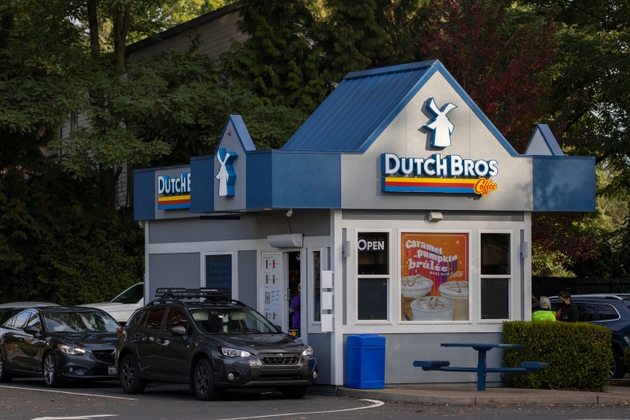
Dutch Bros Inc. (BROS) will acquire 29 franchise shops in the Phoenix East Valley from a retiring operator, the company announced Tuesday. The transaction, expected to close in the third quarter, shifts a sizable block of locations from franchise to company-operated, extending a strategy that has already shown stronger unit-level performance at converted shops.
The acquisition removes a legacy franchise territory in one of Dutch Bros’ core markets. The retiring franchise owner’s exit creates a clean handover, with no reported disputes or operational disruptions. For Dutch Bros, the deal is the latest in a series of franchise buybacks aimed at consolidating control over high-potential markets and capturing the full economics of each shop.
The 29-Shop Phoenix Acquisition
The 29 locations sit in the Phoenix East Valley, a densely populated suburban corridor that has been a stronghold for the drive-thru coffee chain. Dutch Bros did not disclose the purchase price. The transaction is structured as an asset acquisition, with the shops transitioning to company-operated status upon closing in Q3.
Phoenix is one of Dutch Bros’ most penetrated markets, and the East Valley shops have long operated under a franchise agreement. Bringing them in-house allows Dutch Bros to implement its company-level operating procedures, menu pricing, and marketing directly. The company has previously stated that company-operated shops generate higher average unit volumes and better margins than franchised locations, making each conversion accretive to earnings over time.
The retiring franchise owner’s decision to sell back to the parent removes any lingering uncertainty about territory renewal or operational divergence. The transition is expected to be seamless, given Dutch Bros’ existing infrastructure in the region.
Clutch Conversion Performance and Margin Implications
Dutch Bros has branded its franchise-to-company conversion program as “Clutch.” The company has reported that Clutch conversions are outperforming legacy company-operated shops on key metrics, including same-store sales growth and store-level margins. That performance gap provides a direct read-through for the 29 Phoenix shops: once converted, they could see a lift in sales and profitability after adopting the company’s refined operating model.
The mechanism is straightforward. Company-operated shops benefit from centralized supply chain, data-driven labor scheduling, and consistent brand execution. Franchisees, even successful ones, often operate with higher costs or less aggressive pricing. When Dutch Bros takes over, it typically invests in minor remodels, retrains staff, and aligns hours and menu offerings with corporate standards. The result has been a measurable improvement in throughput and ticket averages.
Based on past conversions, the process involves a short period of integration expense, including training and potential temporary closures. The company has not quantified the expected cost. Previous conversions have been absorbed within quarterly results without material margin disruption. The outperformance of Clutch conversions suggests that any near-term drag will be followed by a sustained uplift in unit economics.
What the Q3 Close Means for BROS Shares
The Q3 closing date puts the acquired shops into Dutch Bros’ financials for the back half of the year. The next earnings report after the close will be the first opportunity to see the initial impact on revenue and store-level margins. Analysts will likely update their models to reflect the addition of 29 company-operated units, though the exact contribution depends on the timing of the close and the pace of conversion.
For traders, the acquisition reinforces the narrative that Dutch Bros can accelerate its shift toward a company-operated model without relying solely on new unit openings. The buyback strategy also reduces franchise royalty streams but replaces them with higher-margin company sales, a trade-off that has been well-received by the market when conversions perform as expected.
The key watchpoint is whether the Phoenix shops follow the Clutch pattern. If they do, the deal could prompt upward revisions to same-store sales estimates for the second half. If integration costs run higher than anticipated, the margin benefit may be delayed. The retiring franchise owner’s smooth exit reduces execution risk, making the Q3 close a concrete catalyst for the stock.
For traders tracking restaurant and consumer discretionary names, the move adds a specific event to the stock market analysis calendar. The conversion of a large franchise block in a core market is the kind of operational catalyst that can shift sentiment when the numbers start to flow.