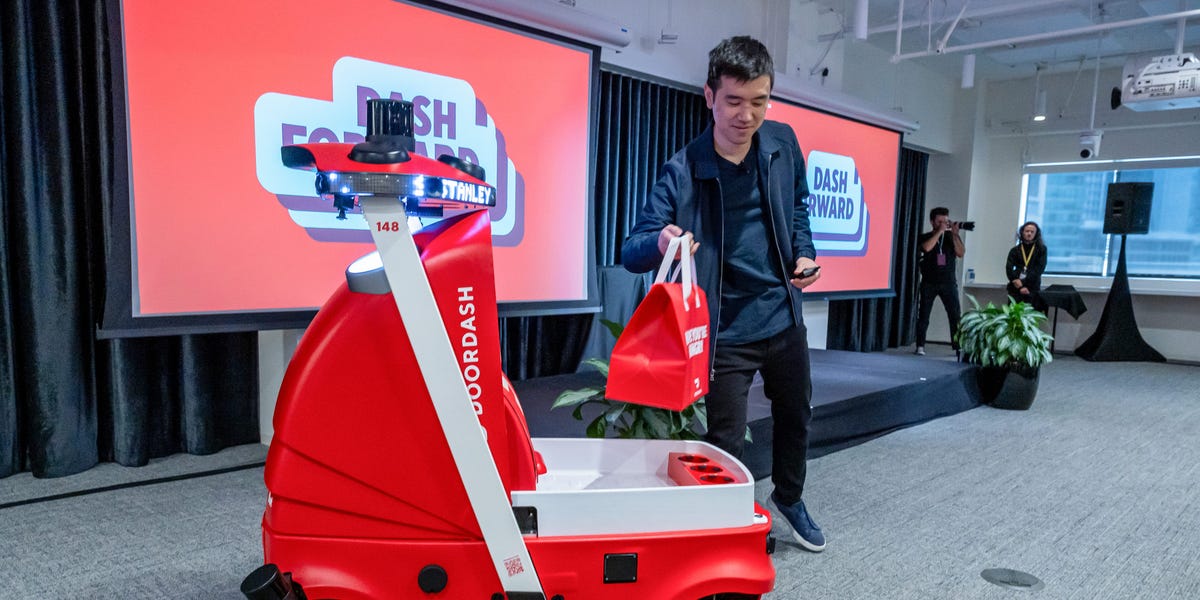
DoorDash is paying gig workers to load its delivery robots, a sign that autonomous systems still need human help for the last few feet of a pickup. The company's Dot robot, roughly the size of a baby stroller, can navigate miles to a customer's home. It cannot walk from the restaurant counter to the curb. That gap is filled by DoorDash drivers who accept offers through the app to handle the handoff.
Devena Bybee, a DoorDash worker in Mesa, Arizona, said she received one such offer in early July. She drove about two miles to a restaurant, picked up an order, placed it in the Dot robot waiting in the parking lot, and took photos of the process. The gig took five minutes. DoorDash paid her about $5.
Bybee was surprised the company asked her to complete the task instead of a restaurant worker already on site. "I just don't see how it's efficient," she said.
On Facebook groups for DoorDash workers, screenshots of similar offers have appeared over the past month. One July 6 post showed a robot-loading gig at a Burger King in Scottsdale, Arizona. "I would never do a five-dollar order, but I was really curious about this and I was super close to the restaurant," the poster wrote.
A DoorDash spokesperson said the pilot is "designed to support merchants during busy periods, while creating more earning opportunities for Dashers outside of traditional deliveries." The company added that Dashers "are essential to our platform and will continue completing the majority of deliveries even as our autonomous technology scales."
The loading gigs follow a similar pattern with Waymo. Business Insider reported in February that DoorDash workers in Atlanta received offers to close open doors on Waymo self-driving cars after deliveries. Waymo said it planned to add a self-closing function.
DoorDash CEO Tony Xu said last August, shortly before the company debuted Dot, that handing off orders from restaurants to robots is a challenge to the rollout of autonomous deliveries. "Multiplied over the course of a year or more, there's probably a real savings," said Robert Bruno, a professor of labor and employment relations at the University of Illinois Urbana-Champaign, referring to the cost of using gig workers instead of restaurant employees. DoorDash's gig workers are independent contractors who do not receive employee benefits or hourly pay, he noted.
Bybee said the loading gig left her more confident that humans are still needed for delivery work. "There's only so much right now that the robots can do," she said.