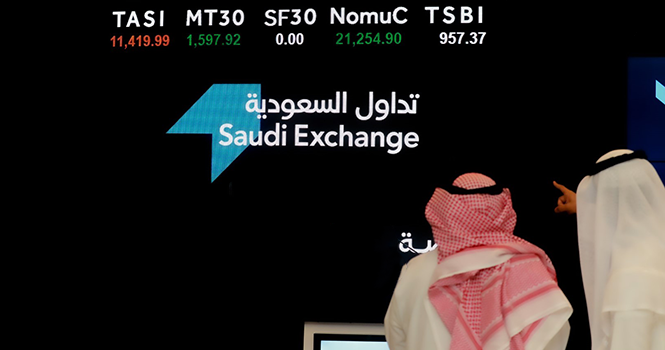
Derayah REIT, Bank Albilad, Saudi Energy, and Alwasail trade ex-dividend today. Monitor the opening price adjustments and volume to gauge institutional demand.
Alpha Score of 57 reflects moderate overall profile with moderate momentum, moderate value, moderate quality, moderate sentiment.
The Saudi market sees four distinct securities trade ex-dividend today, May 5. The list includes Derayah REIT Fund, Saudi Energy, Bank Albilad, and Alwasail. For traders, this date marks the mechanical adjustment where the share price is reduced by the value of the dividend payout, effectively resetting the cost basis for new entrants while finalizing the eligibility for existing shareholders.
When a stock or REIT goes ex-dividend, the exchange automatically adjusts the opening price downward to account for the cash leaving the corporate balance sheet. This is not a market-driven sell-off but a structural change in the asset's valuation. For Derayah REIT, the ex-dividend date is a routine event that often triggers a shift in short-term volume as income-focused investors rotate their capital. Because REITs are mandated to distribute a significant portion of their earnings, the ex-dividend date is a primary liquidity event for the fund.
In the case of Bank Albilad and Saudi Energy, the impact on the broader index is more pronounced due to their weighting. Investors often view the ex-dividend date as a point of technical support or resistance. If the stock price drops by exactly the dividend amount, the market is pricing the event efficiently. However, if the stock trades higher or lower than the adjusted price, it reveals underlying sentiment regarding the company's future growth prospects or the sustainability of its payout ratio.
Bank Albilad represents the financial sector's ongoing commitment to shareholder returns. The ex-dividend event here allows analysts to gauge the bank's capital adequacy and its ability to maintain dividend growth alongside loan book expansion. A smooth transition through the ex-dividend date often signals confidence in the bank's balance sheet strength. Conversely, any significant deviation from the expected price adjustment can indicate that the market is re-rating the stock based on interest rate expectations or credit quality concerns.
Saudi Energy and Alwasail provide a different read-through. For energy-related equities, dividends are often a function of commodity price cycles and operational cash flow. The ex-dividend date serves as a checkpoint for investors to assess whether the current yield is supported by long-term operational efficiency or if it is a lagging indicator of past performance. Alwasail, operating in a distinct industrial niche, faces similar scrutiny regarding its capital allocation strategy.
Investors looking at these four names should distinguish between the mechanical price drop and actual market sentiment. The most common error is interpreting the ex-dividend price decline as a bearish signal. Instead, the focus should remain on the volume profile during the first hour of trading. If the stock recovers a portion of the dividend-adjusted drop, it suggests strong institutional demand. If it continues to slide, it may indicate that investors are using the payout as an exit point to reallocate capital elsewhere. This event serves as a reminder of the importance of stock market analysis when managing portfolios around dividend cycles.
AI-drafted from named sources and checked against AlphaScala publishing rules before release. Direct quotes must match source text, low-information tables are removed, and thinner or higher-risk stories can be held for manual review.