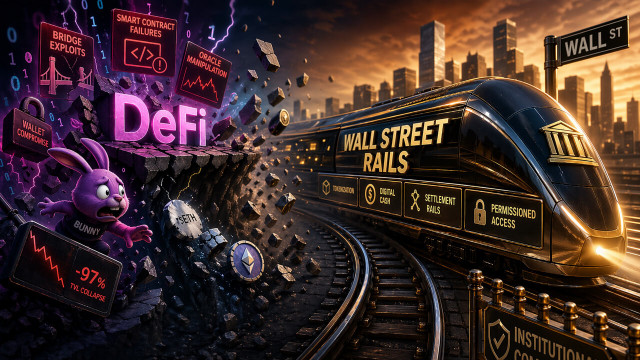
The structural integrity of decentralized finance faces a critical inflection point as data reveals that losses from protocol breaches are now 8,500% higher than those recorded in traditional finance when measured against total value moved. This widening gap suggests that the automated, permissionless nature of DeFi protocols creates a unique risk surface that traditional institutional safeguards have not yet replicated. While traditional financial systems rely on centralized clearinghouses and manual intervention to halt illicit flows, DeFi protocols often lack the circuit breakers necessary to contain the damage once a smart contract vulnerability is exploited.
The Mechanics of Protocol Vulnerability
The disparity in loss ratios stems from the fundamental difference in how assets are secured and recovered. In traditional finance, a breach typically triggers immediate regulatory and institutional responses that can freeze accounts or reverse transactions. In contrast, DeFi exploits often result in the permanent removal of liquidity from the ecosystem before any governance or security response can be initiated. The speed of these automated drains means that the cost of a single security failure is magnified by the lack of human-in-the-loop oversight. This creates a high-stakes environment where the efficiency of smart contract execution is directly offset by the catastrophic potential of code-level errors.
Institutional Risk and Liquidity Contagion
When a major DeFi protocol suffers a breach, the impact extends beyond the immediate loss of user funds. The resulting liquidity crunch often forces a cascade of liquidations across interconnected platforms, creating a ripple effect that can destabilize broader crypto market analysis. As institutional interest in tokenized assets grows, the inability to mitigate these high-loss events serves as a primary barrier to entry. The current security landscape requires a shift toward more rigorous auditing and the implementation of decentralized insurance mechanisms to protect against the systemic risks identified in recent Bitcoin (BTC) profile and Ethereum (ETH) profile activity.
AlphaScala data currently tracks ServiceNow Inc. (NOW) with an Alpha Score of 51/100, labeling the stock as Mixed within the technology sector. You can view further details on the NOW stock page.
- Automated smart contract exploits allow for near-instantaneous depletion of liquidity pools.
- The absence of centralized reversal mechanisms leaves victims with limited recourse compared to traditional banking.
- Cross-protocol dependencies mean that a single failure can trigger a chain reaction of liquidations across the DeFi ecosystem.
The next concrete marker for the industry will be the adoption of standardized security audits and the integration of formal oversight frameworks. As legislative bodies move toward stricter requirements, the ability of DeFi protocols to survive will depend on their capacity to bridge the gap between autonomous execution and institutional-grade security. The upcoming policy discussions regarding the CLARITY Act will likely dictate the pace at which these security standards are codified into law.