A provision in the Senate’s version of the National Defense Authorization Act would block some of the country’s largest defense contractors from buying back their own stock or paying dividends without Pentagon approval.
The Senate Armed Services Committee approved the must-pass bill 18-9 last week in a closed-door meeting. Section 815 of the committee’s bill specifically prohibits the Pentagon from contracting with any company that does not agree in writing to halt purchases of its own listed equity securities and to stop paying dividends or making other capital distributions. The restriction would take effect June 15, 2027. The defense secretary could waive the limitation if a contractor submits a “qualifying defense investment plan.”
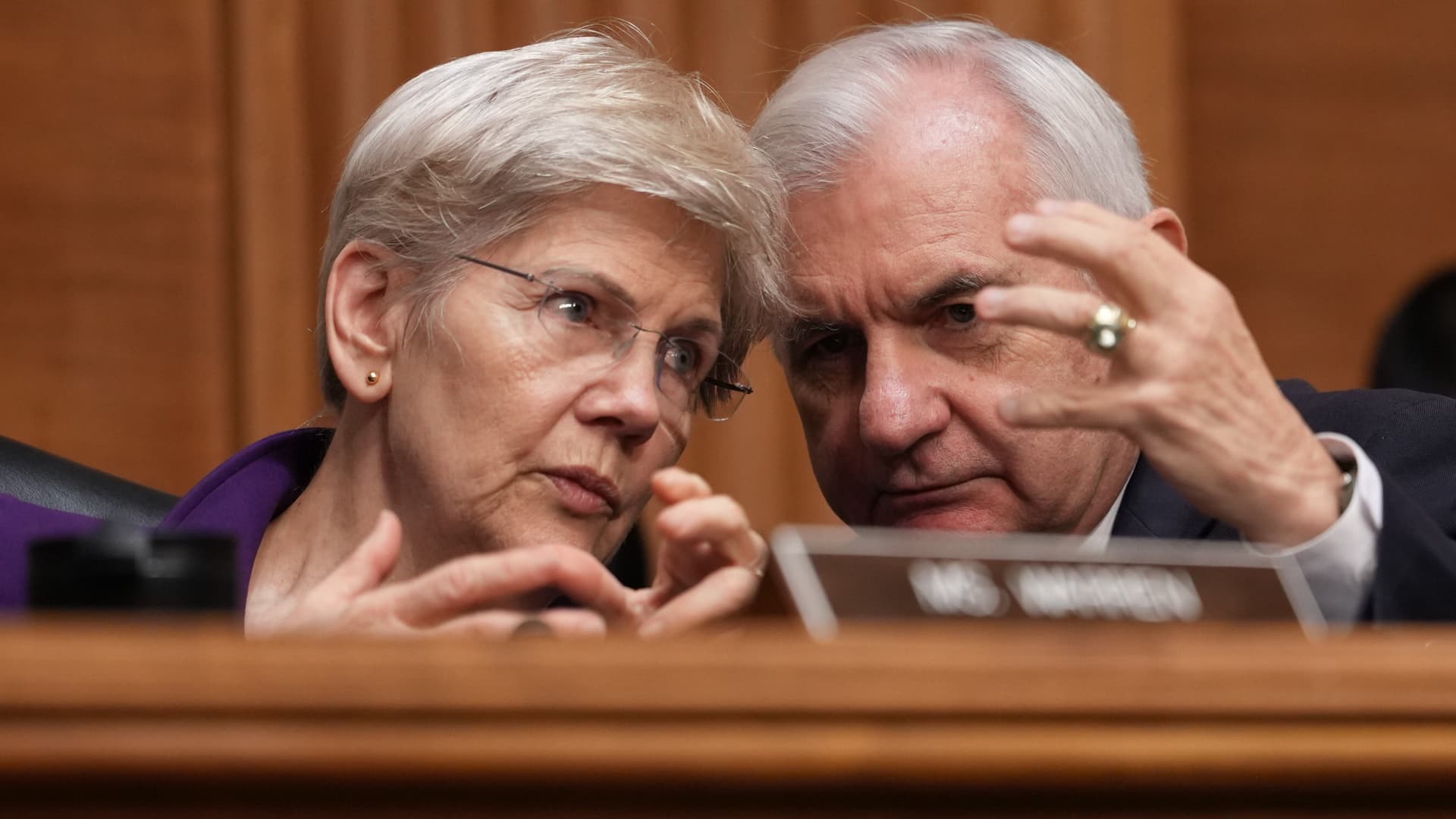
Sen. Elizabeth Warren, D-Mass., helped secure the measure’s inclusion. “These giant defense contractors buy back their own stock for the sole purpose of plumping up the stock price and improving the pay of the corporate executives,” she told CNBC. “The restriction in the NDAA says if you’re a company that’s not even performing on your government contracts, you don’t get to do that.”
Who Bears the Exposure
Lockheed Martin (LMT) and Boeing (BA) are prime contractors that would face capital return limits if Section 815 becomes law. Northrop Grumman, another major Pentagon supplier, also appears in the bill’s sights. All three have active buyback programs. Lockheed spent roughly $4 billion on share repurchases in 2024, according to its most recent annual filing. Boeing, though constrained by its own cash-flow situation, has historically used dividends as a shareholder return tool when earnings support them.
Trade groups are pushing back. The U.S. Chamber of Commerce wrote to the House that buybacks provide “reduced stock price volatility, enhanced market liquidity, lower transaction costs, and greater stability for retail investors.” The Aerospace Industries Association’s president and CEO, Eric Fanning, a former Army secretary, said in a statement that “capital allocation tools like dividends and buybacks are essential for attracting the private capital that funds innovation, production, and workforce growth across the defense sector.”
The provision carries penalties for noncompliance: suspension of contract payments and loss of eligibility for future contracts or competitive grants. The Pentagon would be required to start a review process to identify violators.
The Path Through House Negotiations
The House Armed Services Committee’s version of the NDAA does not include a stock buyback ban. Rep. Chris DeLuzio, D-Pa., withdrew an amendment to add it, citing procedural issues. The provision could still be inserted during floor amendments or in the final conference between the two chambers.
The measure has bipartisan support in the Senate. Sen. Jack Reed, D-R.I., the ranking member of the Armed Services Committee, said it was included on a bipartisan basis. “We establish contractual requirements and when they can’t meet them, to then turn around and buy back stock rather than reinvesting in their production facilities and other aspects is wrong,” he told CNBC. Sen. Rick Scott, R-Fla., who sits on the committee, said: “If you’re making money off the federal government, you shouldn’t be giving shareholders a return before we get our stuff done.” President Donald Trump’s earlier executive order on the same topic makes it harder for Republicans to oppose.
Warren acknowledged the lobbying opposition will be intense. “I never kid myself, the lobbyists are coming out of the woodwork to protect the defense industry,” she said. “There’s never a similar kind of lobbying power to protect the U.S. taxpayer, so we’ll see.”
AlphaScala’s proprietary scores rate LMT at 43 (Mixed) and BA at 57 (Moderate), reflecting each company’s current fundamental and technical profile against sector peers. The buyback provision, if enacted, would alter one of the key capital-allocation levers those scores track.
For now, the risk remains conditional. The House’s next moves in committee markup and floor debate will determine whether Section 815 survives or is stripped before the final NDAA reaches Trump’s desk.