DataBraid's $1.9M Seed Targets Insurance Broker Portal Hopping
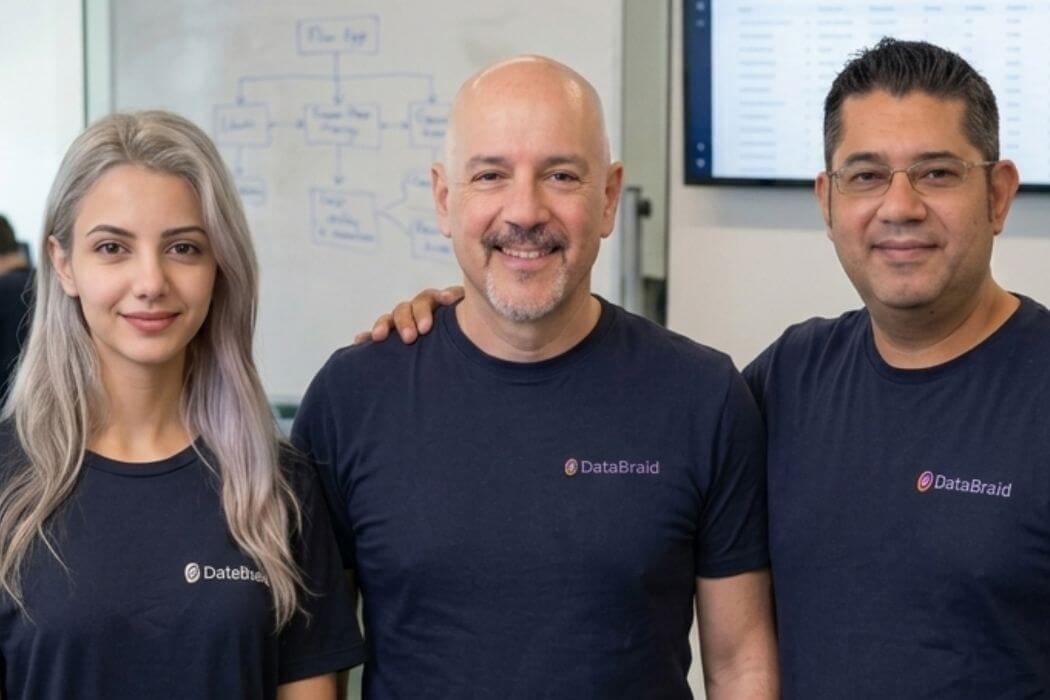
DataBraid raises $1.9M USD from OTPP-backed Koru Ventures to eliminate manual portal hopping for insurance brokers. The AI platform connects broker management systems directly to carrier portals, targeting a structural cost drag that scales with premium volume.
Alpha Score of 55 reflects moderate overall profile with strong momentum, moderate value, poor quality. Based on 3 of 4 signals — score is capped at 90 until remaining data ingests.
A Toronto-based startup called DataBraid has raised $1.9 million USD ($2.7 million CAD) in pre-seed funding to solve what it calls a "quiet inefficiency" compressing insurance industry margins: portal hopping. The round, led by Koru Ventures (backed by the Ontario Teachers' Pension Plan), closed in April and marks the company's first financing.
The core problem is straightforward but costly. Insurance brokers juggle multiple carrier portals to compare rates, submit applications, and process claims. Each portal requires separate logins and manual re-entry of the same client data. The process wastes time, introduces data entry errors, and can cause lost business. DataBraid's AI-powered software connects directly with existing broker management systems, propagating information across carrier portals in one action.
"The platform is essentially a unified broker workspace where [brokers] can operate in one place to do all the things that they need, and then we manage the complexity of connecting to the individual carriers," co-founder and CEO Nick Romano told BetaKit in an exclusive interview.
Why Portal Hopping Compresses Margins
The naive read is that portal hopping is just an annoyance. The better market read is that it is a structural cost drag that scales with premium volume. Every manual re-entry adds seconds per transaction. Across thousands of policies per broker per year, those seconds compound into hours of non-billable labor. The error rate from manual keystrokes creates downstream rework costs and compliance risk.
Igal Mayer, president and CEO of Scoop Insurance Brokers and its parent Rates.ca Group, put it bluntly: "Juggling multiple carrier portals is one of the biggest operational drags on brokerage teams today." Scoop, which has nearly 300 brokers (100 focused on policy servicing), has been DataBraid's pilot brokerage.
The Mechanism: Fragmented Distribution
Insurance distribution in Canada and the US is fragmented. Carriers run proprietary portals with different data formats, login protocols, and submission workflows. A broker representing 20 carriers maintains 20 separate interfaces. The broker's management system (the central record of client data) cannot talk to any of them natively.
DataBraid sits between the broker management system and the carrier portals. It ingests data from the management system, maps it to each carrier's required format, and submits it automatically. The broker sees a single workspace. The complexity of carrier-specific connections is handled by DataBraid's software.
Practical rule: The value of an integration layer scales with the number of portals a broker uses. A broker with 5 carriers saves less than a broker with 20. The addressable market is the set of brokers with high carrier counts and high transaction volumes.
The Koru and OTPP Connection
DataBraid was created in late 2025 following conversations between Koru Ventures and Scoop Insurance Brokers, an OTPP portfolio company. Koru's mandate is to work with OTPP's portfolio companies to create startups that could benefit them. The venture studio recruited Romano earlier this year to lead the new business.
Romano previously led Deeplite, a Montreal-based startup that built software to optimize deep neural networks. Deeplite was acquired last year by STMicroelectronics for an undisclosed sum. Romano said that experience gave him "a deep education in what AI can do."
The Co-Founder Track Record
Romano and co-founder and CTO Atif Khan previously worked together at Messagepoint, which Romano co-founded. Messagepoint began as a professional services firm before evolving into an AI-powered customer communications software company. The pair's combined background in AI and enterprise software maps directly to DataBraid's technical challenge: building reliable integrations across heterogeneous systems.
The Pilot and the Path to Scale
Scoop has been DataBraid's pilot brokerage. "They're very supportive," Romano said. "They know the problem." The pilot gives DataBraid real-world feedback on integration reliability, data mapping accuracy, and broker workflow fit.
DataBraid plans to use the funding to:
- Add engineers to its six-person team
- Deepen carrier and broker integrations
- Advance early customer deployments in Ontario
What Would Confirm the Thesis
- Broker adoption metrics: Time saved per transaction, error rate reduction, and broker satisfaction scores from the Scoop pilot
- Integration count: The number of carrier portals DataBraid connects to. Each new integration increases the platform's value for existing brokers and opens new broker accounts
- Customer acquisition: New brokerages signing on beyond Scoop, especially those with different management systems or carrier mixes
What Would Weaken the Thesis
- Integration fragility: If carrier portals change their APIs or data formats frequently, maintaining integrations becomes expensive and reliability suffers
- Broker switching costs: If brokers are reluctant to change their workflow even when a better tool exists, adoption stalls
- Carrier resistance: If carriers see DataBraid as disintermediating their direct broker relationship, they may block or complicate integration
The Sector Read-Through
DataBraid is a narrow bet on a specific operational bottleneck in insurance distribution. The read-through for the broader sector is about distribution efficiency and margin pressure.
Confirmed Peers and Adjacent Plays
The source does not name direct competitors. The sector generically includes:
- Applied Systems: A major broker management system provider that could build similar functionality natively
- Vertafore: Another large broker management system player
- EZLynx: A comparative rater that already aggregates carrier quotes
DataBraid's differentiation is its focus on the post-quote workflow (submissions, bind, policy issuance, claims) rather than just rate comparison. Comparative raters solve the shopping problem. DataBraid targets the servicing problem.
The OTPP Signal
OTPP's involvement through Koru is a signal about where the pension giant sees operational waste in its portfolio. Scoop is one of OTPP's insurance holdings. If DataBraid reduces Scoop's cost-to-serve, OTPP benefits directly. That creates a natural incentive for OTPP to support DataBraid's expansion into other portfolio companies.
Key insight: The venture studio model means DataBraid's first customer is also its sponsor. That alignment reduces early revenue risk but creates concentration risk. The company must prove it can win non-OTPP customers to validate the product-market fit.
Valuation and Funding Context
The $1.9 million USD pre-seed round is modest by SaaS standards. It reflects the early stage and the venture studio origin. The round size suggests DataBraid is expected to reach a clear product-market fit milestone before raising a larger Series A.
The STMicroelectronics Connection
Romano's previous company, Deeplite, was acquired by STMicroelectronics (STM). The acquisition gave Romano experience in AI optimization at scale. STM's Alpha Score is 55/100 (Moderate), per AlphaScala data. The connection is tangential but relevant: Romano has experience building AI software that runs on constrained hardware, which maps to the challenge of running integration logic across diverse carrier systems without requiring brokers to upgrade their infrastructure.
The Catalyst Path
DataBraid's next concrete catalyst is customer deployment data from the Ontario pilot. If the company can show measurable time savings and error reduction at Scoop, it has a case for expanding to other brokerages. The funding announcement itself is a signal of institutional backing, not a revenue event.
What to Track
- Integration announcements: New carrier portals added to the platform
- Customer wins: Brokerages outside the OTPP ecosystem signing on
- Team growth: Engineering hires that indicate scaling capacity
DataBraid is solving a real operational problem. The question is whether the solution is sticky enough to survive carrier API changes, broker inertia, and competition from larger broker management system vendors. The OTPP backing gives it runway. The pilot data will determine whether it has a product worth scaling.
For traders and investors tracking the insurance technology space, DataBraid is a name to watch for its approach to a specific, measurable cost center. The broader lesson is that margin compression in distribution-heavy industries creates opportunities for integration layers that reduce manual work. Portal hopping is not unique to insurance. The same pattern exists in healthcare, logistics, and financial services.
Drafted by a large language model from the source reporting linked above, then screened by automated publishing checks. It is not read by a journalist before publication. Some articles cite our Alpha Score. Verify prices and figures against the original source. Educational coverage, not personalized advice.