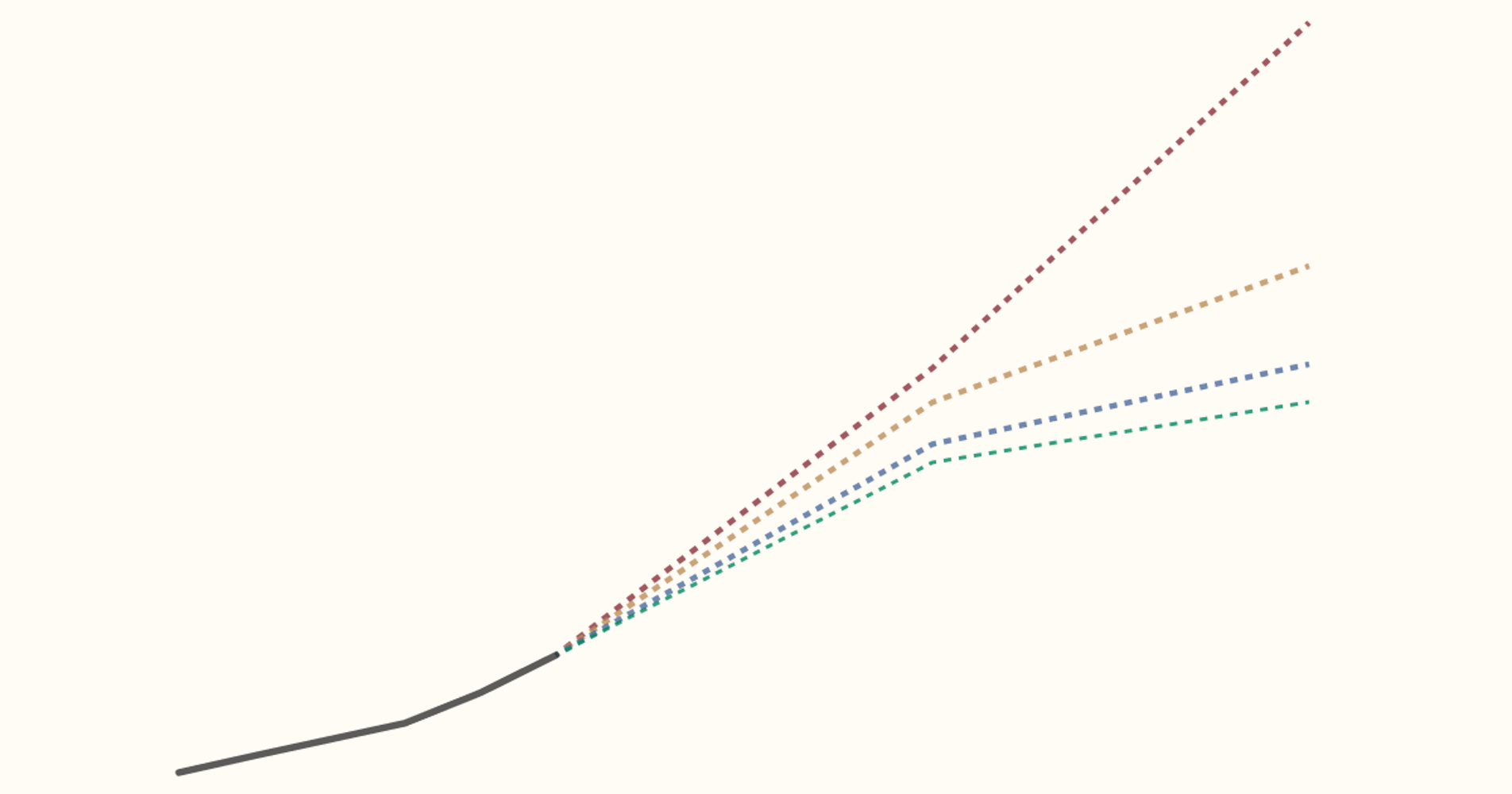
Global data centers consumed roughly 485 terawatt-hours of electricity in 2025, according to the International Energy Agency. That is about 1.5% of the world's electricity generation, roughly the same as Germany's annual output. Within that total, AI-focused data centers accounted for roughly one-third of the demand, or about 155 TWh, the IEA reported. That works out to around 0.5% of global electricity.
The number sounds small. The real challenge is geographic concentration. Data center demand is not spread evenly across the world's grids. It clusters in a handful of regions. In the United States, data centers consume about 5% of all electricity, the IEA said. In Ireland, the figure exceeds 20%. In Virginia, it is more than one-quarter. That kind of local load can strain grid capacity, push up prices, and complicate efforts to decarbonize.
Per-query energy use is tiny by comparison. Google released estimates for its Gemini model in 2025. A median text-based query consumed around 0.24 watt-hours, the company said. That is less electricity than a microwave uses in one second. OpenAI CEO Sam Altman wrote that an average ChatGPT query ran about 0.34 Wh. Epoch AI independently estimated roughly 0.3 Wh for a typical ChatGPT prompt.
The numbers climb for longer or more complex requests. A long query of 7,500 input words might consume 2.5 Wh, Epoch AI estimated. A very long one of 75,000 words could reach 40 Wh. Agentic tasks with reasoning, such as a standard request to Claude, are estimated at around 1.2 Wh, according to the IEA's 2026 analysis. A reasoning-heavy agentic request can hit 50 Wh.
Even at the high end, the per-query footprint is modest against daily household consumption. The average person in the European Union uses about 17,000 Wh per day, based on Ember data. That is equivalent to 6,800 long-input queries or 425 maximum-length ones. In the United States, where per-capita electricity use is roughly double the EU average, the relative contribution of AI queries is about half as large.
Future demand projections are deeply uncertain. The IEA's base case shows data centers growing to 3% of global electricity by 2030, with AI centers matching non-AI ones. Other sources, such as S&P Global's data cited in the Energy Institute's Statistical Review, put current data center demand about 60% higher than the IEA's estimate. Part of that gap comes from the inclusion of cryptocurrency mining, which the IEA excludes. The rest reflects methodological differences in how each source models capacity utilization and infrastructure demand, the IEA said.
One point holds across all scenarios. The emissions impact of AI depends on how the electricity is generated, not just how much is used. A query served by a coal-heavy grid carries a far larger carbon footprint than one running on renewables or nuclear. The growth of AI will test not only energy efficiency and hardware gains but also the pace of grid decarbonization, the IEA noted.
For an individual worried about their own usage, the data suggests the per-query impact is small. For the grids that host the largest clusters, the pressure is already real. The IEA has four future scenarios: one projects far higher user demand growth, another sees much faster efficiency gains. Which path the world takes will depend on hardware improvements, grid investment, and policy choices over the next decade.