Data Center Permits Imply State-Sized Power Demand by 2026
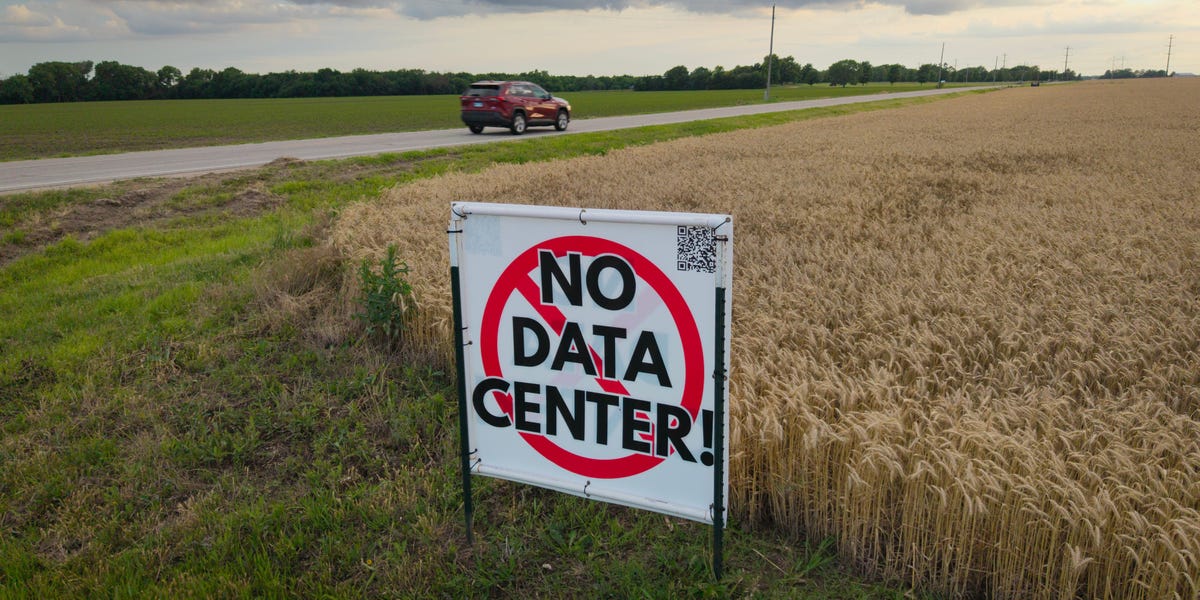
Permitted US data centers through 2025 will consume more electricity than every state except Texas. Dominion Energy and Constellation Energy face a test between permit volume and grid delivery timelines.
The data center buildout is moving from a theoretical long-term thesis to a measurable near-term grid event. A Business Insider analysis of US data center permits found that if all permitted projects through 2025 become operational, their combined electricity consumption will exceed every US state's total 2024 power use except Texas.
The scale shift is the story. The comparison to state-level consumption is not a rhetorical device. It is a concrete benchmark: the projected load from permitted data centers alone would top Florida's entire 2024 electricity consumption. That is not an extrapolation of trend growth. It is a step-change in industrial demand concentrated in a handful of grid regions where the permits are filed and construction timelines are set.
Why the Load Magnitude Rewrites the Utility Investment Thesis
The simple read is that rising electricity demand benefits all utility stocks. The better market read separates the winners by regulatory structure and grid location. Regulated utilities in data center corridors are the primary beneficiaries because they earn a guaranteed return on capital deployed for grid upgrades.
Dominion Energy in Virginia, American Electric Power in Ohio, and Georgia Power face the most direct exposure. Each utility will need to build substations, transformers, and transmission lines to connect hyperscale facilities requiring 100 to 500 megawatts of continuous power each. The regulatory framework in Virginia and Ohio allows these utilities to recover capital costs through rate base expansion, making the revenue stream predictable.
The second-order effect hits power generation. Hyperscale operators require 24/7 carbon-free electricity to meet corporate sustainability pledges. That creates a demand premium for nuclear plants, natural gas with carbon capture, and renewables paired with battery storage. The Nuclear Regulatory Commission has seen a surge in license renewal applications and uprate requests as technology companies explore co-location at existing nuclear sites. Constellation Energy and Vistra are positioned to capture that premium through their nuclear fleets.
The Execution Risk: Interconnection Queues and Transformer Lead Times
The thesis faces one real obstacle: delivery. The permits are issued. The physical infrastructure to connect those data centers to the grid is not built yet.
The interconnection queue at NERC and regional transmission organizations is backlogged by three to five years. Transformer lead times have jumped from 12 weeks to over 80 weeks. Skilled electrical labor is scarce.
This creates a timing mismatch between permit issuance and revenue generation. Projects sited on existing industrial properties with spare substation capacity will connect first. Those that require new transmission lines face the longest delays.
The Supply Chain Pinch
Eaton, Hubbell, and GE Vernova are the direct exposure points for the grid hardware shortage. Their transformer and switchgear order books extend past 2026. Quanta Services and MasTec face the labor bottleneck: they need crews to install the equipment, and those crews are already booked on existing projects.
The Ratepayer Cost Allocation Fight
The indirect cost of this buildout falls on residential and small commercial customers. When a data center adds 500 megawatts of load, the utility must build generation and transmission to serve it. Those costs are socialized across the entire rate base. Regulators in Virginia and Ohio are already examining whether data centers pay their fair share of grid upgrade costs. A ruling that shifts more cost onto hyperscale operators would crimp their buildout economics.
The Next Catalyst: FERC Order 1920 Compliance Filings
FERC Order 1920, issued in 2024, requires transmission planners to include future load growth – including data center demand – in long-term plans. Compliance filings are due in 2025. If FERC enforces aggressive cost allocation rules, interconnection timelines could accelerate. If the rules are weakened, the backlog persists.
For investors tracking the stock market analysis for this theme, the earnings calls of Dominion Energy and Constellation Energy are the earliest signal points. The first utility to report a material reduction in its interconnection backlog will signal that the bottleneck is breaking. Until that data point arrives, the power demand is real but the delivery schedule remains the swing factor separating a 2026 revenue event from a 2028 one.
Drafted by a large language model from the source reporting linked above, then screened by automated publishing checks. It is not read by a journalist before publication. Some articles cite our Alpha Score. Verify prices and figures against the original source. Educational coverage, not personalized advice.