Crypto▲ Bullish
CZ's $100B Miss: What Nansen CEO Got Right About FTX
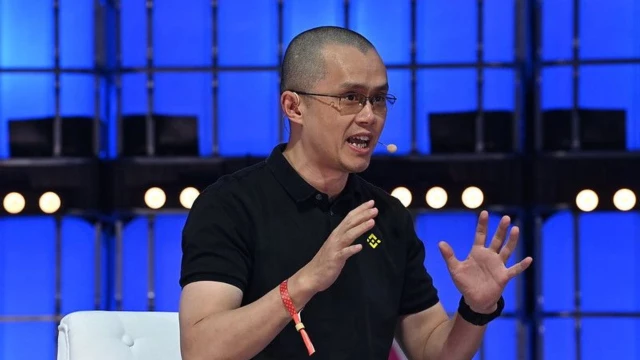
Nansen CEO Alex Svanevik says Binance founder CZ missed controlling a $100 billion venture portfolio by walking away from the FTX deal in 2022.
Continue with
Nansen CEO Alex Svanevik posted a breakdown on X on June 19 that put a number on what might have been. If Binance had completed its FTX acquisition in November 2022, Changpeng Zhao would now control one of the most valuable venture portfolios in tech history. The math is straightforward, and the figure is staggering.
A Forbes analysis from May valued Sam Bankman-Fried's personal and FTX-linked investments at north of $100 billion. That portfolio included an 8% stake in Anthropic, a 5% stake in Cursor, exposure to SpaceX, and holdings in Robinhood and Solana. The Anthropic stake alone, bought for roughly $500 million, would be worth over $70 billion today at the AI company's current $600 billion-plus valuation. The Cursor stake, sold back to founders for $200,000 in 2023, would be worth about $3 billion after SpaceX bought Cursor at a $60 billion valuation. Bankman-Fried had accumulated about $60 million in SOL when it was around $8, a position that peaked near $21 billion.
Svanevik called the decision "a rare miss by CZ in hindsight." Rory O'Driscoll, a partner at Scale Venture Partners, said Bankman-Fried had an unusual ability to pick winning companies before the AI boom.
Zhao's memoir, "Freedom of Money," published in April 2026, tells a different story about the deal. He wrote that Bankman-Fried called him in November 2022 and asked for billions of dollars "nonchalantly, as if he were asking for a bologna sandwich." Zhao signed a non-binding letter of intent but said he never planned to go through with the acquisition. He described the LOI as "purely a formality" so his team could examine FTX's books and assess whether they could protect customers. The deal fell apart within 72 hours. Binance publicly withdrew on November 9, 2022, citing "mishandled customer funds and alleged U.S. agency investigations."