Cybersecurity Anxiety Stalls AI Integration Across Insurance Carriers

Insurance carriers are hitting a wall in AI deployment as cybersecurity fears take center stage, with over half of industry professionals citing imminent attack risks as a primary reason for slowing their digital transformation plans.
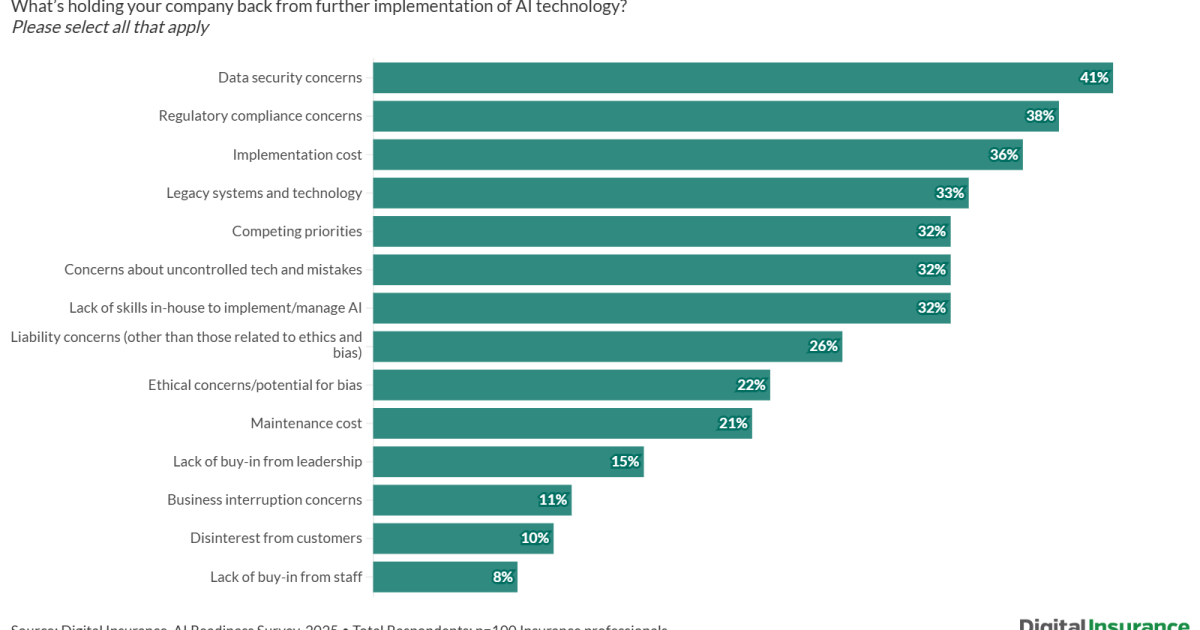
The insurance industry is currently facing a significant friction point in its digital transformation roadmap as cybersecurity concerns begin to outweigh the perceived benefits of rapid AI deployment. According to recent data from Digital Insurance, 52% of insurance professionals now anticipate a near-term cyberattack, a sentiment that is directly influencing the pace and scope of their artificial intelligence initiatives. This shift in sentiment suggests that the industry is moving from an experimental phase into a more cautious, risk-averse posture regarding new technology infrastructure.
Security Constraints on Operational Scaling
The primary hurdle for carriers involves the integration of large language models and automated decision-making tools into sensitive data environments. Because AI systems require access to vast repositories of policyholder information and historical claims data, the potential for a breach creates a high-stakes barrier to entry. Carriers are finding that the cost of securing these AI pipelines often exceeds the immediate efficiency gains promised by the technology. This creates a bottleneck where the desire to modernize is being checked by the necessity of maintaining robust, air-gapped security protocols.
This trend is particularly visible in the following areas of insurance operations:
- The hardening of legacy data silos to prevent unauthorized AI-driven access points.
- Increased allocation of IT budgets toward defensive cybersecurity infrastructure rather than front-end AI development.
- A slowdown in the deployment of customer-facing AI agents due to fears regarding data leakage and regulatory non-compliance.
The Strategic Pivot Toward Defensive Tech
For many firms, the narrative has shifted from how quickly they can adopt AI to how securely they can house it. This transition is forcing a re-evaluation of Modernizing B2B Payment Infrastructure as a Competitive Moat within the insurance sector. As carriers prioritize the integrity of their existing systems, the capital that might have been earmarked for aggressive AI experimentation is being redirected toward threat detection and incident response capabilities. This defensive posture is likely to result in a bifurcated market where larger, well-capitalized insurers manage to balance both security and innovation, while smaller firms remain stuck in a holding pattern.
AlphaScala data indicates that firms prioritizing infrastructure resilience over rapid feature deployment are currently seeing lower volatility in their operational expense ratios, even if their short-term growth metrics lag behind industry peers. This suggests that the market is beginning to reward stability over raw technological speed in the current threat environment.
The Next Marker for Industry Adoption
The next concrete indicator of how this tension will resolve lies in the upcoming quarterly earnings reports and the accompanying risk disclosures from major carriers. Investors should look for specific commentary on cybersecurity insurance premiums and the allocation of capital toward AI-specific security audits. If carriers begin to report successful, secure deployments of AI in non-sensitive areas, it could signal that the industry has found a viable path forward. Conversely, if disclosures continue to emphasize cyber-risk as a primary reason for project delays, the industry-wide AI rollout will likely remain stalled through the next fiscal year. The focus will remain on whether carriers can prove that their AI investments are not creating new, unmanageable attack surfaces for their core business operations.
AI-drafted from named sources and checked against AlphaScala publishing rules before release. Direct quotes must match source text, low-information tables are removed, and thinner or higher-risk stories can be held for manual review.