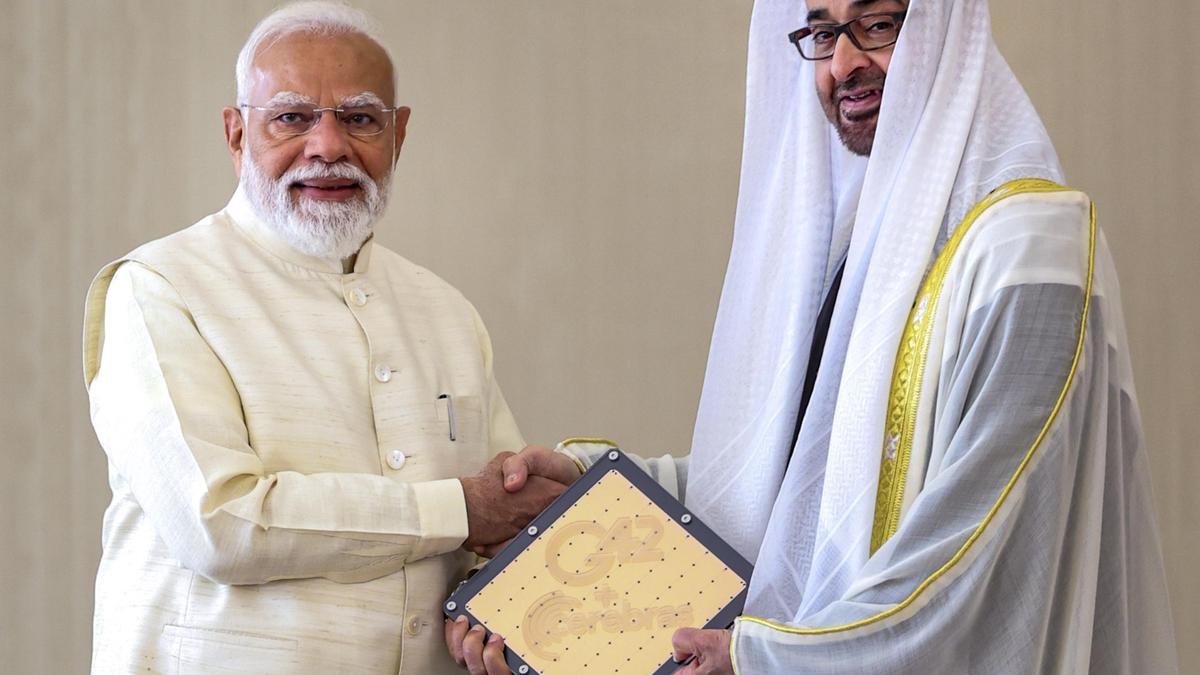
Prime Minister Narendra Modi's Abu Dhabi visit produced a defence cooperation framework and a specific industrial agreement that directly involves Cochin Shipyard Ltd (CSL). The Union Cabinet had already cleared a ₹1,570 crore ship repair facility at Vadinar, Gujarat, to be developed jointly by Deendayal Port Authority (DPA) and CSL. On Friday, CSL signed a memorandum of understanding with Drydocks World (DDW) of the UAE to set up that ship repair cluster. A tripartite skill development agreement with DDW and the Centre of Excellence in Maritime & Shipbuilding (CEMS) was inked alongside it. The headline defence pact between India and the UAE creates the strategic umbrella; the CSL-specific MoUs turn that umbrella into a concrete, government-backed revenue project that was not in consensus estimates.
AlphaScala's proprietary scoring system does not yet cover CSL (Unscored), leaving investors to rely on traditional fundamental and catalyst analysis.
The simple market read is that a defence deal with the UAE is geopolitically positive and any shipyard stock should rally. The better read is that CSL now has a named, budgeted, and partner-backed infrastructure project that adds a new business vertical–ship repair cluster operations–with a built-in workforce pipeline. The Maritime Development Fund Scheme provides the policy backstop. The UAE partner brings drydock expertise and a potential flow of vessels from the Gulf. The catalyst is not the pact itself; it is the ₹1,570 crore facility moving from cabinet approval to an operational MoU with an experienced international player.
The Vadinar Ship Repair Cluster: A ₹1,570-Crore Project Moves to Execution
The Ministry of External Affairs confirmed that the MoU between CSL and DDW covers setting up a Ship Repair Cluster at Vadinar, including offshore fabrication. The project falls under the Maritime Development Fund Scheme launched by the Government of India. The Cabinet nod on May 5, just ahead of the Prime Minister's UAE tour, signalled that the government wanted the Vadinar facility to be a deliverable during the visit. That sequencing matters: it shows the project has political weight and is not a speculative announcement.
From Shipbuilder to Repair Hub Operator
CSL is primarily known as a shipbuilder, with a strong order book in defence and commercial vessels. The Vadinar cluster adds a ship repair revenue stream that is structurally different. Repair work is shorter-cycle, less capital-intensive than newbuilds, and generates recurring cash flows when a cluster attracts regular vessel traffic. DDW, part of Dubai's maritime infrastructure, operates one of the largest ship repair yards in the Middle East. The partnership gives CSL access to DDW's operational know-how and potentially to a customer base of Gulf-based shipowners who already use DDW facilities.
The Numbers That Matter
The ₹1,570 crore figure is the government's committed outlay for the facility. CSL's role as a joint developer with DPA means the company will likely earn project management fees, equity returns from the cluster, and a share of repair revenues once operational. The exact revenue split is not disclosed. The structure–a public-private partnership under a dedicated maritime fund–reduces the capital burden on CSL's balance sheet. The stock currently trades on a multiple that reflects its shipbuilding order book; the repair cluster is a free option that the market has not yet priced.
Practical rule: When a government-backed infrastructure project moves from a cabinet note to a signed international MoU within days, the probability of execution rises materially. That probability shift is what reprices the stock.
Defence Pact Read-Through: Maritime Security and Industrial Collaboration
The broader India-UAE defence framework covers industrial collaboration, innovation, advanced technology, maritime security, cyber defence, and secure communications. For CSL, the maritime security and industrial collaboration pillars are the direct read-through. The two countries already conduct regular naval exercises and defence dialogues. A formal strategic partnership raises the likelihood of follow-on orders for naval vessels, repair contracts for Indian Navy ships operating in the region, and joint development of maritime technologies.
The EDGE-Adani Precedent
The UAE's EDGE Group and India's Adani Defence & Aerospace earlier formed a global defence platform to jointly manufacture Unmanned Aerial Systems (UAS) and advanced counter-drone systems. That deal set a template: a UAE defence champion partners with an Indian industrial group to co-develop and co-produce defence equipment. The CSL-DDW MoU extends that template into the maritime domain. If the EDGE-Adani partnership progresses to production orders, the CSL-DDW cluster becomes the maritime equivalent, with the Vadinar facility as the physical hub.
What This Means for CSL's Order Pipeline
CSL already builds vessels for the Indian Navy and Coast Guard. A strategic defence partnership with the UAE could open a new export channel. Gulf navies and commercial operators are potential customers for ship repair and eventually for newbuilds. The MoU does not guarantee defence orders. It positions CSL as the default Indian shipyard for any UAE-linked maritime defence work. The skill development agreement reinforces that positioning by creating a trained workforce that can service both Indian and UAE requirements.
Skill Development MoU: Building a Workforce Pipeline
The tripartite MoU among CSL, DDW, and CEMS establishes a framework to mobilise, train, and employ skilled maritime workforce. The Ministry of External Affairs stated that the agreement seeks to enhance capabilities of the Indian maritime workforce and position India as a hub for skilled shipbuilding and ship repair professionals. For CSL, this solves a critical operational bottleneck: the availability of certified welders, fitters, and marine engineers who can work on complex repair jobs.
Workforce as a Competitive Moat
Ship repair is labour-intensive and skill-sensitive. A cluster that can draw on a pre-trained, certified workforce will win contracts on turnaround time and quality. The CEMS involvement brings standardised training curricula and certification. DDW brings on-the-job training protocols from a high-throughput yard. CSL gets a pipeline of workers who are already familiar with the yard's systems before the cluster even opens. That reduces the typical 12-18 month lag between facility completion and full operational capacity.
Key insight: The skill development MoU is not a soft annexure. It is the operational enabler that determines whether the ₹1,570 crore asset generates returns from year one or sits underutilised.
Next Milestones for the Vadinar Cluster
The Vadinar MoU is a catalyst that resets the narrative. The stock will need concrete milestones to sustain a re-rating. The next confirmatory signals are specific and observable.
- Project timeline disclosure: CSL or DPA issuing a detailed project report with a commissioning date. The market needs to know when the facility starts generating revenue.
- First repair contract: A named vessel owner signing a repair slot at Vadinar, even before full completion, would validate demand.
- Follow-on defence MoUs: Any additional agreement under the strategic defence partnership that names CSL as the Indian shipyard counterpart.
- DDW equity or revenue-sharing terms: Clarity on the commercial structure between CSL and DDW. A revenue-sharing model with minimum volume guarantees would be the most bullish signal.
- Quarterly order book commentary: CSL's management explicitly incorporating the repair cluster into forward guidance.
The Vadinar cluster is a greenfield project. Land acquisition, environmental clearances, and construction delays are standard risks for Indian port infrastructure. The Cabinet approval and the UAE MoU reduce political risk. Execution risk remains with CSL and DPA. The stock will trade on execution milestones, not on the announcement alone.
Cochin Shipyard now carries a catalyst that is specific, budgeted, and internationally partnered. The defence pact provides the strategic context. The investable fact is the ₹1,570 crore ship repair cluster moving from a cabinet note to a signed MoU with a proven operator. The stock's current valuation embeds its shipbuilding backlog; the repair cluster and any defence export orders that follow are not yet in the price. The next move depends on how quickly the project timeline converts from a government announcement into a construction schedule.