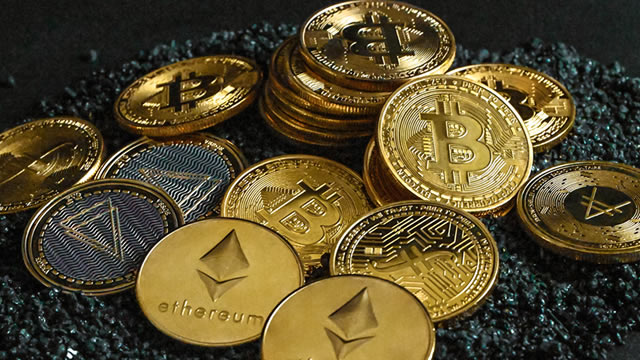
What is Bitcoin and how does it work?
Bitcoin is a digital currency that operates without a central bank or single administrator. It was created in 2009 by an anonymous person or group using the name Satoshi Nakamoto. Unlike traditional money, Bitcoin exists only as computer code and moves between users through a peer-to-peer network. No government prints it, no bank holds it, and no company controls it. Transactions happen directly between users, verified by network participants called miners.
**How Bitcoin works**
Bitcoin runs on a technology called blockchain. Think of the blockchain as a public ledger, a shared record of every Bitcoin transaction ever made. This ledger is not stored on one server. It lives on thousands of computers around the world at the same time. When someone sends Bitcoin, the transaction gets broadcast to the network. Miners collect pending transactions, bundle them into a block, and compete to solve a complex math puzzle. The first miner to solve the puzzle adds the block to the chain and earns new Bitcoin as a reward. This process is called proof-of-work mining.
**Why mining matters**
Mining serves two purposes. It creates new Bitcoin in a predictable, controlled way. It also secures the network. To fake a transaction or spend the same Bitcoin twice, an attacker would need to control more than half of the network's computing power. That is expensive and practically impossible for a network this size. The puzzle difficulty adjusts automatically so that a new block is added roughly every 10 minutes, regardless of how much computing power joins or leaves.
**Bitcoin supply**
Only 21 million Bitcoin will ever exist. This cap is written into the code. New Bitcoin enters circulation through mining rewards, but those rewards get cut in half every four years in an event called the halving. The last Bitcoin will be mined around the year 2140. This fixed supply makes Bitcoin scarce, unlike central bank money that can be printed in unlimited amounts.
**Wallets and keys**
To use Bitcoin, a person needs a digital wallet. The wallet generates a pair of cryptographic keys: a public key and a private key. The public key works like an email address. People share it to receive Bitcoin. The private key works like a password. Whoever holds the private key controls the Bitcoin. Lose the private key, lose the Bitcoin. There is no reset button, no customer support line, no bank to call. This is the single biggest risk for beginners.
**Transactions and fees**
Sending Bitcoin requires paying a transaction fee. The fee goes to miners who include the transaction in a block. Higher fees get processed faster. Lower fees can sit unconfirmed for hours or even days if the network is busy. Bitcoin can handle roughly 7 transactions per second. Visa handles thousands. This bottleneck has led to higher fees during peak demand.
**Price volatility and risk**
Bitcoin's price swings wildly. It has fallen 80% from a high before, then later set new highs. Leverage trading, where a trader borrows money to amplify bets, has wiped out many accounts. Futures and options on Bitcoin add another layer of risk. A beginner should never invest money they cannot afford to lose. Bitcoin is not backed by any government or physical asset. Its value comes entirely from what someone else will pay for it.
**Regulatory risk**
Governments treat Bitcoin differently. Some countries ban it outright. Others tax it as property. In the United States, the IRS treats Bitcoin as property, meaning every sale or trade is a taxable event. A person who buys Bitcoin and later uses it to buy coffee owes capital gains tax on the difference. Many beginners get caught by this. Regulations change fast. What is legal today might not be tomorrow.
**A simple example**
Alice wants to send 0.1 Bitcoin to Bob. She opens her wallet, enters Bob's public address, and hits send. The wallet broadcasts the transaction to the network. Miners see it, include it in a block, and solve the proof-of-work puzzle. Once the block is added to the chain, Bob sees the Bitcoin in his wallet. The whole process takes anywhere from 10 minutes to an hour depending on fees and network traffic. Bob knows the transaction is final when several more blocks are added on top of that block. Most services wait for 3 to 6 confirmations before treating the payment as settled.
**Common beginner mistakes**
Storing Bitcoin on an exchange is the most common error. Exchanges get hacked. Users lose everything. A hardware wallet or a properly secured software wallet is safer. Another mistake is falling for giveaways or phishing scams. No one will send free Bitcoin in exchange for a small test payment. That is always a scam. A third mistake is panic selling during a crash. Bitcoin's history shows deep drawdowns followed by long recoveries. Selling at the bottom locks in losses.
**The bottom line**
Bitcoin is a decentralized digital currency secured by cryptography and a global network of miners. It offers censorship-resistant transactions and a fixed supply. It also carries extreme price risk, regulatory uncertainty, and technical complexity. Anyone considering Bitcoin should start small, learn to control their own private keys, and never invest more than they can afford to lose.
Difference between Bitcoin and Ethereum?
Bitcoin and Ethereum serve different purposes. Bitcoin is digital gold – a store of value and payment network. Ethereum is a decentralized computer – a platform for running applications and smart contracts. One stores wealth. The other builds on it.
Why the distinction matters
If you hold Bitcoin, you are betting people will keep using it as a savings vehicle, a hedge against inflation, and a settlement layer for large transfers. If you hold Ethereum, you are betting developers will keep building applications on it – lending protocols, NFT marketplaces, gaming, stablecoins – and that users will pay fees in ether to use those apps.
Bitcoin's core design
Bitcoin launched in 2009. Its blockchain records who owns what. The code caps the total supply at 21 million coins. That scarcity is the whole thesis. Transactions are relatively simple: send BTC from address A to address B. The network settles about 7 transactions per second. It is slow on purpose – security and decentralization matter more than speed.
Miners validate blocks using proof of work, which consumes a lot of electricity. That energy cost is part of Bitcoin's value proposition. It costs real money to attack the network. Changing Bitcoin's rules requires near-unanimous agreement among miners, node operators, and developers, which is why upgrades take years.
Ethereum's core design
Ethereum launched in 2015. Its blockchain records not just balances but also code. That code – smart contracts – runs exactly as written, no trusted intermediary needed. Developers deploy applications on Ethereum, and the network executes them automatically.
Ethereum's supply is not capped. Its issuance rate changes over time. The 2022 merge switched Ethereum from proof of work to proof of stake, cutting energy use by roughly 99.95%. Validators lock up 32 ETH to propose and attest blocks. If they misbehave, their stake gets slashed.
Ethereum processes about 15-30 transactions per second, though layer-two networks like Arbitrum and Optimism push that much higher by settling transactions off the main chain and posting compressed proofs back.
Smart contracts and what they enable
A smart contract is just code on the blockchain that executes when conditions are met. No lawyer. No bank. No clearinghouse. Example: a lending protocol lets you deposit ETH as collateral and borrow USDC against it. If your collateral drops below a threshold, the contract liquidates your position automatically. Everything runs on chain.
This programmability means Ethereum hosts thousands of applications. Uniswap for swapping tokens. Aave for lending. MakerDAO for the DAI stablecoin. OpenSea for NFT trading. All of them settle on Ethereum.
Bitcoin has limited smart contract capability through its Script language, but it is deliberately restricted. You cannot build a lending protocol on Bitcoin the way you can on Ethereum. People sometimes wrap BTC as WBTC on Ethereum to use it in DeFi, which shows the demand for programmability that Bitcoin itself does not offer.
Use cases compared
Bitcoin gets used for:
- Long term savings. Buy and hold for years, treat it like a hard asset.
- Cross border transfers. Moving $1 million costs a flat fee, not 3% like a wire.
- Collateral for loans. Institutions like BlockFi and Genesis used to lend against BTC.
- Inflation hedge in countries with unstable currencies (Turkey, Argentina, Nigeria).
Ethereum gets used for:
- Accessing DeFi applications. Lend, borrow, trade, farm yields.
- Minting and trading NFTs. Art, music, in game assets.
- Running DAOs. Organizations governed by token holders, not executives.
- Tokenizing real world assets. Treasury bills, real estate, private credit.
- Paying gas fees for every transaction. Every action costs ETH.
Risk differences
Bitcoin risk is mostly macro. If the dollar strengthens and inflation drops, demand for BTC as a hedge weakens. If governments ban self custody or mining, the network faces existential pressure. Bitcoin has never been hacked at the protocol level in 15 years.
Ethereum risk is broader. Smart contracts can have bugs. The 2016 DAO hack led to a chain split. Bridge hacks like Ronin and Wormhole lost hundreds of millions. Layer two solutions add complexity. Regulatory risk is higher because securities regulators look at many tokens issued on Ethereum and call them unregistered securities. The SEC has sued Coinbase and Binance partly over staking services and tokens traded on Ethereum.
Both face scaling limits. Bitcoin has Lightning Network for faster payments, but it adds custodial risk. Ethereum has layer twos, but they fragment liquidity and user experience.
Which one for a beginner
Start with Bitcoin if you want the simplest store of value with the longest track record. Read about self custody. Buy from a regulated exchange. Transfer to a hardware wallet if the amount is meaningful.
Move to Ethereum if you want to interact with applications – try a DEX, understand gas fees, learn what a wallet like MetaMask actually does. Expect more volatility and higher transaction costs during network congestion.
Holding both is common. Roughly 70% of the crypto market cap sits between the two. Many traders treat BTC/ETH as the core pair and everything else as higher risk bets.
A quick comparison table
| Feature | Bitcoin | Ethereum |
|---|---|---|
| Launch | 2009 | 2015 |
| Purpose | Store of value, payments | Global computer, smart contracts |
| Supply cap | 21 million | None, issuance changes over time |
| Consensus | Proof of work | Proof of stake |
| Energy use | High | Low after 2022 merge |
| Tx speed | ~7 per second | ~15-30 per second, faster with L2s |
| Programmability | Minimal | Full, via Solidity |
| Key risk | Macro, regulatory | Smart contract bugs, regulatory |
Practical rule of thumb
Bitcoin is what people mean when they say 'crypto' in the context of macro investing, inflation hedging, or portfolio allocation. Ethereum is what people mean when they talk about building new financial infrastructure, tokenizing assets, or decentralized apps. One holds value. The other creates it.
If a friend asks 'should I buy Bitcoin or Ethereum', the honest answer is 'it depends on what you want it to do'. Holding wealth long term? Bitcoin. Interacting with applications and earning yield? Ethereum. Both carry real risk. Neither is guaranteed to hold value. Never put in money you cannot afford to lose.
How does cryptocurrency mining work?
Cryptocurrency mining is the process of adding new transactions to a blockchain and creating new coins. Miners use specialized computers to solve complex math problems. The first miner to solve the problem gets to add a block of transactions to the chain and receives a reward in the form of new cryptocurrency plus transaction fees.
Think of it as a global competition where thousands of computers race to be the first to find a valid solution. The solution is a number called a nonce. When combined with the block's data and run through a hash function, it produces a result that meets a specific target. The target is set by the network to keep the average time between blocks steady, roughly 10 minutes for Bitcoin.
**The core mechanism: proof of work**
Bitcoin and many other cryptocurrencies use a system called proof of work. The "work" is the electricity and computing power spent searching for the valid nonce. Finding it is pure luck based on hashing power. A miner with 1% of the network's total hashing power will find roughly 1% of the blocks.
Once a miner finds a valid block, they broadcast it to the network. Other nodes verify the block's transactions and the solution. If everything checks out, the block is added to the chain. The miner collects the block reward, currently 3.125 Bitcoin plus fees. That reward halves roughly every four years in an event called the halving.
**What miners actually do**
Miners don't just run software on a laptop. Early on you could mine Bitcoin with a CPU. That stopped being profitable around 2011. Today Bitcoin mining requires ASICs, application specific integrated circuits. These are machines built solely to run the SHA-256 hashing algorithm as fast as possible with minimal electricity.
An Antminer S19 Pro, a common model, does about 110 terahashes per second. A terahash is one trillion hashes. Your laptop might do a few million. The network's total hashrate is around 600 exahashes per second, 600 million trillion hashes per second. The difficulty adjusts every 2016 blocks to keep block times near 10 minutes. If more miners join and hashrate rises, the target gets harder. If miners leave, it gets easier.
**Where mining happens**
Mining is now an industrial business. Large facilities house thousands of ASICs in warehouses with cheap electricity, often near hydroelectric dams, natural gas flares, or wind farms. Electricity is the biggest cost, often 60-80% of operating expenses. Miners negotiate power prices directly with utilities or build their own substations.
Some miners join pools. A mining pool combines hashrate from many participants and splits rewards proportionally. Solo mining with a single ASIC is essentially a lottery ticket. Pool mining gives steady, smaller payouts. The pool takes a small fee, usually 1-3%.
**What happens when a block is mined**
A block contains a list of pending transactions. Miners select which transactions to include, prioritizing those with higher fees. The block also contains the previous block's hash, linking it to the chain. Changing any transaction in a past block would change that block's hash, breaking the link. To alter a past block, an attacker would need to re-mine that block and all subsequent blocks, which requires more hashing power than the rest of the network combined. That is why the chain is secure.
**Other mining methods**
Not all cryptocurrencies use proof of work. Ethereum switched to proof of stake in 2022. In proof of stake, validators lock up coins as collateral and are randomly selected to propose blocks. No mining hardware is needed. But Bitcoin, Litecoin, Dogecoin, and Monero still use proof of work.
Some coins use different hash functions. Litecoin uses Scrypt, which was designed to be ASIC resistant. ASICs for Scrypt now exist anyway. Monero uses RandomX, optimized for CPUs, which makes ASIC development harder.
**The economics of mining**
A miner's profit depends on four things: the coin's price, the block reward, the electricity cost, and the machine's efficiency. At $60,000 Bitcoin and $0.05 per kWh electricity, an S19 Pro might earn about $8 per day after power costs. At $30,000 Bitcoin and $0.10 per kWh, the same machine loses money. Miners hedge by selling futures or holding inventory. Many miners also sell their coins immediately to cover operating costs.
**Risks and realities**
Mining is not passive income. Machines break. Difficulty rises. Prices drop. Governments change rules. China banned Bitcoin mining in 2021, forcing a massive relocation of hashrate to the US, Kazakhstan, and Russia. Electricity prices can spike. Supply chains for ASICs are controlled by one company, Bitmain, which creates its own risks.
For an individual, buying and holding cryptocurrency is usually simpler and less risky than mining. Mining only makes sense with access to very cheap electricity and capital for hardware that may become obsolete in 18 months. The halving cuts block rewards in half, so miners need the price to double roughly every four years just to keep revenue flat.
**One practical example**
Say a miner buys an S19 Pro for $2,000. It draws 3250 watts. At $0.05 per kWh, power costs $3.90 per day. At current difficulty and $60,000 Bitcoin, the machine earns about $12 per day in block rewards and fees. Gross profit is $8.10 per day. That pays off the hardware in 247 days. After that, every day is profit until the halving or a price drop. But if Bitcoin falls to $30,000, daily revenue drops to $6, and the machine loses $1.80 per day. The miner either turns it off or hopes for a rebound.
**A quick checklist for evaluating a mining operation**
- Electricity cost per kWh. Below $0.05 is competitive. Above $0.10 is tough.
- Machine efficiency in joules per terahash. Lower is better. The S19 Pro is around 30 J/TH. Newer models are under 25.
- Pool fees and payout structure. PPS pays per share. FPPS includes transaction fees. PPLNS pays based on the pool's luck over a window.
- Cooling method. Immersion cooling allows higher density and longer hardware life but costs more upfront.
- Regulatory risk. Some jurisdictions tax mined coins as income at the time of receipt. Others ban mining outright.
**The bottom line**
Mining is the engine that secures proof of work blockchains. It turns electricity into digital scarcity. For most people, it is not a practical way to earn cryptocurrency. The industry is dominated by large, professional operators with access to cheap power and scale. Understanding how mining works helps explain why Bitcoin has value and how its supply schedule operates. But buying coins on an exchange is simpler, cheaper, and less risky for the average person. Trading and holding cryptocurrency carries significant risk of loss.
What is proof of stake vs proof of work?
Proof of Work (PoW) and Proof of Stake (PoS) are the two dominant consensus mechanisms that blockchains use to validate transactions, add new blocks, and secure the network without a central authority. PoW relies on miners expending computational power and electricity to solve cryptographic puzzles, while PoS relies on validators locking up their own cryptocurrency as collateral to earn the right to propose and attest to new blocks. The core trade-off is that PoW consumes massive external energy to create a physical cost barrier against attacks, whereas PoS uses internal financial commitment and economic penalties to achieve the same goal with roughly 99.9 percent less energy consumption.
HOW PROOF OF WORK OPERATES
PoW functions as a competitive race. Miners collect pending transactions into a candidate block and then repeatedly hash that block's header data, changing a small piece of arbitrary data called a nonce, until the resulting hash falls below a target number set by the network's difficulty. This process is brute-force trial and error. The first miner to find a valid hash broadcasts the block to the network. Other nodes verify the solution instantly by running the hash once, and if valid, the block is added to the chain. The winning miner receives a block reward, which is newly minted cryptocurrency, plus transaction fees.
The security model is rooted in the cost of hardware and electricity. To rewrite history or double-spend coins, an attacker would need to control more than 51 percent of the network's total hash rate. Acquiring that much specialized hardware, such as ASIC miners for Bitcoin, and powering it would cost billions of dollars and face practical supply chain limits. The electricity consumption is not a bug but a feature: it makes attacks physically expensive and detectable. Bitcoin, Litecoin, and Dogecoin are prominent PoW networks. Bitcoin's annualized energy consumption has been estimated at levels comparable to mid-sized countries, a fact that drives ongoing debate about sustainability.
HOW PROOF OF STAKE OPERATES
PoS replaces miners with validators. To become a validator, a participant must deposit, or stake, a minimum amount of the network's native token into a smart contract. The protocol then pseudo-randomly selects a validator to propose a new block, while a committee of other validators attests to the block's validity. Selection probability is typically weighted by the size of the stake, though many implementations include randomization to prevent the richest validators from dominating entirely. Validators earn rewards in the form of transaction fees and, on some networks, newly issued tokens.
The security model shifts from external hardware costs to internal economic penalties. If a validator proposes conflicting blocks, validates invalid transactions, or goes offline for extended periods, the protocol can slash a portion of their staked tokens. Slashing creates a direct financial disincentive that can exceed the potential gains from an attack. An attacker attempting to corrupt the chain would need to acquire and stake a majority of the token supply, which would drive up the token's market price and make the attack prohibitively expensive. After the attack, the attacker's stake could be slashed, destroying the very capital used to execute the attack. Ethereum, Cardano, Solana, and Polkadot use PoS or variants of it.
WORKED EXAMPLE: ATTACK COST COMPARISON
Consider a hypothetical network with a native token priced at $50. Under PoW, an attacker needs 51 percent of the hash rate. If the network's total mining hardware is valued at $800 million and consumes $200,000 in electricity per hour, a sustained attack requires enormous upfront capital and ongoing operational costs. The attacker cannot recover the hardware cost easily and must keep paying for power.
Under PoS, suppose the same network has 100 million tokens staked, worth $5 billion at the current price. To control two-thirds of the stake, often required for finality in BFT-style PoS systems, an attacker would need to buy approximately 67 million tokens. Attempting to buy that many tokens on open markets would push the price up dramatically, potentially to multiples of $50. Even if the attacker accumulated the stake, executing a double-spend would trigger slashing conditions. The protocol could destroy the attacker's entire $3.35 billion-plus stake. The attack becomes economically irrational because the cost of the capital destroyed exceeds any plausible double-spend gain.
ENERGY AND HARDWARE REQUIREMENTS
PoW mining demands specialized hardware. Bitcoin mining uses ASICs that cannot be repurposed for other tasks. This creates electronic waste when hardware becomes obsolete. Mining operations cluster where electricity is cheap, sometimes relying on fossil fuels, though some use stranded renewable energy. PoS validators can run on low-power consumer hardware, such as a Raspberry Pi or a cloud server, because the computational work is minimal. Ethereum's transition to PoS in 2022 reduced its energy use by an estimated 99.9 percent, a figure widely cited by the Ethereum Foundation and independent researchers.
DECENTRALIZATION AND BARRIERS TO ENTRY
PoW faces centralization pressure from economies of scale. Large mining pools and industrial farms benefit from bulk hardware discounts, cheaper electricity rates, and optimized cooling. This concentrates hash rate among a few entities. PoS also faces centralization risks. Wealthy token holders can stake more and earn more, potentially compounding their dominance. However, many PoS protocols implement mechanisms like delegation, where smaller holders can pool their stake with a validator and share rewards without running infrastructure. Liquid staking derivatives further lower the barrier by letting users stake any amount and receive a tradable receipt token.
SECURITY TRADE-OFFS
PoW's longest-chain rule means that the valid chain is the one with the most accumulated work. Reorganizations are possible if a longer chain is produced in secret, but the probability decreases exponentially with confirmations. PoS protocols often use finality gadgets that provide economic finality after a certain number of validator attestations, meaning blocks cannot be reverted without slashing a massive amount of stake. The trade-off is that PoS protocols have more complex consensus code, which can introduce software bugs. PoW's simplicity has been battle-tested over more than a decade.
RISK CONTEXT FOR PARTICIPANTS
Staking is not risk-free. Validators can lose funds through slashing if their node misbehaves or suffers extended downtime. Staked tokens are often subject to lock-up or unbonding periods, during which they cannot be sold. If the token's market price drops sharply during the unbonding period, the staker cannot exit and absorbs the full loss. Staking rewards are variable and depend on network activity and total staked supply. Staking through third-party providers or exchanges introduces counterparty risk, as the custodian could be hacked or become insolvent. Cryptocurrency markets are highly volatile, and protocol-level failures, smart contract exploits, or regulatory actions can cause sudden and total loss of staked capital. Thorough due diligence on the protocol's code audits, slashing conditions, and custody arrangements is essential before committing funds.
PRACTICAL CHECKLIST FOR CHOOSING A NETWORK TO PARTICIPATE IN
1. Identify the consensus mechanism and read the protocol's official documentation on slashing conditions and reward distribution.
2. Calculate the minimum stake requirement and determine whether you will run your own validator node or delegate.
3. Assess lock-up periods and unbonding delays. Ensure you can tolerate illiquidity for that duration.
4. Research the token's historical volatility and market depth. A large stake in an illiquid token can be difficult to exit.
5. Verify the protocol's security track record. Look for completed third-party audits and any history of slashing incidents or consensus failures.
6. Understand the tax implications of staking rewards in your jurisdiction, as they may be treated as income at the time of receipt.
Both PoW and PoS achieve distributed consensus without a central authority, but they optimize for different priorities. PoW prioritizes physical resource commitment and simplicity, while PoS prioritizes capital efficiency and energy sustainability. Neither mechanism is universally superior, and the choice depends on the specific goals and threat model of the blockchain network.
What is DeFi and decentralized finance?
DeFi, short for decentralized finance, refers to financial applications built on blockchain networks, mainly Ethereum. These apps let users lend, borrow, trade, and earn interest without a bank or broker. Instead of a company controlling the system, smart contracts do the work. Smart contracts are self-executing pieces of code that run when conditions are met. They hold funds, enforce rules, and settle trades automatically.
**How DeFi works**
A smart contract is like a vending machine. You put in a token, the contract checks the price, and sends you another token. No person behind the counter. The code is public, so anyone can verify it. The blockchain records every transaction, making the whole system transparent.
A key piece is the decentralized exchange, or DEX. Uniswap is the biggest example. Instead of matching buyers and sellers on an order book, Uniswap uses liquidity pools. Users deposit two tokens, say ETH and USDC, into a pool. Traders swap one for the other, paying a small fee that goes to the liquidity providers. The price is set by a formula: the product of the two token reserves stays constant. This is called the constant product formula, x * y = k. If you swap ETH for USDC, the ETH reserve goes up and the USDC reserve goes down, so the price of ETH in USDC drops. The larger the trade relative to the pool, the more the price moves. That price impact is slippage.
**Real example: swapping on Uniswap**
Say a pool holds 100 ETH and 200,000 USDC. The product k is 20 million (100 * 200,000). If someone wants to buy 10 ETH, they put in USDC. The new ETH reserve is 110. To keep k at 20 million, the USDC reserve must become 181,818 (20 million / 110). That means the trader had to put in 200,000 - 181,818 = 18,182 USDC. The effective price is 1,818 USDC per ETH. Before the trade, the price was 2,000 USDC per ETH. Slippage of about 9%.
Lending and borrowing protocols like Aave work differently. Users deposit assets into a pool and earn interest. Borrowers put up collateral, often more than they borrow, and pay a variable rate. If the collateral value drops, the protocol can liquidate the position. A liquidation means the borrower's collateral is sold to repay the loan, plus a penalty.
**Risks you need to know**
DeFi carries serious risks. Smart contracts can have bugs. Hackers have stolen billions from DeFi protocols. The code may be audited, but audits do not guarantee safety. The biggest loss was the Ronin bridge hack in 2022, where $620 million in crypto was taken.
Liquidation risk is real. If you borrow against ETH and ETH falls 20%, the protocol may seize your collateral. Some protocols let you borrow with 2x, 3x, or higher leverage. A small price move can wipe you out.
Stablecoins in DeFi are not always stable. DAI is a decentralized stablecoin backed by crypto collateral. If the collateral drops sharply, DAI can lose its peg. In March 2020, DAI traded above $1.10. In a panic, trust breaks.
Regulation is unclear. Governments are deciding how to treat DeFi. Some protocols have been sued. The US Securities and Exchange Commission has charged several DeFi projects with offering unregistered securities. New rules could restrict access or make some tokens illegal.
Impermanent loss is a risk for liquidity providers. When you put tokens in a pool, the ratio changes as trades happen. If the price of one token moves a lot compared to the other, you might have been better off just holding them. The loss is permanent only if you withdraw at that point.
**Key terms explained**
Total value locked, or TVL, is the amount of assets deposited in a DeFi protocol. It measures size and confidence. At its peak in late 2021, DeFi TVL exceeded $180 billion. Today it is around $50 billion, according to DeFi Llama.
Liquidity provider tokens, or LP tokens, represent your share of a pool. You can stake them in other protocols to earn extra yield. This stacking is called yield farming.
Gas fees are transaction costs on Ethereum. During busy times, a simple swap can cost $20 or more. That makes DeFi expensive for small trades. Layer 2 networks like Arbitrum and Optimism cut those fees.
Oracle manipulation is another attack category. Oracles feed outside prices into smart contracts. If an attacker can manipulate an oracle, they can trick a protocol into lending or trading at bad prices. Several attacks have used this technique.
**Practical scenario: using a DeFi lending protocol**
You have 10 ETH worth $20,000. You want to borrow $10,000 USDC to buy more ETH, but you cannot get a bank loan. On Aave, you deposit the 10 ETH. The protocol lets you borrow up to 75% of the value, or $15,000. You borrow $10,000. Your health factor is a metric. If ETH drops to $1,600 per coin, your collateral is worth $16,000. The loan is still $10,000. Your health factor falls. At a certain threshold, the protocol will liquidate enough ETH to repay the loan, plus a 5-10% penalty. If ETH drops to $1,200, you might lose nearly all your collateral.
DeFi is not a bank. There is no deposit insurance, no customer support, no guarantee. Users are responsible for their own security. Private keys must be kept safe. If you send tokens to the wrong address, they are gone forever.
**A checklist before using DeFi**
- Understand the protocol's code and audit history. Look for audits from firms like Trail of Bits or OpenZeppelin.
- Check TVL. A protocol with $100 million TVL is more battle tested than one with $1 million.
- Beware of unsustainable yields. If a farm offers 1,000% APY, the risk is extreme.
- Start small. Test with a small amount before committing larger sums.
- Use a hardware wallet for cold storage when not actively trading.
- Keep track of gas fees on Ethereum mainnet. Use Layer 2 if possible.
- Never invest money you cannot afford to lose.
Trading and investing in DeFi carries substantial risk. Prices can go to zero. Hacks happen. Regulatory changes can make tokens worthless. There is no guarantee of profit.
How to trade cryptocurrency safely?
Trading cryptocurrency safely means treating it like any other high-risk market, not a lottery ticket. The same rules that protect futures traders in Chicago apply here: size your positions, know your exit, and never risk money you cannot afford to lose. Crypto adds extra layers of risk that stocks and bonds do not have, including 24/7 volatility, exchange failures, and wallet theft. Safety starts before you place a single trade.
**Pick a real exchange, not a random app**
Stick with exchanges that have been around for years and hold licenses in major jurisdictions. Coinbase, Kraken, and Binance (where regulated) are the usual choices. Check that the exchange holds most customer assets in cold storage, meaning offline wallets that hackers cannot reach. Avoid platforms that promise zero fees or unlisted coins with no trading history. Those are often scams or honeypots. Read the exchange's security history. If it has been hacked twice and still operates, move on.
**Use a hardware wallet for anything you hold longer than a day**
An exchange is a bank. If it goes bankrupt or freezes withdrawals, your coins are stuck. For any crypto you plan to keep for more than a few hours, move it to a hardware wallet like a Ledger or Trezor. These devices store your private keys offline. Even if your computer is infected with malware, the keys stay safe. Never store large amounts in a hot wallet, which is software connected to the internet. Hot wallets are for small trading balances only.
**Enable two-factor authentication with a hardware key, not SMS**
SMS-based two-factor authentication can be bypassed with a SIM swap attack. A thief calls your phone carrier, port your number to their phone, and resets your exchange password. Use a hardware security key like a YubiKey or an authenticator app like Google Authenticator. Write down the backup codes and store them somewhere physical, not in your email.
**Start with a position size you can lose completely**
Crypto can drop 50% in a single day. That is not a bug, it is the market structure. If you put $1,000 into a coin and it falls to $500, you need a 100% gain just to break even. Beginners should risk no more than 1-2% of their total trading capital on any single trade. If you have $5,000 to trade, your maximum loss per trade should be $50 to $100. That means using stop-loss orders on every position.
**Always set a stop-loss, and never move it lower**
A stop-loss is an order that sells your position automatically if the price drops to a certain level. Without one, a flash crash can wipe out your account while you sleep. Crypto markets run 24/7. You cannot watch the screen all night. Set the stop at a level where the trade idea is wrong, not at a round number where it might get triggered by noise. For example, if you buy Bitcoin at $60,000 because you expect it to reach $70,000, set the stop at $55,000. If it hits $55,000, the trade is invalid. Do not move the stop lower to avoid taking a loss. That is how small losses become total losses.
**Never trade on margin or with borrowed money**
Margin trading lets you borrow money from the exchange to increase your position size. If the trade goes against you, the exchange can liquidate your entire account, meaning they sell everything you own to cover the loan. Crypto is volatile enough without leverage. A 2x leverage trade on a coin that drops 50% loses 100% of your capital. Beginners should trade only what they own. No leverage, no futures, no perpetual swaps.
**Understand that most coins will go to zero**
The crypto market has thousands of coins. Most of them are pump-and-dump schemes, copycat projects, or outright frauds. Bitcoin and Ethereum have the longest track records and the most developer activity. Everything else is a speculative bet. Treat altcoins like lottery tickets. If you buy a small-cap coin, assume it will be worthless in a year. If it survives, that is a bonus.
**Do not chase pumps on social media**
When a coin starts trending on Twitter or TikTok, the people who bought early are already selling. By the time you hear about it, the easy money is gone. The pattern is always the same: insiders buy, they promote the coin to retail, retail buys, insiders sell, the price crashes. This is called a pump-and-dump. It is illegal in regulated markets but common in crypto. The only way to avoid it is to buy assets you have researched yourself, not because an influencer told you to.
**Keep records for taxes**
Most tax authorities treat crypto trades as taxable events. Every time you sell a coin for fiat currency or trade one coin for another, you may owe capital gains tax. Use a portfolio tracker like CoinTracker or Koinly to log every trade. Without records, you will have to reconstruct your trading history from exchange data, which is painful and error-prone. Set aside a percentage of your profits for taxes. A common rule is 30% of gains, but check your local rate.
**One worked example**
You have $5,000 to trade. You decide to buy Ethereum at $3,000 with a target of $3,600 and a stop at $2,700. Your position size is $1,000, which is 20% of your capital. If the stop hits, you lose $100, which is 2% of your total capital. If the target hits, you gain $200, which is 4% of your capital. The risk-reward ratio is 1:2. That is a reasonable trade. You never risk more than 2% of your account on any single idea. You keep the rest in cash or a stablecoin, waiting for the next setup.
**Risk context**
Crypto trading carries the risk of total loss. Exchanges can freeze withdrawals. Wallets can be hacked. Coins can be delisted. Regulations can change overnight. None of these risks exist in the same way for stocks or bonds. Anyone trading crypto should be prepared to lose their entire trading capital. That is not pessimism. It is the baseline assumption. If you cannot afford to lose the money, do not trade it.
Trading safely is boring. It means small positions, tight stops, hardware wallets, and no leverage. The traders who survive long enough to learn the market are the ones who treat safety as the first rule, not an afterthought.