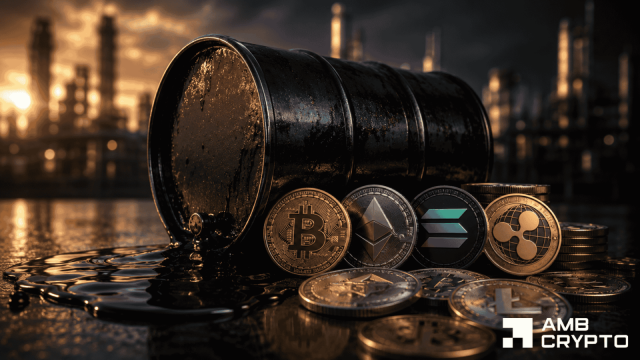
Crypto markets rallied on June 15 as oil prices extended a multiweek slide amid optimism over a preliminary US-Iran framework. Bitcoin climbed 4.2% in 24 hours. Ethereum jumped 9.8%. XRP gained 12.4%. Solana rose 11.1%.
The move tracked a drop in WTI crude toward the low $80 a barrel range. Crude had traded above $100 earlier this year as the market priced in a risk of Strait of Hormuz disruption and broader regional escalation.
Media reports said the US and Iran have moved toward a preliminary stabilization framework linked to sanctions relief, shipping access, and future nuclear talks. No final agreement has been signed. Several issues – uranium enrichment limits, enforcement mechanisms, and inspection regimes – remain under negotiation, according to the reports.
Traders read the oil decline as a signal that the probability of a major supply shock has fallen. Lower energy prices feed into lower inflation expectations, which in turn support risk assets including crypto, several traders said.
The structure of the rally pointed to improving speculative appetite rather than defensive positioning. Bitcoin's gain was solid but Ethereum, XRP, and Solana all outperformed by wide margins. That pattern typically emerges when traders rotate into higher-beta names, not when they seek safety in the largest cap, traders noted.
Gains were broad across the crypto heatmap, not concentrated in a few tokens. That kind of breadth suggests macro-driven buying rather than token-specific catalysts, said one London-based crypto fund manager.
WTI crude had already fallen sharply in the weeks leading up to the framework reports. The June 15 leg extended that decline. The correlation between oil and crypto has been high since the Strait of Hormuz fears peaked in April, with both assets moving inversely to geopolitical risk premiums, according to data from CoinMetrics.
The next concrete catalyst is the formal text of any agreement. Reports indicated that discussions continue on sanctions enforcement and inspection timetables. A breakdown in implementation talks could reverse the oil decline and pressure crypto higher-beta names first. Conversely, a ratified framework with clear enforcement terms would remove a major tail risk from both markets.
The Strait of Hormuz remains the world's most critical oil chokepoint. Any reduction in disruption risk directly lowers global inflation expectations, which has historically correlated with higher crypto allocations during periods of stable dollar liquidity, traders said.
Bitcoin's rally paused near $68,000 on June 15, still below its April high. The altcoin moves were more aggressive in percentage terms but from lower bases. Whether the risk-on rotation sustains depends on oil staying below $85 and on the framework holding through the next round of talks, scheduled for late June according to diplomatic sources cited by Reuters.