Edward Zimbardi faces wire fraud charges after alleged $165M crypto Ponzi scheme promised 25% monthly returns; deported from Fiji to US. Commentary from Chris Skinner explains why crypto enables such fraud.
The U.S. Department of Justice charged Edward Zimbardi over an alleged $165 million cryptocurrency Ponzi scheme known as The Crypto Program. Zimbardi was arrested in Fiji in July 2025 and deported to the United States on Aug. 14, 2026, prosecutors said. He faces 12 counts of wire fraud, 12 counts of money laundering and one count of money-laundering conspiracy. The charges are allegations; the court will determine guilt.
Prosecutors said the scheme promised investors a guaranteed 25% monthly return from buying advertising packages. Investors sent cryptocurrency into wallets Zimbardi secretly controlled. More than $165 million flowed into the program, according to the indictment. Rather than being invested as promised, more than $34 million was gambled on risky foreign-exchange trades, substantial sums were lost, and later investors' money was used to pay earlier investors. At least $10 million went to personal expenses including property, luxury vehicles and alimony.
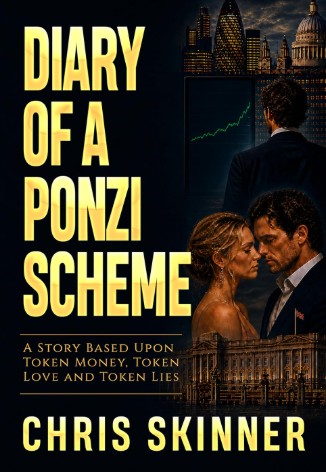
Crypto provides an almost perfect environment for Ponzi schemes, said Chris Skinner, a financial commentator and author of the novel "Diary of a Ponzi Scheme." He argued the combination of technological complexity, enormous price swings, global money transfer, online communities and a belief that conventional rules are being rewritten gives fraudsters a powerful narrative. "Crypto does not repeal those lessons," Skinner wrote in a commentary for AlphaScala. "If anything, it makes them more important."
A successful Ponzi operator needs a story sophisticated enough that most investors cannot easily challenge it, Skinner said. Crypto offers plenty of those stories. The operator needs plausible extraordinary returns, and anyone who has watched cryptocurrencies rise by hundreds or thousands of percent has already seen returns that look similar. Money moves quickly across borders. Communities turn customers into evangelists. Investors come to believe they are participating in something the traditional financial establishment does not yet understand.
The scheme eventually hits the oldest problem in banking: liquidity, Skinner wrote. The operator has liabilities to investors but insufficient genuine assets. As long as new investment exceeds withdrawals, the mismatch stays hidden. Investors receive their money, testimonials circulate, impressive returns appear on dashboards, more customers arrive. Then something changes: new investment slows, withdrawals increase, markets fall or regulators step in. The balance reverses, and the machine collapses.
Skinner said the four most dangerous words in finance are "this time is different," but there is another word that should make investors pause: guaranteed. "Real markets do not guarantee extraordinary returns,," he wrote. "If somebody removes the risk while simultaneously increasing the promised return to extraordinary levels, you should not be asking how quickly you can transfer your money. You should be asking why somebody who can generate guaranteed returns of 25% a month needs your money in the first place.
Drafted by a large language model from the source reporting linked above, then screened by automated publishing checks. It is not read by a journalist before publication. Some articles cite our Alpha Score. Verify prices and figures against the original source. Educational coverage, not personalized advice.