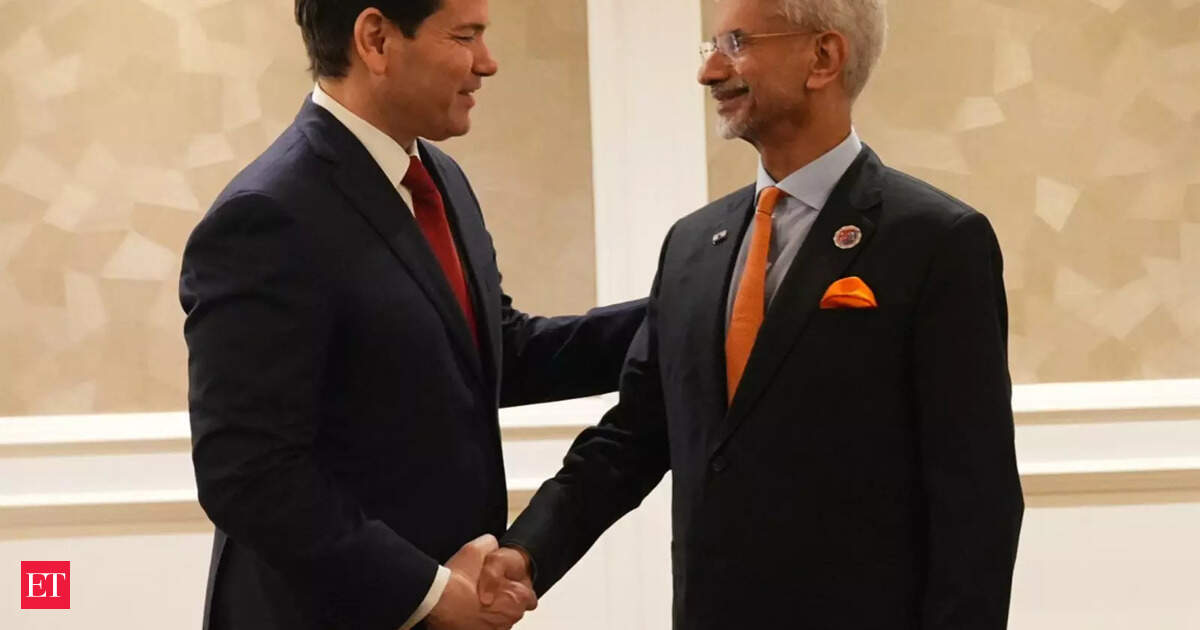
Foreign Minister S. Jaishankar and US Secretary of State Marco Rubio held discussions covering critical minerals, AI, nuclear energy, trade, defense, and counter-terrorism. The talks were scheduled ahead of the Quad foreign ministers' meeting. For investors tracking India-linked supply chains, the event shifts the watchlist focus from general diplomatic ties to concrete sector-level catalysts.
Critical Minerals and Nuclear Energy: Supply Chain Pressure Points
The inclusion of critical minerals signals a shared push to diversify away from dominant producers. India is actively seeking lithium, rare earth elements, and cobalt sourcing agreements. The US is building its own critical minerals strategy through bilateral pacts and the Inflation Reduction Act. A confirmed partnership could benefit Indian mining and processing companies holding exploration licenses or refining capacity. The read-through is indirect but trackable. Any joint working group or funding announcement from the Quad meeting will act as a catalyst for Indian state-owned and private mineral explorers.
On nuclear energy, the talks revisit a long-stalled area. India's civil nuclear liability law has slowed US reactor deals for years. Renewed government-level engagement may push operators and engineering firms into focus. US nuclear component suppliers and Indian project developers are the logical beneficiaries if the Quad meeting produces a technology-transfer framework. The mechanism here is regulatory clarity, not immediate revenue. Investors should watch for memoranda of understanding or named companies in the Quad joint statement.
AI Cooperation and Defense: Technology Transfer as a Catalyst
AI cooperation and defense ties form the second major block. The US has restricted high-end chip exports to China while maintaining a relatively open stance for India. The talks suggest joint AI research or semiconductor supply agreements could be formalized in the coming quarters. For India's IT services sector, deeper AI collaboration means potential contracts in defense analytics, autonomous systems, and cybersecurity. For US defense primes, India's Make in India offset rules create a route for co-production.
The read-through is most direct for Indian defense manufacturing stocks and US technology partners with India exposure. The Quad meeting deadline compresses the timeline. Any joint statement on AI compute infrastructure or defense procurement will tighten the watchlist for these sub-sectors. The risk is that discussions remain aspirational with no earmarked funds or regulatory changes. Specific dollar amounts or pilot projects in the Quad statement will separate a genuine sector catalyst from diplomatic signaling.
The Quad Meeting as the Next Catalyst Marker
The talks were deliberately timed ahead of the Quad foreign ministers' meeting, which becomes the near-term catalyst clock. Quad meetings have historically produced funding pledges for infrastructure, vaccine distribution, and technology standards. A repeat pattern would see targeted investment in critical mineral processing or AI compute capacity in India.
If the joint statement includes working groups, pilot projects, or named companies, expect the first round of stock moves in Indian exploration companies and US technology partners. If the statement remains vague, the catalyst is delayed until the next bilateral summit. The meeting itself is the source of the next move, not any single company announcement. For deeper context on geopolitical supply chains, see stock market analysis and the NVIDIA profile for AI-related semiconductor dependencies.