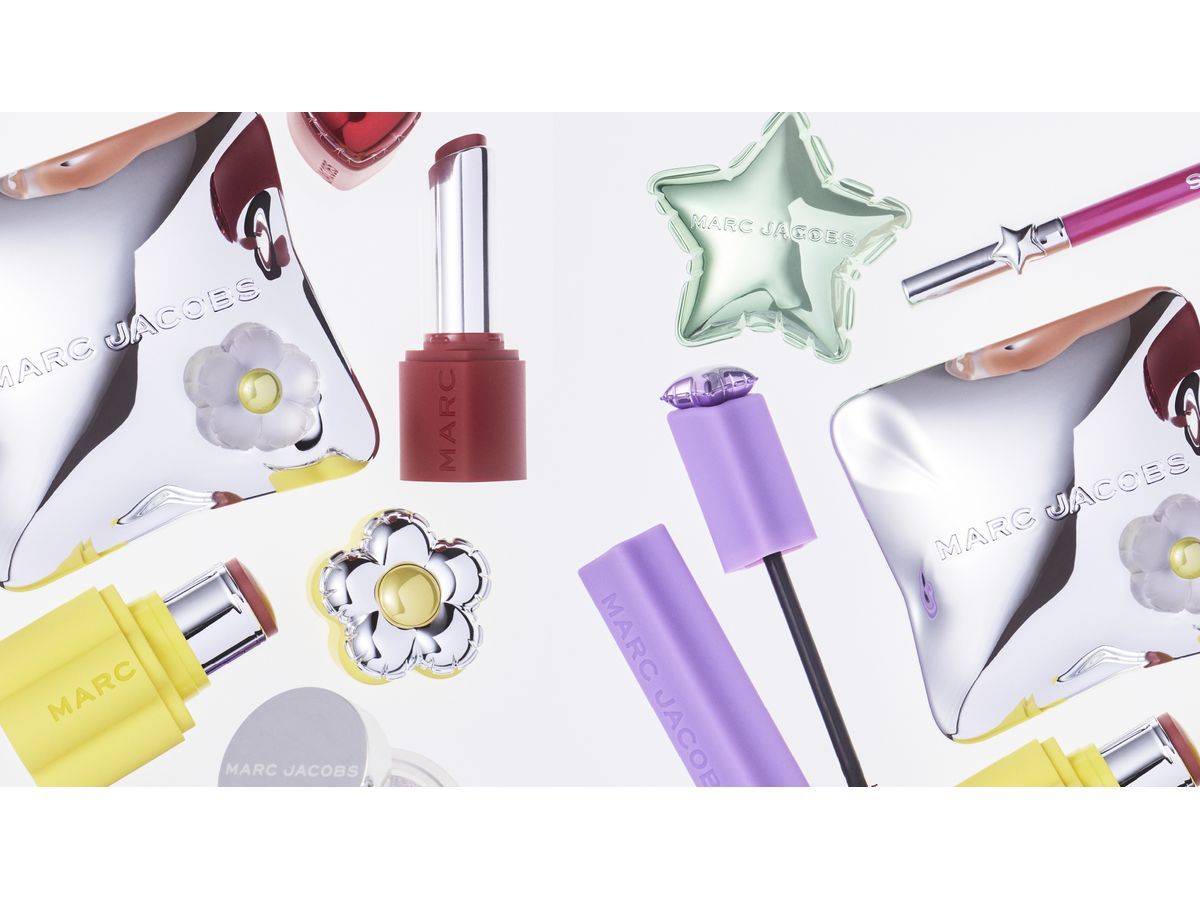
Coty Inc. (NYSE: COTY) announced the launch of Marc Jacobs Beauty, a color cosmetics line the company calls one of the most requested luxury comebacks. The collection, priced from $26 to $42 in the U.S., turns a long-standing fragrance partnership into a full makeup platform. The simple read: a beloved fashion brand returns to beauty, Coty gains a new revenue stream. The better read: the launch’s narrow SKU count, staged rollout, and channel exclusivity reveal a controlled test of demand before scale commitments. The real story is how Coty segments distribution and what that signals about retail risk in prestige beauty.
The Seven-SKU Discipline: Inventory Risk and Signal for Investors
Why a Narrow Range Cuts Both Ways
Marc Jacobs Beauty launches with seven products: Drawn This Way Longwear Eyeliner, Born Star Eyeshadow, Heart On Lipstick, Joystick Blush Stick, Flashes Mascara, Legally Bronze Bronzer, and Money Shot Highlighter Gel. That range is narrower than a typical prestige color cosmetics debut, which often runs 15 to 20 SKUs. Coty is managing inventory risk by limiting upfront shelf commitment. The company can read early sell-through data before expanding categories. The downside: the narrow range also caps initial revenue and may not generate enough repeat traffic to sustain a Sephora store footprint.
Each product category has a different margin profile. Eyeliners and mascaras typically carry higher replenishment rates. Bronzers and highlighters are more discretionary. Coty is betting the Marc Jacobs name drives trial across all categories, even the less frequent repurchase items. The Sephora app exclusive from May 31 to June 1 will provide the first clean read on demand from loyal beauty shoppers.
The Mass-Premium Pricing Trap
The pricing positions Marc Jacobs Beauty between drugstore and luxury. At $26 to $42, it competes directly with Estee Lauder’s MAC (lipsticks at $24), L’Oreal’s Urban Decay (eyeliners at $23), and LVMH’s Fenty Beauty (foundation at $36). Coty is betting the Marc Jacobs cultural cachet can sustain premium pricing without heavy discounting. Marc Jacobs said in the release, “I am not interested in one right way to look; beauty, like fashion, has always been a form of self-expression rooted in experimentation, play, and reimagining the familiar in new ways.” The brand positions itself as maximalist and inclusive, pushing against the minimalist trend that dominated the post-COVID recovery.
The risk is that consumers have more options than ever in this price tier. If the initial sell-through slows, Coty may need to increase promotional spending, compressing margins. The packaging, designed by Marc Jacobs with custom charm molds (a daisy for complexion, a star for eyes, a heart for lips), requires upfront tooling costs. Those costs are sunk, making volume essential for recouping investment.
The Mechanism Behind "Joyride Sensoriality": Texture as a Category Shift
Packaging as a Collectible Asset
The release emphasizes “immersive, pleasurable experience,” “unexpected textures, tactile finishes,” and formulas “designed to be played with.” The packaging uses oversized soft-touch matte and metallic materials, turning each item into a collectible object. This language aligns with two current trends in prestige beauty: multi-sensory application and collectible packaging that justifies premium pricing.
Coty is betting that the Marc Jacobs brand name can elevate everyday makeup into a cultural object. The designer’s personal involvement – “the packaging, designed by Marc Jacobs himself” – adds authenticity. If the product catches fire on social media, the charm motifs could become viral symbols, similar to how the Daisy fragrance charm drove cross-category recognition.
Execution Risk in Formula and Longevity
The formulas emphasize high-impact, long-wearing performance designed to be layered and blended. That claim is common in the category; differentiation requires real-world proof. Coty has not disclosed who formulated the products – in-house team or external lab. Investors should watch early influencer reviews for feedback on wear time and texture. Negative reviews on texture or longevity would undermine the entire sensory positioning.
Sector Readthrough: Prestige Color Cosmetics at a Crossroads
Established Brands Lose Ground
Coty's launch directly targets shelf space held by Estee Lauder (MAC, Clinique), L’Oreal (Lancome, Urban Decay), and LVMH (Fenty Beauty, Sephora private label). MAC has seen declining mall traffic and sliding sales in recent years. Urban Decay's Naked palette era has faded. Fenty Beauty's growth slowed after an explosive start. The market is open for a culturally relevant relaunch.
The sector read-through here: if this launch succeeds, it validates the playbook of reviving dormant luxury brand extensions with a digital-first, exclusive retail strategy. If it fails, it reinforces the view that brand heritage alone cannot overcome high consumer churn in color cosmetics. Sephora CEO quoted in the release: “Marc Jacobs Beauty is one of the most anticipated relaunches in prestige beauty, and Sephora is proud to partner in bringing it back to consumers around the world.” Sephora gets exclusive early access, differentiating its app and website during a period when competitors like Ulta Beauty and Amazon Beauty may not carry the brand.
Travel Retail as a High-Margin Beta
The release lists JFK International Airport and Palma de Mallorca Airport as the first travel retail locations, launching in June 2026. Travel retail in prestige beauty carries higher margins because pricing is not directly compared to domestic retail, and the customer is often leisure-driven. Coty is betting on strong international air travel demand through mid-2026. If the brand performs well in those two airport locations, Coty can accelerate expansion into other hubs ahead of the holiday season.
Valuation Implications for Coty Stock
Year One Revenue Is Marginal
Assuming an average retail price of $30 per unit and modest initial sell-through of 500,000 units globally in the first six months – a reasonable guess for a narrow SKU launch – that represents roughly $15 million in retail sales. Coty’s wholesale revenue would be lower. For a company with fiscal 2025 revenue of about $6 billion, the launch is unlikely to move the needle in year one. The bullish case is that the brand becomes a recurring source of growth, similar to Charlotte Tilbury for Puig or MAC for Estee Lauder.
Upfront Costs and Margin Pressure
Coty did not disclose marketing spend. Prestige beauty launches typically carry upfront costs of 15-20% of expected first-year revenue for influencer seeding, digital advertising, and in-store merchandising. The custom packaging molds require multi-million dollar minimum order quantities. Coty must recoup those through sustained sales, not a one-month pop. Traders using best stock brokers should watch for any mention of launch costs in Coty’s quarterly filings.
Next Catalyst: Sell-Through Data and September Store Rollout
The release details four distinct launch phases:
- Online on MarcJacobs.com on May 28, 2026
- Sephora app exclusive on May 31, 2026
- Sephora.com (U.S. and Canada) and Selfridges.com on June 1, 2026
- Travel retail at JFK and Palma de Mallorca Airport in June 2026
- Sephora physical stores in the U.S., Canada, UK, and Australia on September 1, 2026
The 90-day gap between e-commerce and full store distribution is deliberate. Coty can read data from online sales before committing to in-store shelf space. If sell-through misses targets, allocations can be adjusted downward. If the product catches fire, Sephora can push faster replenishment.
Three metrics to watch in the first 90 days:
- App sell-through rate during the May 31 exclusive. A sell-out within 72 hours signals strong demand.
- Selfridges reorder rate within 30 days of the June 1 launch. A repeat order above 80% of the initial order indicates velocity.
- Social media sentiment around the charm motifs and packaging. Viral organic content reduces the need for incremental marketing spend.
Coty is not a one-product company. The stock market analysis of the beauty sector will hinge on whether this relaunch proves that legacy fashion brands can generate fresh demand in color cosmetics without the heavy promotional cycle that erodes margins. Investors should treat the first 90 days of sell-through data as the primary signal, not the launch hype. If the numbers hold, Marc Jacobs Beauty could become a growth engine. If they do not, the packaging design costs will weigh on Coty’s prestige segment margins for quarters to come.