Macro● Neutral
Consumer Sentiment Hits Post-1952 Low, Defying White House Spin
By AlphaScala Research DeskSource reporting: davidstockmanscontracorner.comEditorial standards1 views
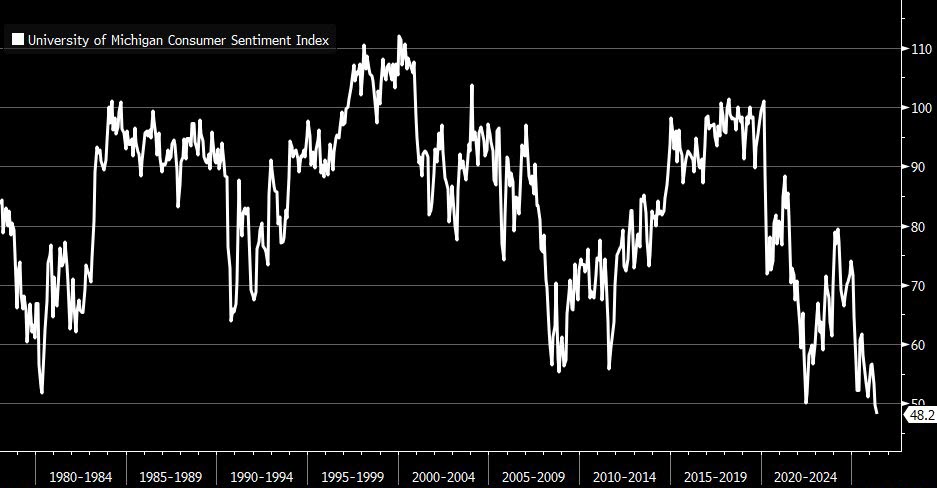
University of Michigan consumer sentiment index hit a post-1952 low for the second straight month, undercutting the White House confidence narrative. The collapse forces a repricing of rate-cut expectations and the dollar.
Continue with
The University of Michigan’s consumer sentiment index dropped to a post-1952 record low for the second consecutive month on Friday. The reading directly contradicted the administration’s claim earlier in the week that “consumer confidence is way up.” The gap between political messaging and hard data carries a direct transmission into rates, the dollar, and risk appetite because consumer spending drives two-thirds of US GDP. When sentiment craters, the odds rise that consumption will follow, forcing a repricing of the entire macro stack.
Treasury Yields Reprice the Consumption Hit
The simple market read is that a sentiment plunge signals recession, so stocks should sell off. The better read targets the front end of the Treasury curve. A consumer retreat lowers GDP estimates and, with some lag, drags inflation lower. That path pulls forward market-implied rate cut expectations. The 2-year yield becomes acutely sensitive. The 10-year can remain anchored if long-run inflation expectations stay sticky, a dynamic that steepens the yield curve. Banks benefit from wider net interest margins. The dollar tends to weaken because near-term rate differentials compress.
Adding tension, Dallas Fed President Lorie Logan recently warned that price pressures are still too high, complicating the picture. A sentiment collapse alongside sticky inflation is the stagflationary quadrant markets dread–one where the central bank cannot ease without risking another price spiral. That paradox makes the next inflation prints as important as the sentiment readings themselves.