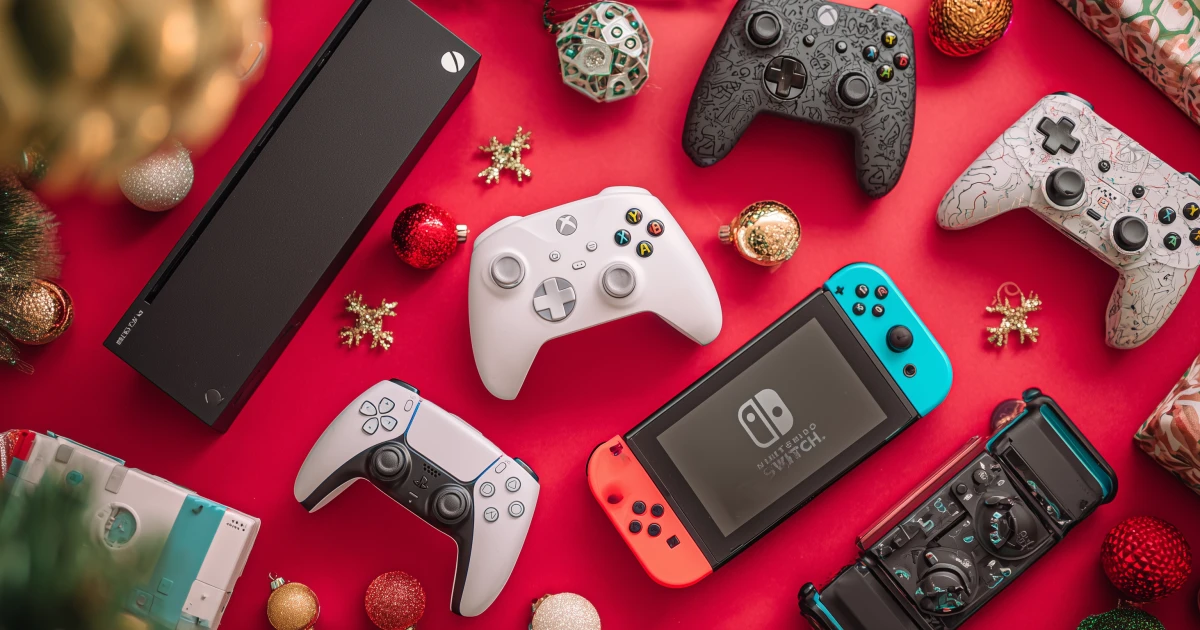
The video game industry is heading for another record year in 2025, with nearly $200 billion in total revenue from software, hardware, and accessories. Console sales alone accounted for $45 billion of that figure. The segment, dominated by Sony's PlayStation, Microsoft's Xbox, and Nintendo's Switch, has been a fixture in living rooms since the 1970s.
The economics that made consoles a mass-market product are coming apart.
Consoles are purpose-built devices with fixed, optimized hardware. They are not modular. When they become obsolete, they are replaced entirely. The trade-off has always been simplicity and price. A PlayStation 5 or Xbox Series X launched in 2020 at $400 to $500. A PC with comparable graphics and processing power cost roughly $1,500. That price gap made high-end gaming accessible to a broad audience.
That gap has narrowed to the point of inversion.
Current-generation consoles are now several years old. Modern PCs significantly outperform them. The difference shows in sales data and in the games themselves. Take Grand Theft Auto VI, the most anticipated title of the year. Rumors suggest it will run at 30 frames per second on current consoles. A high-end gaming PC can deliver multiples of that, with noticeably better visual quality.
The problem is not just aging hardware. The next generation faces a cost crisis.
The AI boom has created a prolonged hardware shortage that has driven up component prices. Analysts expect the next Xbox and PlayStation to launch at $1,000 to $1,100, if supply chains hold. A single-function entertainment device at that price point faces a different consumer calculus than the $400 consoles of five years ago. If new geopolitical conflicts disrupt oil prices or logistics, the final retail price could go higher.
PCs are not immune to rising component costs. They offer flexibility. A gamer can build a capable system over two or three years, upgrading piece by piece. They can choose a cheaper Chinese graphics card from a company like Lisuan instead of an Nvidia. They can buy a used but still powerful GPU at a discount. Consoles offer none of those options.
The shift is visible in platform data. Steam has quintupled its user base over the past decade. Competing stores like the Epic Store, Battle.net, and GOG Galaxy are also growing, often using free games to attract users.
Valve's experience with the Steam Machine illustrates the hardware bind. The company planned to launch its own console, positioned as an Xbox and PlayStation competitor, earlier this year. It canceled the launch, citing hardware costs. By the time the device reached the market in mid-2026, the price had settled at $1,450 for a version with reasonable storage and a controller. Early reviews and online commentary suggest the reception has been poor.
Sony and Microsoft face a strategic dilemma. They cannot delay the next generation much longer without losing further ground to PC gaming. Launching at $1,000-plus risks alienating the mass market that made consoles successful. One possible outcome is a shift toward cloud gaming, where the heavy processing happens in remote data centers and the user pays only for the service. That model has existed for years. It has not yet delivered a seamless experience comparable to local hardware.
A cloud shift would not save the console as a product category. It would change what the companies sell.
Nintendo occupies a different position. The Switch is a hybrid portable-home device with a closed ecosystem and a loyal fan base. It does not compete on raw performance. Its exclusive franchises – Mario, Zelda, Pokémon – never appear on PC. That exclusivity, which Sony and Microsoft have largely abandoned, insulates Nintendo from the forces pressuring its larger rivals. If the traditional console market contracts, Nintendo could end up dominating a smaller pool of dedicated hardware buyers, much as it did in the early 1990s.
For Sony and Microsoft, the path forward is less clear. The next hardware cycle will test whether the console model can survive a doubling of its entry price.