The 2012 STOCK Act mandates that members of the United States Congress and senior government officials report financial transactions exceeding $1,000 within 45 days. Recent filings under this regulatory framework have brought increased visibility to the digital asset holdings of lawmakers. These disclosures provide a window into the specific tokens that have gained traction among legislators, highlighting a preference for established assets over speculative, low-cap alternatives.
Concentration in Market Leaders
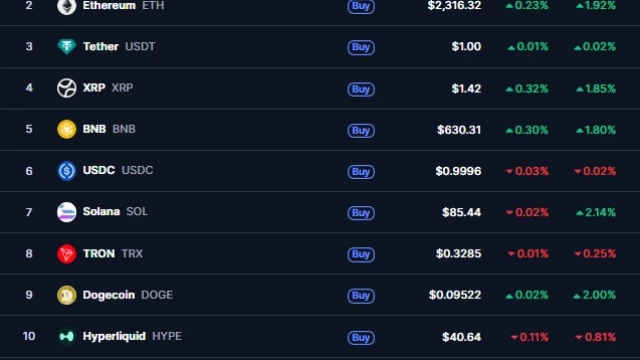
Data extracted from recent congressional disclosures indicates that legislative portfolios are heavily weighted toward the largest assets by market capitalization. This trend suggests that lawmakers are prioritizing liquidity and established network effects when allocating capital to the digital asset space. The following assets appear most frequently in recent filings:
- Bitcoin (BTC)
- Ethereum (ETH)
- Solana (SOL)
- Ripple (XRP)
- Cardano (ADA)
The reliance on these specific assets reflects a broader trend where institutional and retail participants alike gravitate toward protocols with significant infrastructure and proven track records. For those tracking these movements, the Bitcoin (BTC) profile and Ethereum (ETH) profile serve as primary references for understanding the underlying volatility and adoption metrics of these holdings.
Regulatory Alignment and Disclosure Lag
While the STOCK Act provides a mechanism for transparency, the 45-day reporting window creates a structural delay in market intelligence. By the time a trade is disclosed, the market conditions that prompted the initial entry or exit may have shifted significantly. This lag necessitates a cautious approach when interpreting these filings as signals for future price action. The disclosures are better viewed as a record of historical positioning rather than real-time indicators of legislative sentiment or impending policy shifts.
Legislative interest in digital assets often coincides with broader debates regarding the Digital Chamber Pushes Senate Markup for CLARITY Act. As these assets become more integrated into the personal portfolios of policymakers, the intersection of personal financial interest and regulatory oversight becomes increasingly complex. Market participants often monitor these disclosures to identify potential conflicts of interest or to gauge the level of institutional familiarity with specific blockchain protocols.
AlphaScala Data Context
In the broader technology sector, ON Semiconductor Corporation currently holds an AlphaScore of 45/100, reflecting a mixed sentiment profile. Investors can review the ON stock page for further technical details. While digital assets represent a distinct asset class from traditional semiconductor manufacturing, the underlying demand for high-performance computing hardware remains a common thread linking both sectors.
The next concrete marker for this activity will be the subsequent round of periodic transaction reports filed by the House and Senate ethics committees. These filings will determine whether the current concentration in top-tier tokens continues or if lawmakers begin to diversify into emerging sectors such as decentralized finance or tokenized real-world assets. Monitoring the frequency of these disclosures will remain the primary method for assessing how congressional participation in the crypto ecosystem evolves alongside pending federal legislation.