The five-decade political partnership between the Indian National Congress and the Dravida Munnetra Kazhagam (DMK) has officially dissolved following the Congress party's decision to extend support to the Tamilaga Vettri Kazhagam (TVK) for government formation. This realignment follows the 2026 Tamil Nadu Assembly election results, which served as the final catalyst for a relationship already strained by seat-sharing disputes and internal friction. The All India Congress Committee authorized the move, delegating the final execution to the Tamil Nadu Congress Committee, effectively ending a collaboration that dates back to the 1970s.
The Mechanics of the Political Rupture
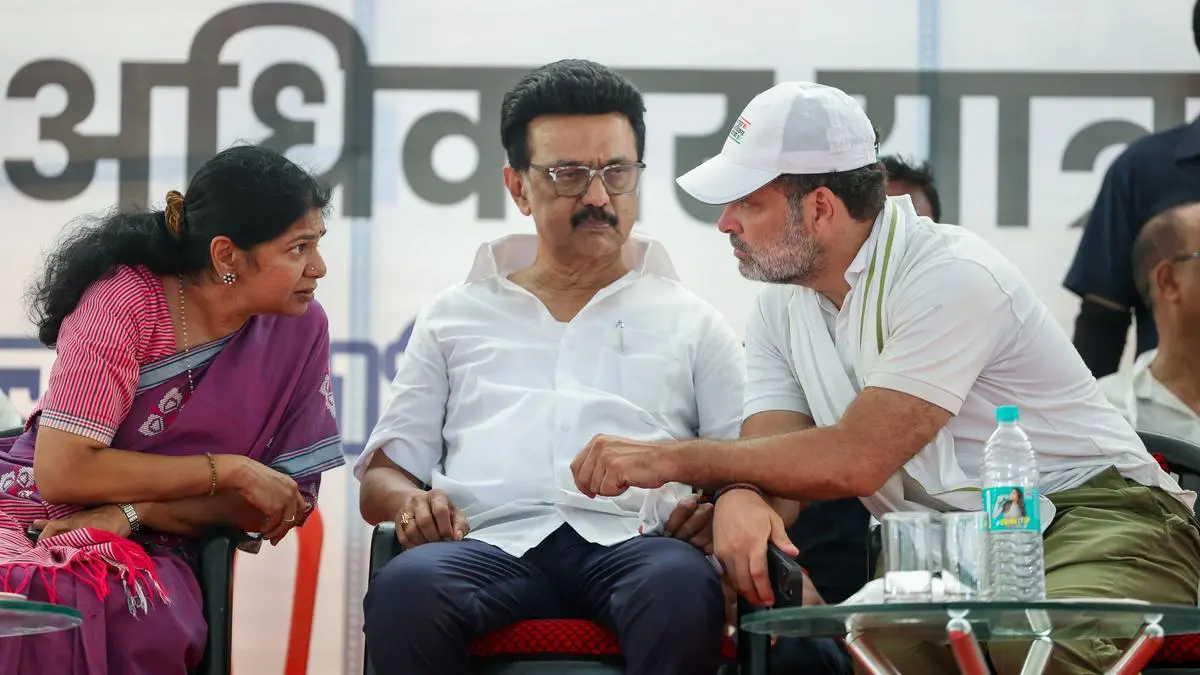
The dissolution of this alliance was not an overnight event but the culmination of mounting structural dissatisfaction. During the 2026 election cycle, the Congress party grew increasingly frustrated with the seat-sharing arrangements dictated by the DMK. Specifically, the Congress leadership felt that the DMK denied them access to key constituencies where the party maintained a viable path to victory. These tensions were visually confirmed during the campaign trail, as DMK president MK Stalin and Congress leader Rahul Gandhi notably failed to share a stage, a move both camps attempted to dismiss as a scheduling conflict at the time.
The rupture became irreversible following the election results. On Tuesday, the Congress party signaled its departure by skipping a critical meeting convened by Stalin to consult with alliance partners. This absence served as the functional confirmation of the split, prompting a sharp rebuke from the DMK. DMK spokesperson Saravanan Annadurai characterized the Congress decision as a "backstabbing" move, arguing that the party's pivot to the TVK is short-sighted and will ultimately erode the Congress party's credibility as a stable coalition partner on the national stage.
Strategic Realignments and National Implications
For the Congress, the decision to pivot toward the TVK is framed as a response to the electoral verdict. B Manickam Tagore, the Congress Member of Parliament from Virudhunagar, articulated this position on social media, noting that the verdict went against the DMK government and that half of the ministers in the cabinet lost their seats. Tagore argued that the Congress suffered collateral damage by remaining tied to the DMK, and the party must now decide whether to remain with a force rejected by the electorate or align with a new entity to prevent the BJP from expanding its influence in Tamil Nadu.
This shift carries significant weight for national opposition coordination. The Congress has historically relied on the DMK for support on legislative issues within Parliament. A formal break-up complicates this collective bargaining power, potentially weakening the opposition's ability to present a unified front on national policy. While the immediate focus remains on the formation of the Tamil Nadu government, the long-term impact on the opposition's parliamentary strategy remains a critical variable for observers of the Indian political landscape.
Evaluating the Institutional Risk
In the broader context of political risk, the dissolution of the Congress-DMK alliance mirrors the volatility often seen in institutional partnerships where ideological alignment is superseded by electoral necessity. Much like the shifts observed in stock market analysis where long-term correlations break down due to changing fundamentals, the Congress-DMK split reflects a fundamental change in the "value" of the partnership. The DMK's warning that the Congress will be viewed as an "unstable partner" highlights the reputational risk inherent in such sudden realignments.
For those tracking political stability in the region, the next concrete marker will be the formalization of the government under the TVK and the subsequent legislative behavior of the Congress party in the state assembly. If the Congress can successfully leverage its new position to secure policy wins, the move may be viewed as a tactical success. However, if the move leads to further isolation or electoral losses, the decision to abandon a five-decade partnership will likely be scrutinized as a failure of long-term strategic planning. Investors and analysts should note that while this is a political event, the resulting instability in Tamil Nadu's governance structure creates a new risk premium for regional policy continuity.
While this analysis focuses on political shifts, similar dynamics of institutional realignment are common in the corporate sector, such as when firms like PGR (Progressive Corporation) adjust their market strategies in response to shifting competitive landscapes. With an Alpha Score of 55/100, the current sentiment surrounding such shifts remains in the moderate range, suggesting that while the change is significant, the market is still pricing in the ultimate outcome of the transition.