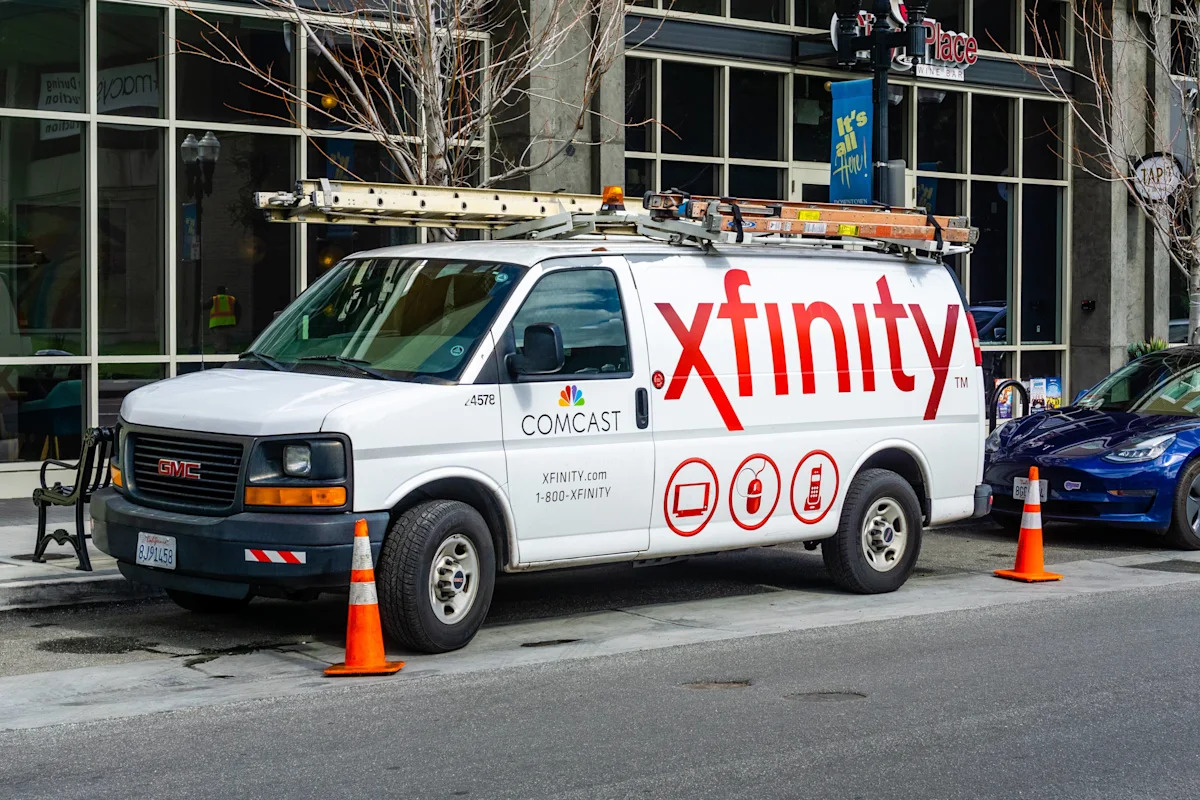
Comcast lost 167,000 U.S. broadband customers in the second quarter, revenue from the segment falling 5.5% from a year earlier. The exodus follows last year's Xfinity price increases. It also comes as T-Mobile, AT&T, Verizon and SpaceX's Starlink all chip away at the incumbent's base.
"Fiber continues to expand, fixed wireless remains aggressive, satellite is emerging as another alternative and convergence-based promotional activity remains elevated across the industry," Chief Financial Officer Jason Armstrong told analysts on a July earnings call. "We are operating under the assumption that the market will remain intensely competitive."
Comcast's answer is Xfinity Shield, a cybersecurity and home-monitoring platform that attaches to internet plans. The two-tier offering includes a free layer, WiFi Shield, that ships with every Xfinity internet plan. It adds Xfinity CyberSecure, which automatically blocks hackers, malware and phishing attempts. WiFi Motion detects movement inside the home by monitoring changes in radio-frequency signals between the gateway and connected devices, sending alerts through the Xfinity app. Family Settings lets users manage screen time, set device limits and pause WiFi.
The paid tier, Shield Select, costs $15 a month. It adds an AI-powered indoor camera with smart motion detection, a door/window sensor, cloud video storage and 24/7 urgent response that connects customers to emergency help.
Jon Gieselman, chief growth officer of connectivity and platforms, said in a release that "the network should do more than connect devices. It should help protect the people, their personal information, and everything within their homes that depend on our most reliable WiFi every day."
The cybersecurity push comes after Comcast agreed to pay $117.5 million to settle a class-action lawsuit over a data breach that exposed usernames, passwords, contact information and partial Social Security numbers from October 2023. The suit alleged the company "did not adequately protect personal data, had inadequate security measures, violated various laws, and failed to properly notify affected customers."
The broader threat environment is real. A white paper from Parks Associates and Plume found that U.S. internet households face between 36 and 86 blocked security threats per month, with botnet attacks up 89% year over year. A survey in the same report said 62% of smart home device owners find AI-powered cybersecurity monitoring appealing, and 27% are willing to pay for it.
Tam Williams, contributing analyst at Parks Associates, said the competitive dynamic is shifting. "Broadband competition is shifting beyond speed. The providers that deliver the most reliable, secure and personalized connected home experience will be best positioned to retain subscribers and attract new customers as AI becomes an integral part of everyday digital life."
Comcast's CMCSA stock page carries an Alpha Score of 67, labeled Moderate, reflecting the risk from customer losses and competitive pressure. The company's ability to reverse the broadband decline will determine whether the new security features can meaningfully differentiate the product.