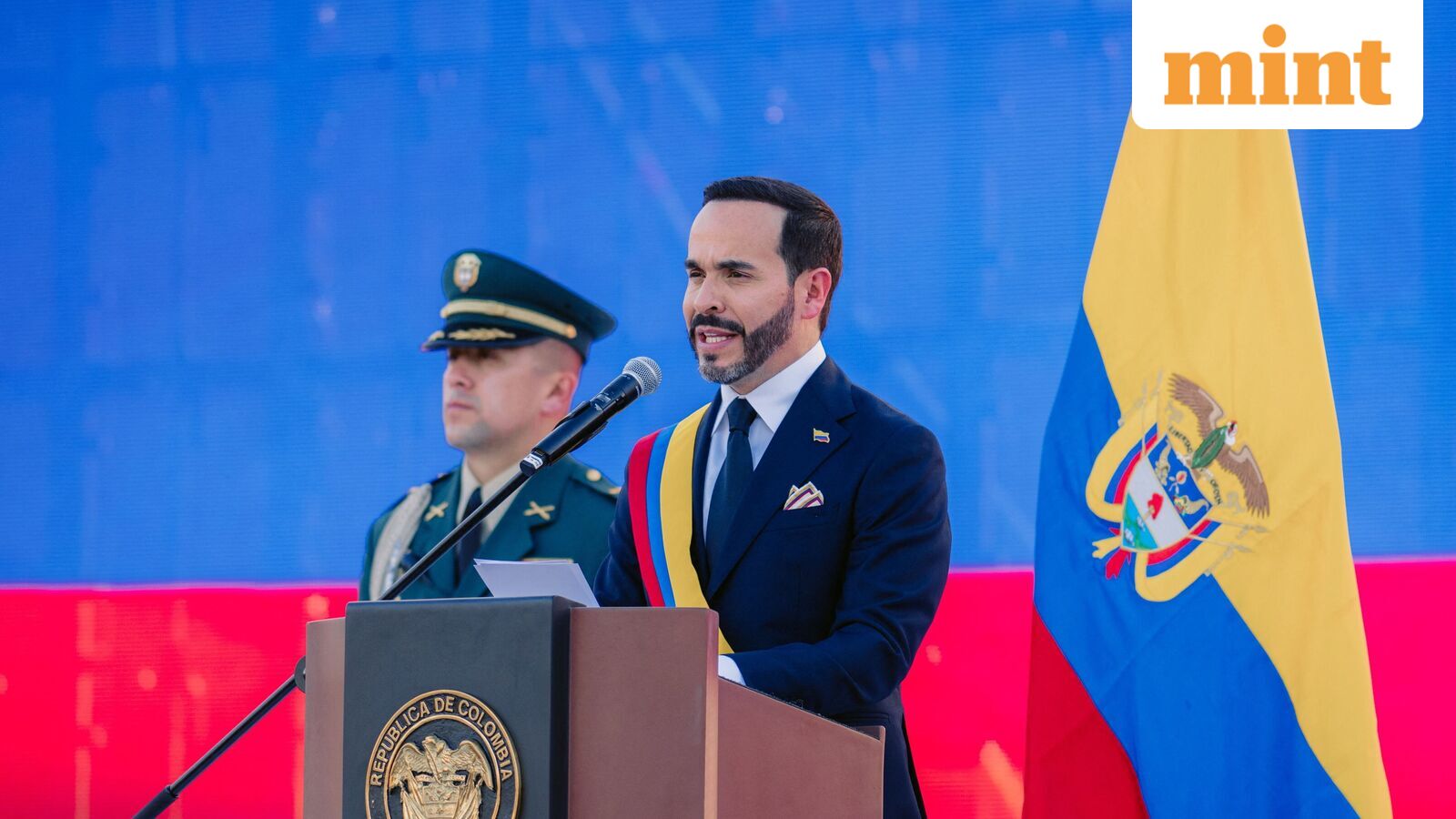
Abelardo de la Espriella took office Friday, ending peace talks and shifting security policy. The US pledged $1 billion in support. Colombia's risk premium faces a test.
Abelardo de la Espriella took office as Colombia's president on Friday, vowing to abandon predecessor Gustavo Petro's peace talks with armed groups and deploy the military against criminal organisations. The 48-year-old lawyer, who has defended paramilitaries and businessmen accused of corruption, inherits a country where violence is rising and fiscal pressures are mounting.
In his inaugural address in Cali, De la Espriella said the time for "restoring order, authority and freedom has begun." He promised mega-prisons, herbicide spraying of coca crops, and a forceful state response. "Those who did not believe in my proposal will find, in the facts, that this project will serve the common good," he said, according to Bloomberg.
The shift in security policy could affect Colombia's risk premium. Petro's government had pursued negotiations with groups like the ELN and dissident FARC factions. De la Espriella called those efforts "exhausted" and told criminal groups they face two paths: "submit to the rule of law or confront the resolute force of the Colombian state."
Hours after the swearing-in, the United States announced a $1 billion financial package to help the new administration combat crime and boost Colombia's energy sector. The package extends President Donald Trump's support for De la Espriella during his campaign.
The new president rose to prominence as a defence lawyer. In 2007 he represented former Justice Minister Alberto Santofimio, suspected in the 1989 assassination of presidential candidate Luis Carlos Galán. He later defended David Murcia Guzmán, a Colombian businessman who defrauded tens of thousands through a pyramid scheme while laundering drug profits.
De la Espriella's father managed Álvaro Uribe's 2002 regional campaign in Córdoba. Uribe's presidency was marked by neoliberal policies and what critics called systematic suppression of civil society. De la Espriella has embraced the nickname "The Tiger," posting AI-generated images of himself as a fanged tiger during the campaign.
The administration now faces the challenge of turning campaign promises into action while addressing Colombia's security and economic concerns. The US package signals Washington's bet on the new approach. The cost of a military crackdown and prison construction will test the country's fiscal space. Colombia's peso and sovereign bonds will be watched for reaction to the policy shift, traders said.
Drafted by a large language model from the source reporting linked above, then screened by automated publishing checks. It is not read by a journalist before publication. Some articles cite our Alpha Score. Verify prices and figures against the original source. Educational coverage, not personalized advice.